Kirjojen hintavertailu – 12 867 530 kirjaa ja 27 kauppaa

Kirjailija

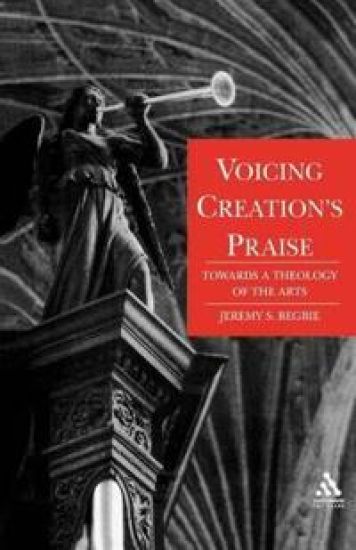
Jeremy Begbie

Kirjat ja teokset yhdessä paikassa: 8 kirjaa, julkaisuja vuosilta 1991–2022, suosituimpiin kuuluu The Art of New Creation – Trajectories in Theology and the Arts. Vertaile teosten hintoja ja tarkista saatavuus suomalaisista kirjakaupoista.

8 kirjaa

Kirjojen julkaisuvuodet: 1991–2022.

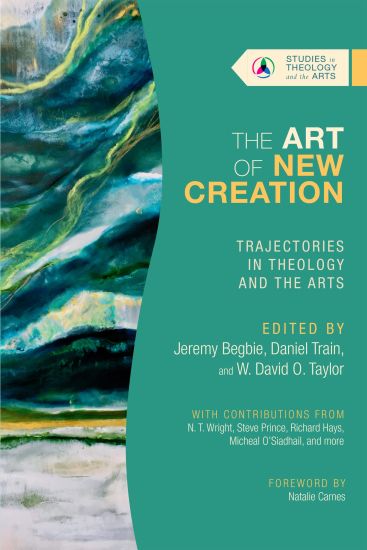
The Art of New Creation – Trajectories in Theology and the Arts

The Art of New Creation – Trajectories in Theology and the Arts

Jeremy Begbie; Daniel Train; W. David O. Taylor

IVP Academic
2022
nidottu
The biblical themes of creation and new creation are inextricably bound to each other. For the God who created the world is the same God who recreates humanity in Jesus Christ and the same God who promises a new heaven and a new earth. How might the relationship between creation and new creation be informed by and reflected in the arts? This volume, based on the DITA10 conference at Duke Divinity School, brings together reflections from theologians, biblical scholars, and artists to offer insights on God's first work, God's future work, and the future of the field of theology and the arts. The Studies in Theology and the Arts series encourages Christians to thoughtfully engage with the relationship between their faith and artistic expression, with contributions from both theologians and artists on a range of artistic media including visual art, music, poetry, literature, film, and more.
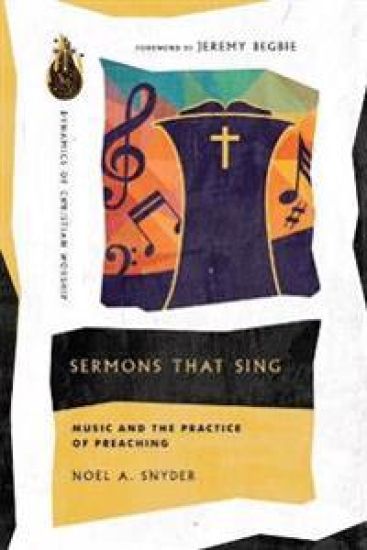
Sermons That Sing – Music and the Practice of Preaching

Sermons That Sing – Music and the Practice of Preaching

Noel A. Snyder; Jeremy Begbie

IVP Academic
2021
nidottu
Preaching and music are both regular elements of Christian worship across the theological spectrum. But they often don't interact or inform each other in meaningful ways. In this Dynamics of Christian Worship volume, theologian, pastor, and musician Noel A. Snyder considers how the church's preaching might be helpfully informed by musical theory. Just as a good musical composition employs technical elements like synchrony, repetition, and meter, the same should be said for good preaching that seeks to engage hearts and minds with the good news of Jesus Christ. By drawing upon music that lifts the soul, preachers might craft sermons that sing. The Dynamics of Christian Worship series draws from a wide range of worshiping contexts and denominational backgrounds to unpack the many dynamics of Christian worship—including prayer, reading the Bible, preaching, baptism, the Lord’s Supper, music, visual art, architecture, and more—to deepen both the theology and practice of Christian worship for the life of the church.
Redeeming Transcendence in the Arts
How can the arts witness to the transcendence of the Christian God? It is widely believed that there is something transcendent about the arts, that they can awaken a profound sense of awe, wonder, and mystery, of something “beyond” this world. Many argue that this opens up fruitful opportunities for conversation with those who may have no use for conventional forms of Christianity. Jeremy Begbie—a leading voice on theology and the arts—in this book employs a biblical, trinitarian imagination to show how Christian involvement in the arts can (and should) be shaped by a vision of God’s transcendence revealed in the person of Jesus Christ. After critiquing some current writing on the subject, he goes on to offer rich resources to help readers engage constructively with the contemporary cultural moment even as they bear witness to the otherness and uncontainability of the triune God of love.
Redeeming Transcendence in the Arts

Redeeming Transcendence in the Arts

Jeremy Begbie

William B Eerdmans Publishing Co
2018
nidottu
How can the arts witness to the transcendence of the Christian God? It is widely believed that there is something transcendent about the arts, that they can awaken a profound sense of awe, wonder, and mystery, of something "beyond" this world. Many argue that this opens up fruitful opportunities for conversation with those who may have no use for conventional forms of Christianity. Jeremy Begbie-a leading voice on theology and the arts-in this book employs a biblical, trinitarian imagination to show how Christian involvement in the arts can (and should) be shaped by a vision of God's transcendence revealed in the person of Jesus Christ. After critiquing some current writing on the subject, he goes on to offer rich resources to help readers engage constructively with the contemporary cultural moment even as they bear witness to the otherness and uncontainability of the triune God of love.
Music, Modernity, and God

Music, Modernity, and God

Jeremy Begbie

Oxford University Press
2015
nidottu
When the story of modernity is told from a theological perspective, music is routinely ignored—despite its pervasiveness in modern culture and the manifold ways it has been intertwined with modernity's ambivalent relation to the Christian God. In conversation with musicologists and music theorists, this collection of essays shows that the practices of music and the discourses it has generated bear their own kind of witness to some of the pivotal theological currents and counter-currents shaping modernity. Music has been deeply affected by these currents and in some cases may have played a part in generating them. In addition, Jeremy Begbie argues that music is capable of yielding highly effective ways of addressing and moving beyond some of the more intractable theological problems and dilemmas which modernity has bequeathed to us. Music, Modernity, and God includes studies of Calvin, Luther, and Bach, an exposition of the intriguing tussle between Rousseau and the composer Rameau, and an account of the heady exaltation of music to be found in the early German Romantics. Particular attention is paid to the complex relations between music and language, and the ways in which theology, a discipline involving language at its heart, can come to terms with practices like music, practices which are coherent and meaningful but which in many respects do not operate in language-like ways.
Music, Modernity, and God

Music, Modernity, and God

Jeremy Begbie

Oxford University Press
2013
sidottu
When the story of modernity is told from a theological perspective, music is routinely ignored - despite its pervasiveness in modern culture and the manifold ways it has been intertwined with modernity's ambivalent relation to the Christian God. In conversation with musicologists and music theorists, in this collection of essays Jeremy Begbie aims to show that the practices of music and the discourses it has generated bear their own kind of witness to some of the pivotal theological currents and counter-currents shaping modernity. Music has been deeply affected by these currents and in some cases may have played a part in generating them. In addition, Begbie argues that music is capable of yielding highly effective ways of addressing and moving beyond some of the more intractable theological problems and dilemmas which modernity has bequeathed to us. Music, Modernity, and God includes studies of Calvin, Luther and Bach, an exposition of the intriguing tussle between Rousseau and the composer Rameau, and an account of the heady exaltation of music to be found in the early German Romantics. Particular attention is paid to the complex relations between music and language, and the ways in which theology, a discipline involving language at its heart, can come to terms with practices like music, practices which are coherent and meaningful but which in many respects do not operate in language-like ways.
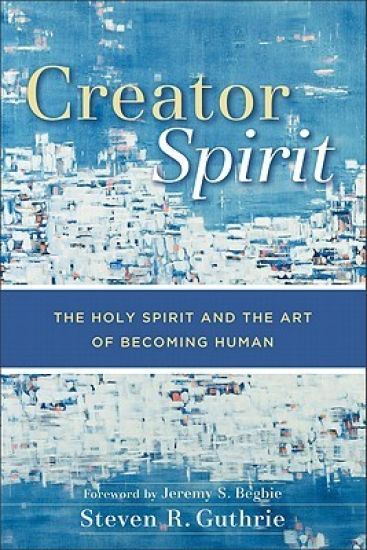
Creator Spirit – The Holy Spirit and the Art of Becoming Human

Creator Spirit – The Holy Spirit and the Art of Becoming Human

Steven R. Guthrie; Jeremy Begbie

Baker Academic, Div of Baker Publishing Group
2011
nidottu
Art is often viewed as being inherently spiritual. But what does it mean to describe an experience of art or beauty as "spiritual"? Is there a relationship between the spiritual experience a person has in the presence of a work of art and the Holy Spirit of Christian faith? Skilled theologian, musician, and educator Steven Guthrie examines areas of overlap between spirituality, human creativity, and the arts with the goal of sharpening and refining how we speak and think about the Holy Spirit. By exploring various connections between art and spirituality, he helps Christians better understand the doctrine of the Holy Spirit and offers a clear, engaging theology of the arts. The book includes a foreword by renowned theologian and musician Jeremy Begbie.