Kirjojen hintavertailu – 12 903 725 kirjaa ja 27 kauppaa

Kirjailija

Jeremy Kilpatrick

Kirjat ja teokset yhdessä paikassa: 6 kirjaa, julkaisuja vuosilta 1982–2014, suosituimpiin kuuluu Mathematics Education as a Research Domain: A Search for Identity. Vertaile teosten hintoja ja tarkista saatavuus suomalaisista kirjakaupoista.

6 kirjaa

Kirjojen julkaisuvuodet: 1982–2014.

Mathematics Education as a Research Domain: A Search for Identity
No one disputes how important it is, in today's world, to prepare students to un­ derstand mathematics as well as to use and communicate mathematics in their future lives. That task is very difficult, however. Refocusing curricula on funda­ mental concepts, producing new teaching materials, and designing teaching units based on 'mathematicians' common sense' (or on logic) have not resulted in a better understanding of mathematics by more students. The failure of such efforts has raised questions suggesting that what was missing at the outset of these proposals, designs, and productions was a more profound knowledge of the phenomena of learning and teaching mathematics in socially established and culturally, politically, and economically justified institutions - namely, schools. Such knowledge cannot be built by mere juxtaposition of theories in disci­ plines such as psychology, sociology, and mathematics. Psychological theories focus on the individual learner. Theories of sociology of education look at the general laws of curriculum development, the specifics of pedagogic discourse as opposed to scientific discourse in general, the different possible pedagogic rela­ tions between the teacher and the taught, and other general problems in the inter­ face between education and society. Mathematics, aside from its theoretical contents, can be looked at from historical and epistemological points of view, clarifying the genetic development of its concepts, methods, and theories. This view can shed some light on the meaning of mathematical concepts and on the difficulties students have in teaching approaches that disregard the genetic development of these concepts.

Mathematics Education as a Research Domain: A Search for Identity
No one disputes how important it is, in today's world, to prepare students to un­ derstand mathematics as well as to use and communicate mathematics in their future lives. That task is very difficult, however. Refocusing curricula on funda­ mental concepts, producing new teaching materials, and designing teaching units based on 'mathematicians' common sense' (or on logic) have not resulted in a better understanding of mathematics by more students. The failure of such efforts has raised questions suggesting that what was missing at the outset of these proposals, designs, and productions was a more profound knowledge of the phenomena of learning and teaching mathematics in socially established and culturally, politically, and economically justified institutions - namely, schools. Such knowledge cannot be built by mere juxtaposition of theories in disci­ plines such as psychology, sociology, and mathematics. Psychological theories focus on the individual learner. Theories of sociology of education look at the general laws of curriculum development, the specifics of pedagogic discourse as opposed to scientific discourse in general, the different possible pedagogic rela­ tions between the teacher and the taught, and other general problems in the inter­ face between education and society. Mathematics, aside from its theoretical contents, can be looked at from historical and epistemological points of view, clarifying the genetic development of its concepts, methods, and theories. This view can shed some light on the meaning of mathematical concepts and on the difficulties students have in teaching approaches that disregard the genetic development of these concepts.

Mathematics Education as a Research Domain: A Search for Identity
In 1978, in the foreword to Weeding and Sowing: A Preface to a Science of Mathematics Education, Hans Freudenthal wrote that his book is a preface to a science that does not exist. Almost 20 years later, does his claim still hold true? The present book is the result of the reflection of many individuals in mathematics education on this and related questions. Is mathematics education a science? Is it a discipline? In what sense? What is its place within other domains of research and academic disciplines? What accounts for its specificity? In the book, the reader will find a range of possible answers to these questions, a variety of analyses of the actual directions of research in different countries, and a number of visions for the future of research in mathematics education. The book is a result of an ICMI Study, whose theme was formulated as: What is Research in Mathematics Education and What are Its Results?'. One important outcome of this study was the realization of the reasons for the difficulty of the questions that the study was posing, leading possibly to a set of other questions, better suited to the actual concerns and research practices of mathematics education researchers. The book addresses itself to researchers in mathematics education and all those working in their neighborhood who are concerned with the problems of the definition of this new scientific domain emerging at their borders.
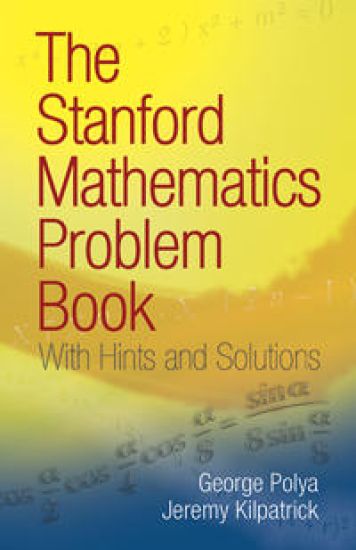
The Stanford Mathematics Problem Book

The Stanford Mathematics Problem Book

George Polya; Jeremy Kilpatrick

Dover Publications Inc.
2009
nidottu

Halvin toimitettuna 16,40 €

This volume features a complete set of problems, hints, and solutions based on Stanford University's well-known competitive examination in mathematics. It offers students at both high school and college levels an excellent mathematics workbook. Filled with rigorous problems, it assists students in developing and cultivating their logic and probability skills. 1974 edition.
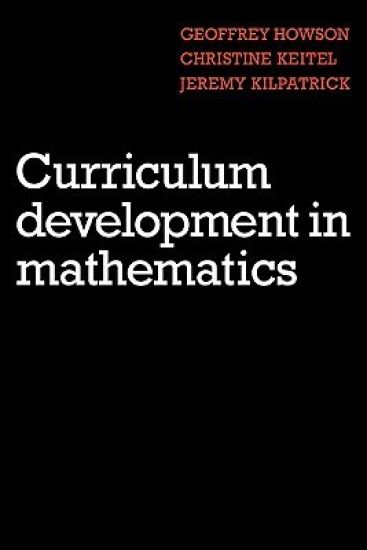
Curriculum Development in Mathematics

Curriculum Development in Mathematics

Geoffrey Howson; Christine Keitel; Jeremy Kilpatrick

Cambridge University Press
1982
pokkari
In the mid- 1970s the curriculum development boom in mathematics was to end almost as rapidly as it had begun. In this book the authors, who come from countries with differing educational traditions and patterns, consider these developments in their historical, social and educational context. They give not only a descriptive account of developmental work in a variety of countries, its aims and the patterns of management utilised, but also attempt to identify trends and characteristics and thus provide a theoretical base for criticism and analysis. The reader will find numerous case studies, including extracts from such renowned authors as Bruner, Dieudonne and Piaget.