Kirjojen hintavertailu – 12 859 818 kirjaa ja 27 kauppaa

Kirjailija

Jeremy Kirby

Kirjat ja teokset yhdessä paikassa: 6 kirjaa, julkaisuja vuosilta 2008–2026, suosituimpiin kuuluu Ancient Ethical Literature. Vertaile teosten hintoja ja tarkista saatavuus suomalaisista kirjakaupoista.

6 kirjaa

Kirjojen julkaisuvuodet: 2008–2026.

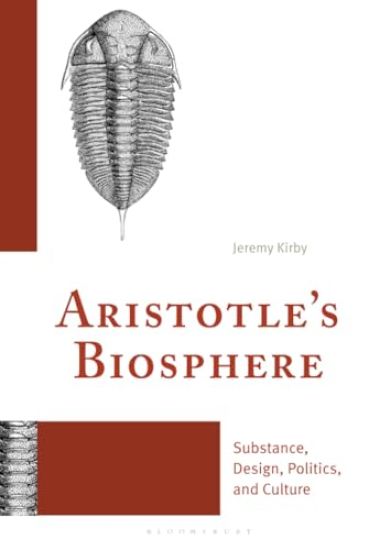
Aristotle's Biosphere: Artifacts, Politics, and Ethics
Aristotle displays a keen interest in life and living beings, but he doesn't separate the biological from the artificial, and he describes organisms as skillfully constructed phenomena that extend beyond their individual bodies. If textual evidence does not require a reading of living and nonliving as procrustean discrete classes, they are instead "contraries that admit of intermediaries." If a beaver dam, for instance, occupies an intersection between natural fact and artifact, then Aristotle may countenance a similar phenomenon in the realms of politics, art, and ethics. Aristotle's Biosphere argues that the state would satisfy Aristotle's criteria associated with both the artificial and the natural, and it also draws connections between what Aristotle calls natural virtue to virtue obtained via habituation and training.
Ancient Ethical Literature

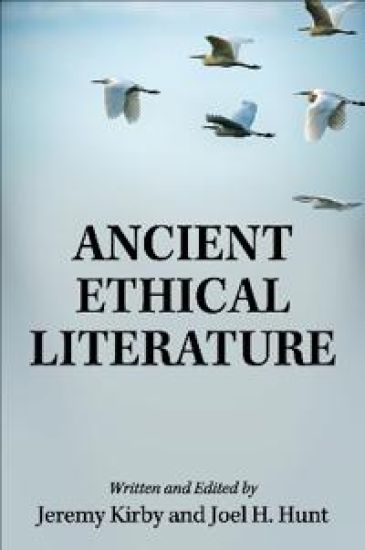
Ancient Ethical Literature

Jeremy Kirby; Joel H. Hunt

Cognella, Inc
2021
nidottu
Ancient Ethical Literature provides students with a collection of translated ancient texts from cultural, religious, and philosophical sources to help readers better understand how various societies have formed their codes of ethics. Part I of the text focuses on ancient Near Eastern literature. It explores Sumerian and Hebrew proverbs on the subjects of wealth, love, character, plenty, humor, wisdom, family, life and death, and more. Additionally, students read a collection of Hebrew and Babylonian laws that address social justice, the Ten Commandments, theft and robbery, agriculture, inheritance, and goring oxen, among other topics. Part II introduces students to Hellenic literature and investigates a number of philosophical texts by Socrates, Plato, and Aristotle. Throughout, students are provided with critical context to frame the readings and discussion questions to stimulate critical thinking and academic discourse. Compiled to provide students with an accessible and illuminating introduction to key concepts within the discipline, Ancient Ethical Literature is an ideal resource for courses in philosophy and ethics.
The Gamma Paradoxes

The Gamma Paradoxes

Jeremy Kirby

Lexington Books
2018
sidottu
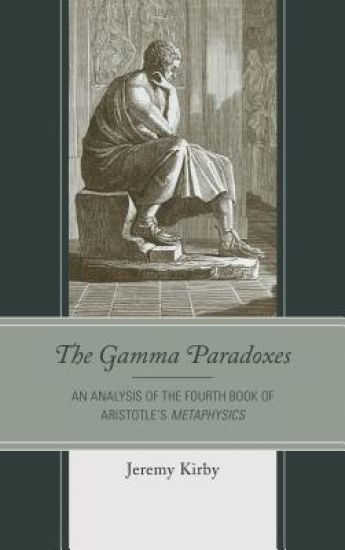
In this book, Jeremy Kirby analyzes Book Gamma of Aristotle's Metaphysics and introduces the debates (or paradoxes as he refers to them) such as relativism versus the idea of a ready-made world, the possibility of true contradictions, the nature and possibility of metaphysics, the limits of thought, and logic.
Aristotle's Metaphysics

Aristotle's Metaphysics

Jeremy Kirby

Continuum Publishing Corporation
2011
pokkari
Aristotle maintains that biological organisms are compounds of matter and form and that compounds that have the same form are individuated by their matter. According to Aristotle, an object that undergoes change is an object that undergoes a change in form, i.e. form is imposed upon something material in nature. Aristotle therefore identifies organisms according to their matter and essential forms, forms that are arguably essential to an object's existence. Jeremy Kirby addresses a difficulty in Aristotle's metaphysics, namely the possibility that two organisms of the same species might share the same matter. If they share the same form, as Aristotle seems to suggest, then they seem to share that which they cannot, their identity. By taking into account Aristotle's views on the soul, its relation to living matter, and his rejection of the possibility of resurrection, Kirby reconstructs an answer to this problem and shows how Aristotle relies on some of the central themes in his system in order to resist this unwelcome result that his metaphysics might suggest.
Aristotle's Metaphysics

Aristotle's Metaphysics

Jeremy Kirby

Continuum International Publishing Group Ltd.
2008
sidottu
Aristotle maintains that biological organisms are compounds of matter and form and that compounds that have the same form are individuated by their matter. According to Aristotle, an object that undergoes change is an object that undergoes a change in form, i.e. form is imposed upon something material in nature. Aristotle therefore identifies organisms according to their matter and essential forms, forms that are arguably essential to an object's existence. Jeremy Kirby addresses a difficulty in Aristotle's metaphysics, namely the possibility that two organisms of the same species might share the same matter. If they share the same form, as Aristotle seems to suggest, then they seem to share that which they cannot, their identity. By taking into account Aristotle's views on the soul, its relation to living matter, and his rejection of the possibility of resurrection, Kirby reconstructs an answer to this problem and shows how Aristotle relies on some of the central themes in his system in order to resist this unwelcome result that his metaphysics might suggest.