Kirjojen hintavertailu – 12 859 827 kirjaa ja 27 kauppaa

Kirjailija

Jeremy Kourdi

Kirjat ja teokset yhdessä paikassa: 13 kirjaa, julkaisuja vuosilta 1998–2026, suosituimpiin kuuluu 50 Ideas That Changed the World of Work. Vertaile teosten hintoja ja tarkista saatavuus suomalaisista kirjakaupoista.

13 kirjaa

Kirjojen julkaisuvuodet: 1998–2026.

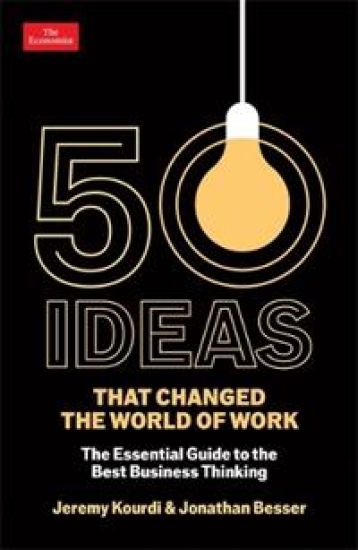
50 Ideas That Changed the World of Work

50 Ideas That Changed the World of Work

Jeremy Kourdi; Jonathan Besser

Economist Books, an Imprint of Pegasus Books
2025
sidottu
Fifty key ideas that have changed the way we think about why we behave the way we do while at work. The world of work is full of ideas. Some of these ideas shape the work we do and the way we do it. But it can often be hard to sort the wheat from the chaff. When ideas really do break new ground and change the way we think about what we do, they can help all of us to be better, happier, and more productive. The trick is to know which ones offer the most reliable vision, and how they can be adapted and deployed to the best effect. By encapsulating and explaining the best of this thinking, 50 Ideas that Changed the World of Work is equal parts vision and road map; an invaluable and insightful guide to navigating the world of work today.
50 Ideas that Changed the World of Work

50 Ideas that Changed the World of Work

Jonathan Besser; Jeremy Kourdi

Profile Books Ltd
2025
pokkari

Halvin toimitettuna 18,50 €

What does disruptive innovation really mean? How can the Eisenhower matrix help you manage your time? And when will you reach that all-important tipping point? By summarising and explaining the best business thinking, this book will help you to get to grips with - and apply - 50 key ideas, including: · Classics like Sun Tzu's Art of War and Dale Carnegie's rules of influence · Fundamentals like emotional intelligence, psychological safety and flow · Tips and techniques like SWOT, PEST and GROW · Smart thinking from Daniel Kahneman, Michael Porter and Carol Dweck Whether you want to think more strategically, boost team performance or make better decisions, this book is a guide to success at work today.
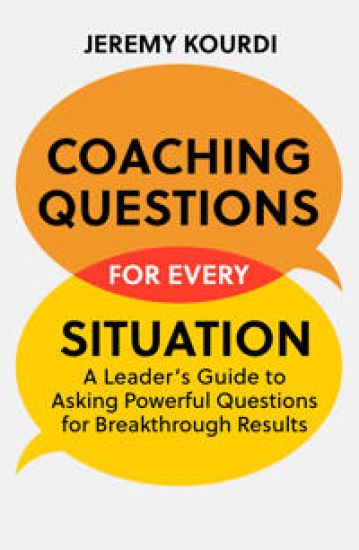
Coaching Questions for Every Situation

Coaching Questions for Every Situation

Jeremy Kourdi

Nicholas Brealey Publishing
2021
pokkari
**Powerful coaching questions to get the best out of any situation.**In coaching, questions are the route to progress. Questions enable the people being coached to arrive at their own solutions and, crucially, to 'own' them as well. The effectiveness of this tool applies to anyone in a coaching role, whether as a leader, a professional coach, or a people management executive. A good question, asked at the right moment, can be transformative. Great questions allow coaches to influence, develop and shape someone's thinking far beyond that of their own knowledge or area of expertise, propelling the learner to new levels of insight, awareness, action and effectiveness. Coaching Questions for Every Situation delivers bags of context-specific questions to leaders and coaches right when they need them most, equipping them with the essential tools to deal with a difficult situation, raise performance or offer a moment of motivation. It includes sections on both virtual coaching and coaching across cultures. The book explains the guiding principles behind great questions as well as the pitfalls to avoid, serving as a practical guide to becoming a highly effective questioner.

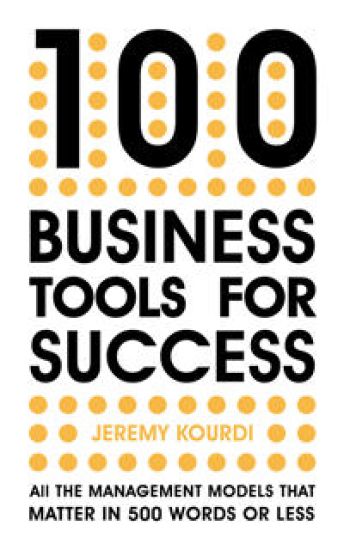
100 Business Tools For Success

100 Business Tools For Success

Jeremy Kourdi

Nicholas Brealey Publishing
2019
pokkari
The world is full of business ideas. But how do you know which the best ones are? And how do you find time to read them?100 BUSINESS TOOLS FOR SUCCESS may be a little book, but it contains the very best business tools from the very best business brains on the planet. Each one is summarized over just two pages, so that you can quickly enjoy the insights that are driving the most successful people in all walks of life. Discover and start using all of these tools and more straight away:* The GROW model for coaching* The six steps of delegation* SWOT analysis* Scenario thinking* The 7s model* The Six Rs of business* The Pareto principle* Blue Ocean Strategy* The Six Thinking Hats* The 4 Ps of marketing* The Tipping Point* Six Sigma* The seven habits of highly effective people
Mentor Guide

Mentor Guide

Gareth Lewis; Jeremy Kourdi

Routledge
2017
sidottu
The structure of the programme:There are two main guiding principles for the way in which the programme is organized:Firstly, the workbooks are grouped according to the Key Roles of Management. There are two core modules which focus on the personal skills required by all managers to help underwrite competence in all areas. Manage Activities describes the principles of managing the processes and activities of any organisation in its efforts to satisfy the needs of their customers. Manage Resources looks at the acquisition, control and monitoring of financial and other resources. Manage People looks at the principles of leadership, managing performance and developing people. Manage Information looks at the acquisition, storage and use of information for communication, problem solving and decision making. Together, these key roles provide a comprehensive description of the fundamental principles of management as it applies in all organisations. Secondly, the workbooks are grouped according to levels of management. The series is organised on two levels - representing different levels of management seniority and responsibility. Level 4 represents first line management. In accredited programmes this is equivalent to N/SVQ level 4, Certificate in Management or CMS. Level 5 is equivalent to middle/senior management and is accredited at N/SVQ level 5, Diploma in Management or DMS. Finally, the programme covers all of the knowledge and principles in respect of all units of competence in the MCI standards at levels 4 and level 5. These links are shown in the maps provided in the User Guide. The Programme is designed to satisfy the requirements of awarding bodies for qualifications in
The Economist: Business Strategy 3rd edition

The Economist: Business Strategy 3rd edition

Jeremy Kourdi

Economist Books
2015
pokkari

Halvin toimitettuna 26,90 €

The effectiveness of a good strategy well implemented determines a business' future success or failure. Yet history is full of strategic decisions, big and small, that were ill-conceived, poorly organised and consequently disastrous. This updated guide looks at the whole process of strategic decision-making - from vision, forecasting, and resource allocation, through to implementation and innovation. Strategy is about understanding where you are now, where you are heading and how you will get there. There is no room for timidity or confusion. Although the CEO and the board decide a company's overall direction, it is the managers at all levels of the organisation that will determine how the vision can be transformed into action. In short, everyone is involved in strategy. But getting it right involves difficult choices: which customers to target, what products to offer and the best way to keep costs low and service high. And constantly changing business conditions inevitably bring risks. Even after business strategy has been developed, a company must remain nimble and alert to change, and view strategy as an ongoing and evolving process. The message of this guide is simple: strategy matters, and getting it right is fundamental to business success - this book will show you how.
Coaching Essentials

Coaching Essentials

Patricia Bossons; Jeremy Kourdi

A C Black Publishers Ltd
2012
nidottu
Now a billion dollar industry, executive coaching is one of the fastest-growing sections of the coaching market and is widely used by senior managers and chief executives in large organisations. In this accessible guide, fully updated for this second edition, Patricia Bossons, Jeremy Kourdi and Denis Sartain offer clear explanations of key coaching theories before putting that theory into context with a comprehensive selection of practical tools and techniques. Benefits and uses of each technique are explained and then followed with advice on how to apply the technique and make it work for you - allowing readers to match situations or issues with specific coaching techniques for optimum results. The unique, practical approach of this book will make it essential reading for managers and leaders at all levels as well as professional coaches and students.
Improve Your Verbal Reasoning: Flash

Improve Your Verbal Reasoning: Flash

Jeremy Kourdi; Julie Kourdi

John Murray Learning
2011
pokkari
The books in this bite-sized new series contain no complicated techniques or tricky materials, making them ideal for the busy, the time-pressured or the merely curious. In just 96 pages, Improve your Verbal Reasoning helps you to practice all sorts of advanced verbal reasoning tests and build your confidence in advance of attending that job interview, assessment centre or bid for promotion. Master verbal tests Decipher linguistic problems Enhance your grammar Improve mental agility Think logically
The Truth about Talent

The Truth about Talent

Jacqueline Davies; Jeremy Kourdi

John Wiley Sons Inc
2010
sidottu
Key themes in the book are: 1. The need to revaluate how people contribute and create value in today's economy ? it is about knowledge, innovation and relationships today rather than executive potential tomorrow. 2. Challenging the conventional wisdom that talent refers to a 'special few' rather than the 'vital many'. Perhaps we don't have enough because we keep looking in the wrong places and doing the wrong things? 3. Conditions facing organizations are tough and competitive and markets are turbulent. To withstand this, we need to build talented organizations and talented individuals. 4. Interdependence between people within and across organizations is critical. The way that each individual relies on each other and how talent is realised through social and team ties makes a decisive, defining difference. 5. Individuals control when and who their potential is shared with. The idea that an organization can manage talent and potential is an outdated conceit. 6. The nature of work itself matters hugely. The extent to which it is stimulating and engaging ? and how people can make the connection with what they do and the wider difference it makes ? is vital. 7. The way talent is generated is affected by the whole 'ecology' of an organization ? its sense of purpose, rituals, the behaviour of its leaders, how it hires and how it fires people all influence the way talent is generated.
Succeed at Psychometric Testing: Practice Tests for Verbal Reasoning Advanced 2nd Edition
Are you about to attend an interview or assessment centre for a new job, or are you being considered for promotion or training? If that means the daunting prospect of sitting psychometric tests then this book contains plenty of preparation exercises to hone your skills and build your confidence before you face those tests. This book covers a vital area of psychometric testing, one which is widely used throughout industry and in the public sector. With hundreds of practice questions, Verbal Reasoning Advanced level shows that verbal reasoning is an easily improvable skill and gives you the opportunity to practise, practise and then practise some more! Improve your skills AND build your confidence before the big day. Written in a clear and accessible style the book contains: -Tips and advice on pre-test preparation -Hundreds of practice questions, cross-referenced to answers and comprehensive explanations -Guidance on what to do on the day of the test-Further reading and websites
New Economy Edge

New Economy Edge

Jeremy Kourdi

John Wiley Sons Inc
2001
nidottu
The aim of this series is a simple one - to help managers create and sustain competitive advantage in the Internet economy. The series pioneers a new generation of business books that take a step back from the evangelical hype surrounding the Web to provide a sound commercial analysis of the opportunities and pitfalls of the e-business environment. The question is no longer whether or why, but how? Books which deal with e-business topics in isolation miss the point. The hub of the electronic world - the Internet - is primarily an enabling force. It cannot work miracles. The brightest sparks are still those with the best ideas, not the most venture capital or marketing spend. What these books demonstrate clearly is that the old ways of doing business are not redundant, and that application of sound, practical steps that combine both old and new models will go a long way towards ensuring continued business success. Each title in the New Economy Excellence Series is clear-minded, accessible and aimed at bringing a critical business issue in the new economy into sharper focus. This series is the first of its kind to provide sound practical steps that busy executives can action immediately no matter where they are on the e-business ladder. As befits books concerned with a globalising world, these books take an international perspective. Read the front inside flap to see how you can profit from having a New Economy Edge.
Mentor Guide

Mentor Guide

Gareth Lewis; Jeremy Kourdi

Pergamon Flexible Learning
1998
nidottu
The structure of the programme: There are two main guiding principles for the way in which the programme is organized: Firstly, the workbooks are grouped according to the Key Roles of Management. There are two core modules which focus on the personal skills required by all managers to help underwrite competence in all areas. Manage Activities describes the principles of managing the processes and activities of any organisation in its efforts to satisfy the needs of their customers. Manage Resources looks at the acquisition, control and monitoring of financial and other resources. Manage People looks at the principles of leadership, managing performance and developing people. Manage Information looks at the acquisition, storage and use of information for communication, problem solving and decision making. Together, these key roles provide a comprehensive description of the fundamental principles of management as it applies in all organisations. Secondly, the workbooks are grouped according to levels of management. The series is organised on two levels - representing different levels of management seniority and responsibility. Level 4 represents first line management. In accredited programmes this is equivalent to N/SVQ level 4, Certificate in Management or CMS. Level 5 is equivalent to middle/senior management and is accredited at N/SVQ level 5, Diploma in Management or DMS. Finally, the programme covers all of the knowledge and principles in respect of all units of competence in the MCI standards at levels 4 and level 5. These links are shown in the maps provided in the User Guide. The Programme is designed to satisfy the requirements of awarding bodies for qualifications in management at both levels.