
Kirjailija
Jeremy Kuzmarov
Kirjat ja teokset yhdessä paikassa: 8 kirjaa, julkaisuja vuosilta 2009–2025, suosituimpiin kuuluu Warmonger. Vertaile teosten hintoja ja tarkista saatavuus suomalaisista kirjakaupoista.
8 kirjaa
Kirjojen julkaisuvuodet: 2009–2025.
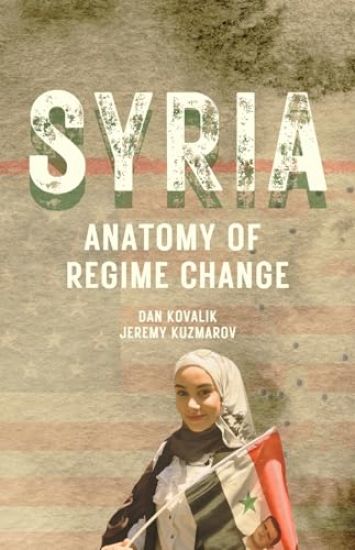
Syria: Anatomy of Regime Change
Jeremy Kuzmarov; Daniel Kovalik
Baraka Books
2025
nidottu
Halvin toimitettuna 31,80 €
In December 2024, Syria's president Bashar al-Assad departed for Russia after militia forces took Damascus. An Al-Qaeda affiliated group led by Abu Mohammed Al-Jolani took power. New York Times columnist Thomas L. Friedman hooted that it was the " biggest... most game-changing event in the Middle East in the last 45 years." Yet until then, Al-Jolani was wanted for terrorism and had a U. S. State Department $10 million bounty on his head since 2017. The media-established story of popular " rebels" triumphing over " evil" has since dominated. Washington's role in this long-standing regime change operation was erased. This is the first comprehensive account of the U. S. regime change operation in Syria dating back decades. The goal was to end Syria's nationalist economic program, its support for the Palestinians, and its steadfast opposition to U. S. and Israeli hegemonic designs in Western Asia. The methods utilized fit a long-standing U. S. regime-change playbook applied worldwide. Key aspects include a protracted demonization campaign, imposition of crippling economic sanctions, and CIA financing of rebel groups under the billion-dollar Operation Timber-Sycamore.
How Clinton's Malign Foreign Policy Launched the US Trajectory from Bush II to Biden
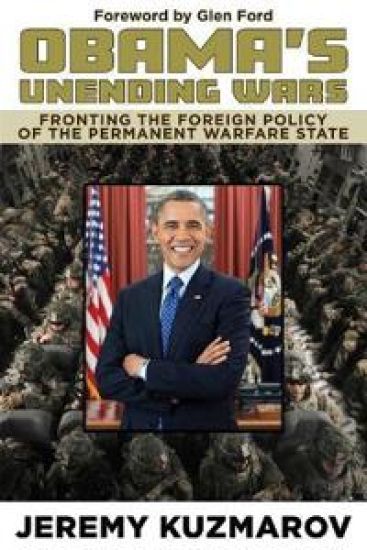
Many academics consider Obama to have been a master foreign policy strategist and shrewd practitioner of the art of realpolitik. This book demonstrates, however, that Obama in reality helped to institutionalize a permanent warfare state that resulted in gross human rights violations and contributed to America's strategic decline. His perpetuation of the War on Terror created more enemies and prompted the United States to lose influence in the Middle East. His Pivot to Asia policy intensified prospects for regional war while his unnecessary and willful military intervention destroyed Libya and drew the Russians in to protect Bashir al-Assad who won Syria's civil war. The Obama administration's heavy-handed interference in Ukraine led to effective Russian counter-moves, promoting a strategic alliance with China and regional integration that is moving the world towards multi-polarity. Obama's Unending Wars provides the first critical, comprehensive and highly documented history of the foreign policy of America's forty-fourth president - the drone king who ordered the bombing of seven Muslim countries, backtracked on a pledge to reduce America's nuclear arsenal, and helped fuel a new Cold War with Russia. During his years in office Obama provided billions of dollars in arms sales to Saudi Arabia as it assisted in the crushing of pro-democracy demonstrators in Bahrain and invaded Yemen. He sanctioned a coup in Honduras which plunged that country into chaos, perpetuated a failed drug war policy and contributed to the recolonization of Africa. While any Democratic Party president would have faced peril in confronting the Pentagon which had carried out a slow coup d'etat over the decades, Obama was rather, in many ways, the most perfect spokesman for the military-industrial complex. Who else but this articulate constitutional law professor could pull off a pro-war speech after winning the Nobel Peace Prize while ramping up drone assassinations and America's network of military bases in Africa and still retain the support of liberal-progressives? As many in the time of Trump now glance nostalgically back to the Obama presidency, this book will help them to see the continuity -- and continuous failure -- of American foreign policy irrespective of the party or figurehead representing it.
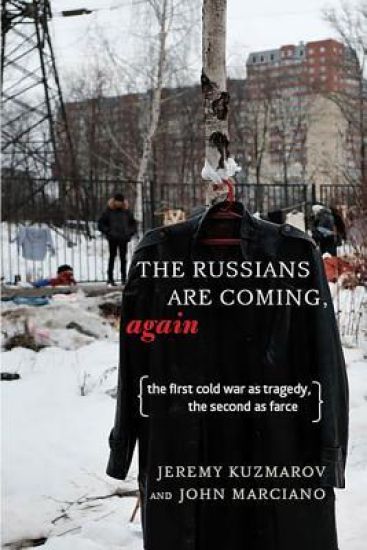
Russians Are Coming, Again
Jeremy Kuzmarov; John Marciano
Monthly Review Press,U.S.
2018
pokkari
Halvin toimitettuna 30,30 €
“In The Russians are Coming Again, Jeremy Kuzmarov and John Marciano present an excellent and well researched effort to remind liberal America of how awful the Cold War was and how it was based on a cynical exaggeration of a largely fictional `Russian threat.’ Their warning against creating a new Cold War with post-communist Russia is well worth considering.”—David N. Gibbs, University of Arizona, author, First Do No Harm: Humanitarian Intervention and the Destruction of Yugoslavia Karl Marx famously wrote in The Eighteenth Brumaire of Louis Napoleon that history repeats itself, “first as tragedy, then as farce.” The Cold War waged between the United States and Soviet Union from 1945 until the latter's dissolution in 1991 was a great tragedy, resulting in millions of civilian deaths in proxy wars, and a destructive arms race that diverted money from social spending and nearly led to nuclear annihilation. The New Cold War between the United States and Russia is playing out as farce – a dangerous one at that. The Russians Are Coming, Again is a red flag to restore our historical consciousness about U. S.-Russian relations, and how denying this consciousness is leading to a repetition of past follies. Kuzmarov and Marciano's book is timely and trenchant. The authors argue that the Democrats’ strategy, backed by the corporate media, of demonizing Russia and Putin in order to challenge Trump is not only dangerous, but also, based on the evidence so far, unjustified, misguided, and a major distraction. Grounding their argument in all-but-forgotten U. S.-Russian history, such as the 1918-20 Allied invasion of Soviet Russia, the book delivers a panoramic narrative of the First Cold War, showing it as an all-too avoidable catastrophe run by the imperatives of class rule and political witch-hunts. The distortion of public memory surrounding the First Cold War has set the groundwork for the New Cold War, which the book explains is a key feature, skewing the nation’s politics yet again. This is an important, necessary book, one that, by including accounts of the wisdom and courage of the First Cold War's victims and dissidents, will inspire a fresh generation of radicals in today's new, dangerously farcical times.
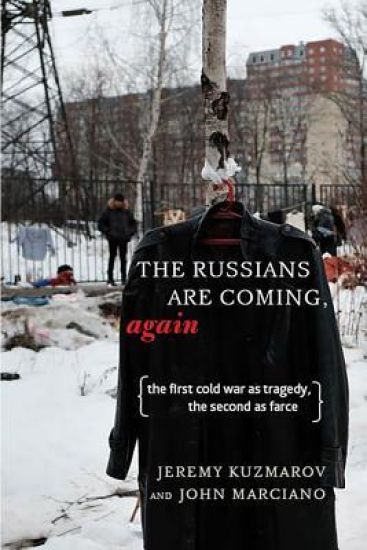
“In The Russians are Coming Again, Jeremy Kuzmarov and John Marciano present an excellent and well researched effort to remind liberal America of how awful the Cold War was and how it was based on a cynical exaggeration of a largely fictional `Russian threat.’ Their warning against creating a new Cold War with post-communist Russia is well worth considering.”—David N. Gibbs, University of Arizona, author, First Do No Harm: Humanitarian Intervention and the Destruction of Yugoslavia Karl Marx famously wrote in The Eighteenth Brumaire of Louis Napoleon that history repeats itself, “first as tragedy, then as farce.” The Cold War waged between the United States and Soviet Union from 1945 until the latter's dissolution in 1991 was a great tragedy, resulting in millions of civilian deaths in proxy wars, and a destructive arms race that diverted money from social spending and nearly led to nuclear annihilation. The New Cold War between the United States and Russia is playing out as farce – a dangerous one at that. The Russians Are Coming, Again is a red flag to restore our historical consciousness about U. S.-Russian relations, and how denying this consciousness is leading to a repetition of past follies. Kuzmarov and Marciano's book is timely and trenchant. The authors argue that the Democrats’ strategy, backed by the corporate media, of demonizing Russia and Putin in order to challenge Trump is not only dangerous, but also, based on the evidence so far, unjustified, misguided, and a major distraction. Grounding their argument in all-but-forgotten U. S.-Russian history, such as the 1918-20 Allied invasion of Soviet Russia, the book delivers a panoramic narrative of the First Cold War, showing it as an all-too avoidable catastrophe run by the imperatives of class rule and political witch-hunts. The distortion of public memory surrounding the First Cold War has set the groundwork for the New Cold War, which the book explains is a key feature, skewing the nation’s politics yet again. This is an important, necessary book, one that, by including accounts of the wisdom and courage of the First Cold War's victims and dissidents, will inspire a fresh generation of radicals in today's new, dangerously farcical times.
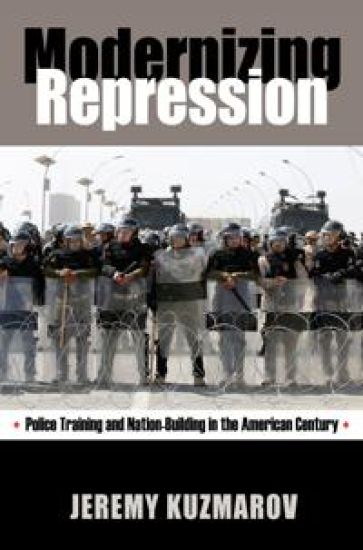
As American troops became bogged down first in Iraq and then Afghanistan, a key component of U. S. strategy was to build up local police and security forces in an attempt to establish law and order. This approach, Jeremy Kuzmarov shows, is consistent with practices honed over more than a century in developing nations within the expanding orbit of the American empire. From the conquest of the Philippines and Haiti at the turn of the twentieth century through Cold War interventions and the War on Terror, police training has been valued as a cost-effective means of suppressing radical and nationalist movements, precluding the need for direct U. S. military intervention and thereby avoiding the public opposition it often arouses. Unlike the spectacular but ephemeral pyrotechnics of the battlefield, police training programs have had lasting consequences for countries under the American imperial umbrella, fostering new elite's, creating powerful tools of social control, and stifling political reform. These programs have also backfired, breeding widespread resistance, violence, and instability—tell-tale signs of “blowback” that has done more to undermine than advance U. S. strategic interests abroad.
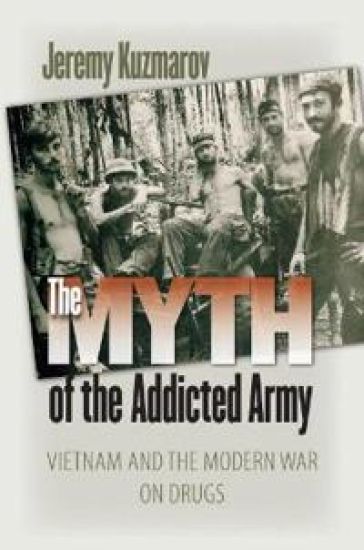
This work offers a probing analysis of the links between the Vietnam War and the evolution of American drug policy. The image of the drug-addicted American soldier - disheveled, glassy-eyed, his uniform adorned with slogans of antiwar dissent - has long been associated with the Vietnam War. More specifically, it has persisted as an explanation for the U. S. defeat, the symbol of a demoralized army incapable of carrying out its military mission. Yet as Jeremy Kuzmarov documents in this deeply researched book, popular assumptions about drug use in Vietnam are based more on myth than on fact. Not only was alcohol the intoxicant of choice for most GIs, but the prevalence of other drugs varied enormously. Although marijuana use among troops increased over the course of the war, for the most part it remained confined to rear areas, and the use of highly addictive drugs like heroin was never as widespread as many imagined. Like other cultural myths that emerged from the war, the concept of an addicted army was first advanced by war hawks seeking a scapegoat for the failure of U. S. policies in Vietnam, in this case one that could be linked to 'permissive' liberal social policies and the excesses of the counterculture. But conservatives were not alone. Ironically, Kuzmarov shows, elements of the antiwar movement also promoted the myth, largely because of a presumed alliance between Asian drug traffickers and the Central Intelligence Agency. While this claim was not without foundation, as new archival evidence confirms, the left exaggerated the scope of addiction for its own political purposes. Exploiting bipartisan concern over the perceived 'drug crisis', the Nixon administration in the early 1970s launched a bold new program of federal antidrug measures, especially in the international realm. Initially, the 'War on Drugs' helped divert attention from the failed quest for 'peace with honor' in Southeast Asia. But once institutionalized, it continued to influence political discourse as well as U. S. drug policy in the decades that followed.