Kirjailija
Jeremy Smith
Kirjat ja teokset yhdessä paikassa: 58 kirjaa, julkaisuja vuosilta 1996–2025, suosituimpiin kuuluu Psionics Unleashed: Core Psionics System. Vertaile teosten hintoja ja tarkista saatavuus suomalaisista kirjakaupoista.
58 kirjaa
Kirjojen julkaisuvuodet: 1996–2025.
Plagued by dreams night after night, Susan eventually visits a hypnotherapist in the hope that he might be able to unravel what is causing them. The result is far from what either of them expect and leads them into danger as they race across the world in an attempt to stave off the destruction of the Earth from climate change which is about to go past the point of no return.
Third Dawn Campaign Setting
Andreas Ronnqvist; Jeremy Smith
Createspace Independent Publishing Platform
2010
nidottu
This book addresses the question: why do sound changes happen, when and where they do? Jeremy Smith discusses the origins of a series of sound changes in English. He relates his arguments to larger questions about the nature of explanation in history and historical linguistics, and examines the interplay between sound change and social change. Drawing on the latest research in linguistics and history he shows how insights in one field illuminate the other. After the opening chapter describing the book's approach and a general theoretical framework for the study of sound-change, the author discusses problems of evidence and considers the nature of phonological processes. He then presents detailed investigations of major sound-changes from three transitional periods: first, when English emerged as a language distinct from the other West Germanic varieties; secondly, during the transition from Old to Middle English; and thirdly during the time when Middle English evolved into Early Modern English. The book is written with minimal use of jargon and offers clear definitions of complex notions. It will appeal to all serious students of English historical linguistics, from advanced undergraduate to researcher.
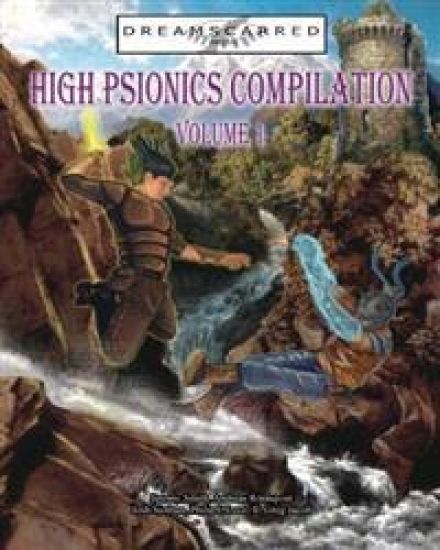
High Psionics Compilation
Jeremy Smith; Josh Sjothun; Greg Jacob
Createspace Independent Publishing Platform
2009
nidottu
This book addresses the question: why do sound changes happen when and where they do? Jeremy Smith discusses the origins of a series of sound changes in English. He relates his arguments to larger questions about the nature of explanation in history and historical linguistics, and examines the interplay between sound change and social change. Drawing on the latest research in the linguistics and history he shows how insights in one field illuminate the other. After the opening chapter describing the book's approach and a general theoretical framework for the study of sound-change, the author discusses problems of evidence and considers the nature of phonological processes. He then presents detailed investigations of major sound-changes from three transitional periods: first, when English emerged as a language distinct from the other West Germanic varieties; secondly, during the transition from Old to Middle English; and thirdly during the time when Middle English evolved into Early Modern English. The book is written with minimal use of jargon and offers clear definitions of complex notions. It will appeal to all serious students of English historical linguistics, from advanced undergraduate to researcher.
This book is the first place to turn when you encounter a Britishism or Americanism. The dictionary illuminates differences in vocabulary, usage, pronunciation, spelling, and the history of English, how and why differences arose, and what those differences are. More then 2,500 entries are listed on each side with a set of tables that includes national holidays, presidents, kings and queens, and money. The dictionary is an easy-to-read, light-hearted, and sometimes irreverent catalogueue of the difference between American and British English. With a tone that is deliberately informal, much of the intrinsic humour shines through, but never at the cost of accuracy or detail.
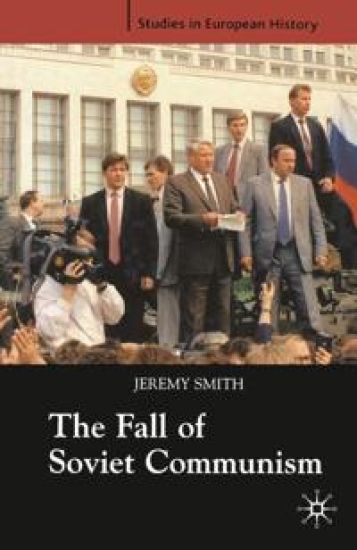
The fall of communism and the break-up of the Soviet Union into 15 independent states in December 1991 was one of the most significant events of the twentieth century. In the last years of Soviet rule, images of mass protests on the streets of Moscow, Tbilisi and Vilnius, bloodshed in Baku, striking miners, Mikhail Gorbachev wooing the West, and Boris Yeltsin defiantly mounting a tank in front of the White House building in Moscow, shattered all of the old certainties about the seemingly unbreakable communist system. Gorbachev and Yeltsin were the dominant figures in this process, but non-Russian national movements, workers, intellectuals, and international developments all had roles to play. Jeremy Smith presents the dramatic events of 1985-91 in a clear and succinct form, setting out a variety of interpretations for the demise of communism in the Soviet Union, and suggesting new approaches to answering the unresolved question of why it happened. Smith discusses the long-term and short-term factors behind the extraordinary collapse, assessing the impact of economic crisis, nationalism, personalities and democratization in the process.

An Introduction to Middle English
Simon Horobin; Jeremy Smith
Oxford University Press Inc
2003
nidottu
Halvin toimitettuna 31,40 €
This authoritative survey offers a concise description of Middle English, the language of Chaucer, during the period from 1100 to 1500. Middle English is discussed in relation to both earlier and later stages in the history of English and in regard to other languages with which it came into contact. The book covers the principal features of Middle English spelling, pronunciation, grammar, and vocabulary and also introduces Middle English textual studies.
An Introduction to Middle English
Simon Horobin; Jeremy Smith
Edinburgh University Press
2002
nidottu
Halvin toimitettuna 29,80 €
An Introduction to Middle English is designed to provide undergraduate students of English historical linguistics with a concise description of the language during the period 1100-1500. Middle English, the language of Chaucer, is discussed in relation to both earlier and later stages in the history of English, and in relation to other languages with which it came into contact. Features: * the historical and geographical contexts of Middle English * the evidence for Middle English * the principal features of Middle English spelling, pronunciation, grammar and vocabulary * an introduction to Middle English textual studies * selected Middle English texts, both literary and non-literary * notes, glossaries and annotated bibliographies * questions for review Most other introductory books on Middle English focus on literary rather than linguistic matters; this book is designed to redress the balance, by providing students of English language with an up-to-date, authoritative survey which takes account of recent trends in historical linguistics.
An Introduction to Middle English
Simon Horobin; Jeremy Smith
Edinburgh University Press
2002
sidottu
An Introduction to Middle English is designed to provide undergraduate students of English historical linguistics with a concise description of the language during the period 1100-1500. Middle English, the language of Chaucer, is discussed in relation to both earlier and later stages in the history of English, and in relation to other languages with which it came into contact. Features: * the historical and geographical contexts of Middle English * the evidence for Middle English * the principal features of Middle English spelling, pronunciation, grammar and vocabulary * an introduction to Middle English textual studies * selected Middle English texts, both literary and non-literary * notes, glossaries and annotated bibliographies * questions for review Most other introductory books on Middle English focus on literary rather than linguistic matters; this book is designed to redress the balance, by providing students of English language with an up-to-date, authoritative survey which takes account of recent trends in historical linguistics.
Considering what type of conflict it is in Ireland and how it fits into wider British and European patterns, this text places events in context by looking at historical roots across the centuries. It attempts to untangle the mixed ideas that sustain identities and traditions.
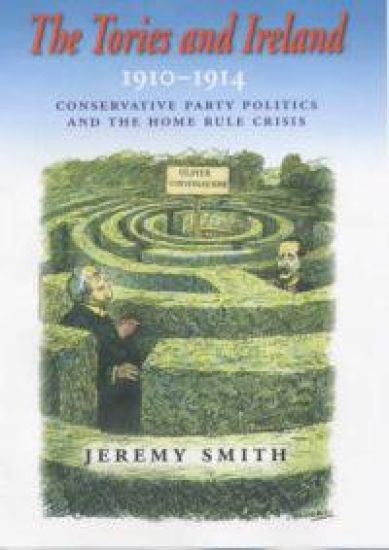
A comprehensive study of the motivations behind the Conservative party's actions during the struggle over Home Rule between 1912 and 1914. An alternative view of the leaderships motives is presented, arguing that their protestations over self-governance for Ireland were political.
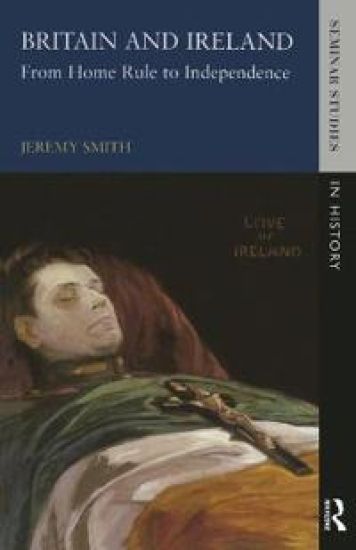
Jeremy Smith explores relations between Britain and Ireland during the late nineteenth and early twentieth century with a story that still raises deep passions and bitter disagreements both among historians and within wider public opinion. This examination attempts to chart a more dispassionate course between the various contending positions and has enormous relevance to the unfolding events in both Northern Ireland and Britain as the united Kingdom moves towards a federal constitutional structure. Books in this Seminar Studies in History series bridge the gap between textbook and specialist survey and consists of a brief "Introduction" and/or "Background" to the subject, valuable in bringing the reader up-to-speed on the area being examined, followed by a substantial and authoritative section of "Analysis" focusing on the main themes and issues. There is a succinct "Assessment" of the subject, a generous selection of "Documents" and a detailed bibliography. Incorporates a large amount of research on Irish history during the last two decades and gives particular focus to the dramatic events between the Easter rising of 1916 and the intense negotiations surrounding the Treaty in the autumn of 1921. For those interested in the history between Ireland and Britain.
Spanning the late 19th century and early 20th century, this volume seeks to introduce and understand the evolution of the modern Conservative party. The central theme of the text is the adaptation of the Party within a political system based upon a mass, democratic, secular and urban society and a mature industrial economy undergoing the early strains of relative decline. The study pursues several lines of interpretation including the analysis of the Party through the war, rather than stopping in 1914 or starting in 1918 or 1922 the events of 1914-1918 are explored within a wider argument.
Through his analysis of selected major developments in the history of English, Jeremy Smith argues that the history of the language can only be understood from a dynamic perspective. He proposes that internal linguistic mechanisms for language change cannot be meaningfully explained in isolation or without reference to external linguistic factors. Smith provides the reader with an accessible synthesis of recent developments in English historical linguistics. His book: Looks at the theory and methodology of linguistic historiography . Considers the major changes in writing systems, pronunciation and grammar. Provides examples of these changes, such as the standardisation of spellings and accent and the origins of the Great Vowel Shift Focuses on the origins of two non-standard varieties; eighteenth century Scots and twentieth century British Black English. This book makes fascinating reading for students of English Historical linguistics, and is an original, important and above all, lively contribution to the field.