Kirjojen hintavertailu – 12 859 828 kirjaa ja 27 kauppaa

Kirjailija

Jeremy Treglown

Kirjat ja teokset yhdessä paikassa: 4 kirjaa, julkaisuja vuosilta 2006–2020, suosituimpiin kuuluu Franco's Crypt. Vertaile teosten hintoja ja tarkista saatavuus suomalaisista kirjakaupoista.

4 kirjaa

Kirjojen julkaisuvuodet: 2006–2020.

Mr. Straight Arrow

Mr. Straight Arrow

Jeremy Treglown

St. Martins Press-3pl
2020
nidottu
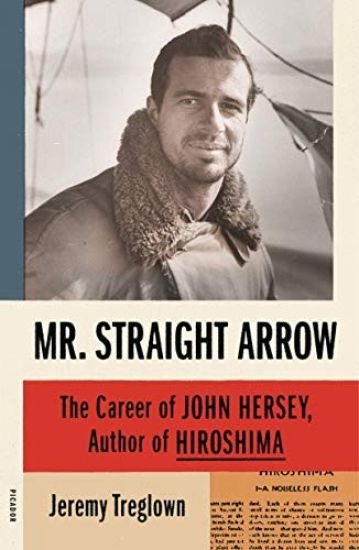
A monumental reevaluation of the career of John Hersey, the author of Hiroshima Few are the books with as immediate an impact and as enduring a legacy as John Hersey's Hiroshima. First published as an entire issue of The New Yorker in 1946, it was serialized in newspapers the world over and has never gone out of print. By conveying plainly the experiences of six survivors of the 1945 atomic bombing and its aftermath, Hersey brought to light the magnitude of nuclear war. And in his adoption of novelistic techniques, he prefigured the conventions of New Journalism. But how did Hersey--who was not Japanese, not an eyewitness, not a scientist--come to be the first person to communicate the experience to a global audience? In Mr. Straight Arrow, Jeremy Treglown answers that question and shows that Hiroshima was not an aberration but was emblematic of the author's lifework. By the time of Hiroshima's publication, Hersey was already a famed war writer and had won a Pulitzer Prize for Fiction. He continued to publish journalism of immediate and pressing moral concern; his reporting from the Freedom Summer and his expos s of the Detroit riots resonate all too loudly today. But his obsessive doubts over the value of his work never ceased. Mr. Straight Arrow is an intimate, exacting study of the achievements and contradictions of Hersey's career, which reveals the powers of a writer tirelessly committed to truth and social change.
Franco's Crypt

Franco's Crypt

Jeremy Treglown

Vintage
2015
pokkari
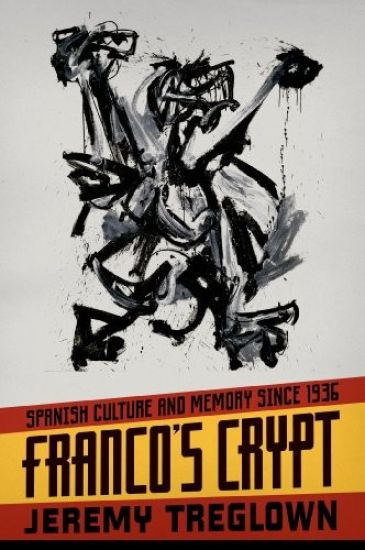
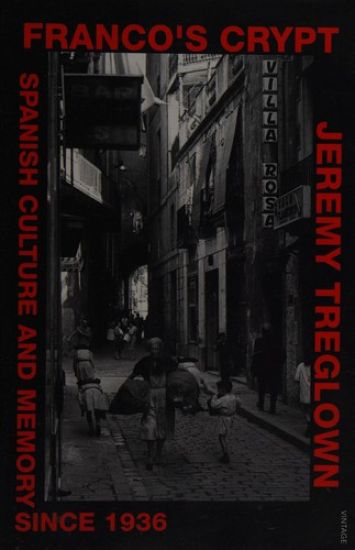
History is written by the victors. It’s a cliché, but a reliable one – except in the case of the Spanish Civil War. Many believe – wrongly, as it turns out – that under Franco’s dictatorship, nothing truthful or imaginatively worthwhile could be said or written or created. And this myth reinforces another: that there is a national pact to forget what really happened. In the four decades since Franco’s death foreign narratives – For Whom the Bell Tolls, Casablanca, Homage to Catalonia – still have greater credibility than Spanish ones. Yet La Guerra de España was, as its name asserts, Spain’s own war, and in recent years the country has begun to reclaim this crucial aspect of its history. In a compelling investigation of collective memory Jeremy Treglown talks to the descendants of men and women killed during the civil war and ensuing dictatorship and stands on a hillside with them as remains are excavated; he attends a Sunday service in the basilica dedicated to Franco’s memory, examines monuments, paintings, novels, films, computer games and finds that despite state censorship, creativity under Franco was burgeoning and events of the time were in fact vividly recorded. In this groundbreaking and captivating new book Jeremy Treglown examines the very tenet of our cultural identity: how we remember. Franco’s Crypt is a much-needed re-examination of a history we only thought we knew.
FRANCO'S CRYPT

FRANCO'S CRYPT

JEREMY TREGLOWN

Farrar, Straus and Giroux
2014
nidottu
An open-minded and clear-eyed reexamination of the cultural artifacts of Franco's Spain True, false, or both? Spain's 1939-75 dictator, Francisco Franco, was a pioneer of water conservation and sustainable energy. Pedro Almod var is only the most recent in a line of great antiestablishment film directors who have worked continuously in Spain since the 1930s. As early as 1943, former Republicans and Nationalists were collaborating in Spain to promote the visual arts, irrespective of the artists' political views. Censorship can benefit literature. Memory is not the same thing as history. Inside Spain as well as outside, many believe--wrongly--that under Franco's fascist dictatorship, nothing truthful or imaginatively worthwhile could be said or written or shown. In his groundbreaking new book, Franco's Crypt: Spanish Culture and Memory Since 1936, Jeremy Treglown argues that oversimplifications like these of a complicated, ambiguous actuality have contributed to a separate falsehood: that there was and continues to be a national pact to forget the evils for which Franco's side (and, according to this version, his side alone) was responsible. The myth that truthfulness was impossible inside Franco's Spain may explain why foreign narratives (For Whom the Bell Tolls, Homage to Catalonia) have seemed more credible than Spanish ones. Yet La Guerra de Espa a was, as its Spanish name asserts, Spain's own war, and in recent years the country has begun to make a more public attempt to "reclaim" its modern history of fascism. How it is doing so, and the role played in the process by notions of historical memory, are among the subjects of this wide-ranging and challenging book. Franco's Crypt reveals that despite state censorship, events of the time were vividly recorded. Treglown looks at what's actually there--monuments, paintings, public works, novels, movies, video games--and considers, in a captivating narrative, the totality of what it shows. The result is a much-needed reexamination of a history we only thought we knew.
Roald Dahl Collected Stories

Roald Dahl Collected Stories

Jeremy Treglown; Roald Dahl

Everyman's Library
2006
sidottu
Many of these stores are now so famous from film and television adaptations that they need no introduction. Roald Dahl is well known as a master of the macabre and the unexpected in the tradition of Saki, and this volume does not disappoint. He began his literary career by writing about his own experiences in the RAF during World War II but soon developed this talent in a series of short-story collections. He is perhaps even more celebrated as an author of children's books, but the best of his short stories represent a claim for him to be numbered among the most remarkable story writers of the 20th century. The present volume includes for the first time all the stories in chronological order as established by Dahl's biographer, Jeremy Treglown, in consultation with the Dahl estate.