Kirjojen hintavertailu – 12 903 742 kirjaa ja 27 kauppaa
Kirjailija
Jerome Kagan
Kirjat ja teokset yhdessä paikassa: 26 kirjaa, julkaisuja vuosilta 1976–2021, suosituimpiin kuuluu The Nature Of The Child. Vertaile teosten hintoja ja tarkista saatavuus suomalaisista kirjakaupoista.
The culmination of almost seven decades of research, A Trio of Pursuits: Puzzles in Human Development is the magnum opus of the career of Dr. Jerome Kagan, Emeritus Professor of Psychology, Harvard University, USA. This book summarizes three of the author's major research themes during a career that spanned from 1954 to present: preservation of individual traits, maturation of cognition and emotions, and the influence of two temperamental biases on personality. An introspective chapter on the deeper lessons learned by the author in research is also included, covering narratives such as the need to specify the context in which data are gathered, the need to supplement all self-reported data, studying puzzling observations rather than confirmation of a priori hypotheses, and avoiding the error of attributing psychological predicates to brain evidence. This book is a must-have for students and academics of Psychology and Cognitive Science, and may also be of interest to social scientists.
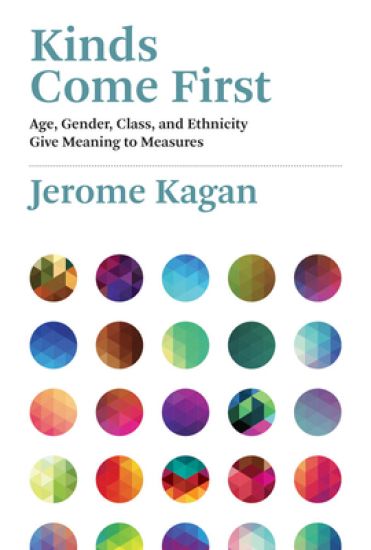
An argument that the meaning of a psychological or biological measure depends on the age, gender class, and ethnicity of the human subject. In Kinds Come First, the distinguished psychologist Jerome Kagan argues that-contrary to the common assumption-age, gender, social class, and ethnicity affect the outcomes of psychological measures, and he questions the popular practice that uses statistical procedures to remove the effects of these categories to confirm a favored predictor-outcome relation. The idea that psychological measures have meanings that transcend the kinds of subjects, Kagan writes, reflects a premature hope of discovering broadly generalizable conclusions. In Kinds Come First, Kagan hopes to persuade investigators otherwise. Kagan examines the unique properties of the four categories, making the case that life stage, gender, class, and ethnicity affect psychological measures in complex, nontrivial ways. He discusses the relevance of a person's developmental stage to many outcomes, focusing on the interval from five to twelve months, when working memory and the ability to relate the past to the present expands. He cites evidence suggesting that a person's gender, class of rearing, and ethnicity, within a particular society, are better predictors of health, arrest record, cognitive skills, and current life satisfaction than either their genomes or answers to a personality questionnaire. Finally, Kagan argues, the biological properties that are more common in one gender, class, or ethnic group, are not a defensible basis for restricting access to an educational program, vocation, or position of authority. A society can ignore such differences in order to honor an ethical imperative for equality without incurring serious costs.
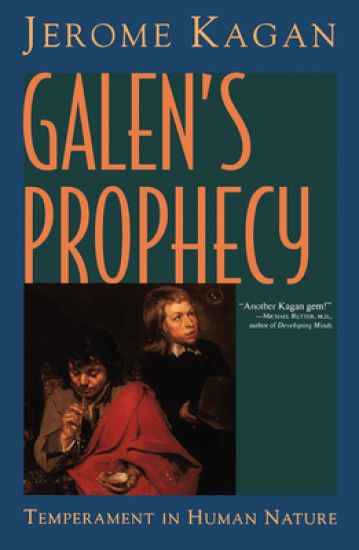
Nearly two thousand years ago a physician named Galen of Pergamon suggested that much of the variation in human behavior could be explained by an individual's temperament. Since that time, inborn dispositions have fallen in and out of favor. Based on fifteen years of research, Galen's Prophecy now provides fresh insights into these complex questions, offering startling new evidence to support Galen's ancient classification of melancholic and sanguine adults. Integrating evidence and ideas from biology, philosophy, and psychology, Jerome Kagan examines the implications of the idea of temperament for aggressive behavior, conscience, psychopathology, and the degree to which each of us can be expected to control our deepest emotions.
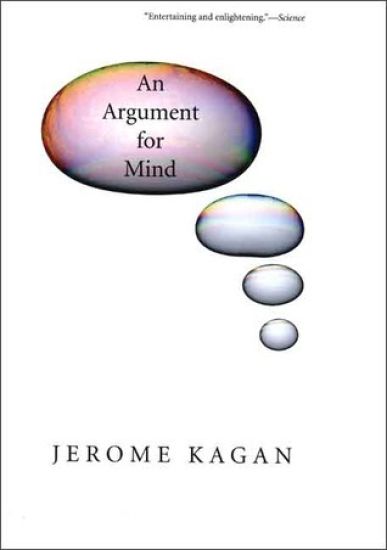
A revered psychologist invites us to re-examine our thinking about controversial contemporary issues, from the genetic basis for behaviors to the functions of education In this thought-provoking book, psychologist Jerome Kagan urges readers to sally forth from their usual comfort zones. He ponders a series of important nodes of debate while challenging us to examine what we know and why we know it. Most critically he presents an elegant argument for functions of mind that cannot be replaced with sentences about brains while acknowledging that mind emerges from brain activity. Kagan relies on the evidence to argue that thoughts and emotions are distinct from their biological and genetic bases. In separate chapters he deals with the meaning of words, kinds of knowing, the powerful influence of social class, the functions of education, emotion, morality, and other issues. And without fail he sheds light on these ideas while remaining honest to their complexity. Thoughtful and eloquent, Kagan’s On Being Human places him firmly in the tradition of Renaissance essayist Michel de Montaigne, whose appealing blend of intellectual insight, personal storytelling, and careful judgment has attracted readers for centuries.
A leading psychologist takes a hard look at his profession today and argues for important changes in practices and attitudes This book is the product of years of thought and a profound concern for the state of contemporary psychology. Jerome Kagan, a theorist and leading researcher, examines popular practices and assumptions held by many psychologists. He uncovers a variety of problems that, troublingly, are largely ignored by investigators and clinicians. Yet solutions are available, Kagan maintains, and his reasoned suggestions point the way to a better understanding of the mind and mental illness. Kagan identifies four problems in contemporary psychology: the indifference to the setting in which observations are gathered, including the age, class, and cultural background of participants and the procedure that provides the evidence (he questions, for example, the assumption that similar verbal reports of well-being reflect similar psychological states); the habit of basing inferences on single measures rather than patterns of measures (even though every action, reply, or biological response can result from more than one set of conditions); the defining of mental illnesses by symptoms independent of their origin; and the treatment of mental disorders with drugs and forms of psychotherapy that are nonspecific to the diagnosed illness. The author's candid discussion will inspire the debate that is needed in a discipline seeking to fulfill its promises.
""Child Psychology"" by Harold William Stevenson is a comprehensive guide to understanding the development and behavior of children. The book covers a wide range of topics, including cognitive development, socialization, language acquisition, emotional development, and personality development. The author draws on research from various fields, including psychology, sociology, anthropology, and biology, to provide a thorough and up-to-date overview of the subject. The book is divided into four sections, each of which focuses on a different aspect of child psychology. The first section covers the biological and environmental factors that influence child development, including genetics, nutrition, and parenting styles. The second section looks at cognitive development, including perception, memory, and problem-solving skills. The third section explores socialization and language acquisition, including the role of family, peers, and culture in shaping a child's social and linguistic abilities. The final section examines emotional and personality development, including the formation of self-concept and identity. Throughout the book, Stevenson emphasizes the importance of understanding the unique needs and experiences of individual children. He also provides practical advice for parents, educators, and other professionals who work with children. The book is written in a clear, accessible style and is suitable for anyone interested in learning more about child psychology. Additional Editors Are Nelson B. Henry And Herman G. Richey. This scarce antiquarian book is a facsimile reprint of the old original and may contain some imperfections such as library marks and notations. Because we believe this work is culturally important, we have made it available as part of our commitment for protecting, preserving, and promoting the world's literature in affordable, high quality, modern editions, that are true to their original work.
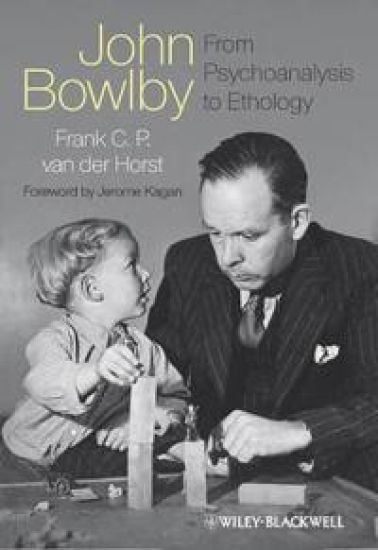
This accessible book draws on unique evidence from oral histories and little-known archive material to shed new light on the working relationships which led to John Bowlby’s shift from psychoanalysis to ethology as a frame of reference – and ultimately to the development of attachment theory. A unique exploration of the origins of Bowlby’s ideas and the critical transformation in his thinking – offers an alternative to standard accounts of the origin of attachment theoryExplores the significance of Bowlby’s influential working relationships with Robert Hinde, Harry Harlow, James Robertson and Mary AinsworthProvides students, academics, and practitioners with clear insights into the development of attachment theoryAccessible to general readers interested in psychology and psychoanalysis
In 1959 C. P. Snow delivered his now-famous Rede Lecture, 'The Two Cultures,' a reflection on the academy based on the premise that intellectual life was divided into two cultures: the arts and humanities on one side and science on the other. Since then, a third culture, generally termed 'social science' and comprised of fields such as sociology, political science, economics, and psychology, has emerged. Jerome Kagan's book describes the assumptions, vocabulary, and contributions of each of these cultures and argues that the meanings of many of the concepts used by each culture are unique to it and do not apply to the others because the source of evidence for the term is special. The text summarizes the contributions of the social sciences and humanities to our understanding of human nature and questions the popular belief that biological processes are the main determinant of variation in human behavior.
We have seen these children—the shy and the sociable, the cautious and the daring—and wondered what makes one avoid new experience and another avidly pursue it. At the crux of the issue surrounding the contribution of nature to development is the study that Jerome Kagan and his colleagues have been conducting for more than two decades. In The Long Shadow of Temperament, Kagan and Nancy Snidman summarize the results of this unique inquiry into human temperaments, one of the best-known longitudinal studies in developmental psychology. These results reveal how deeply certain fundamental temperamental biases can be preserved over development. Identifying two extreme temperamental types—inhibited and uninhibited in childhood, and high-reactive and low-reactive in very young babies—Kagan and his colleagues returned to these children as adolescents. Surprisingly, one of the temperaments revealed in infancy predicted a cautious, fearful personality in early childhood and a dour mood in adolescence. The other bias predicted a bold childhood personality and an exuberant, sanguine mood in adolescence. These personalities were matched by different biological properties. In a masterly summary of their wide-ranging exploration, Kagan and Snidman conclude that these two temperaments are the result of inherited biologies probably rooted in the differential excitability of particular brain structures. Though the authors appreciate that temperamental tendencies can be modified by experience, this compelling work—an empirical and conceptual tour-de-force—shows how long the shadow of temperament is cast over psychological development.
What is an emotion? Can emotion be measured? How can we know if a person is experiencing an emotion? In this sophisticated overview of human emotions, a widely respected psychologist and author addresses the ambiguities and embraces the controversies that surround this intriguing subject. An insightful and lucid thinker, Jerome Kagan examines what exactly we do know about emotions, which popular assumptions about emotions are incorrect, and how scientific study must proceed if we are to uncover the answers to persistent and evasive questions about emotions. Integrating the findings of anthropological, psychological, and biological studies in his wide-ranging discussion, Kagan explores the evidence for great variation in the frequency and intensity of emotion among different cultures. He also discusses variations among individuals within the same culture and the influences of gender, class, ethnicity, and temperament on a person’s emotional patina. In his closing chapter, the author proposes that three sources of evidence—verbal descriptions of feelings, behaviors, and measures of brain states—provide legitimate but different definitions of emotion. Translating data from one of these sources to another may not be possible, Kagan warns, and those who study emotions must accept—at least for now—that their understanding is limited to and by the domain of their information.
Temperament has been a central element of the on-going effort to describe the distinctiveness of persons at every stage of development. Many researchers have examined the relations of temperament to emotions, behavior, and adjustment generally. Fewer studies have focused primarily on the nature and structure of temperament, however, and even fewer have examined the developmental course of temperament. This Monograph reports a significant exception. The authors undertook theoretically relevant behavioral, biological, and self-report assessments of a sample of 14-to-17 year olds who had been classified into one of four temperamental groups at 4 months of age. Infant temperamental categories were based on observed behavior to a battery of unfamiliar stimuli. The infants classified as high reactive (20 percent of the sample) displayed vigorous motor activity and frequent crying. Those classified as low reactive (40 percent) displayed minimal motor activity and crying. About 25 percent of the infants, called distressed, showed minimal motor activity but cried frequently, and 10 percent, characterized by vigorous motoricity but little crying, were called aroused. Previous evaluations of these children at 14 and 21 months, and 4, 7, and 11 years had revealed that those children initially classified as high reactive were most likely to be avoidant of unfamiliar events at the early ages and emotionally subdued, cautious, and wary of new situations at the later ages. By contrast, initially low-reactive children had been the least avoidant of unfamiliarity in the second year and most emotionally spontaneous and sociable at the later ages. At age 11 years, assessments also had revealed that initially high-reactive children were more likely than the low-reactive participants to display right hemisphere activation in the EEG, a larger evoked potential from the inferior colliculus, larger event related waveforms to discrepant scenes, and greater sympathetic tone in the cardiovascular system. In the follow-up of these individuals reported here, adolescents (14-17 years of age) who had been classified as high reactive in infancy were more likely than initially low reactive participants to display sympathetic tone in the cardiovascular system, to combine a fast latency with a large magnitude of the evoked potential from the inferior colliculus, and to show shallower habituation of the event-related potential to discrepant visual events. Moreover, compared to their low-reactive agemates, initially high reactive adolescents more often reported being subdued in unfamiliar situations, experiencing a dour mood and anxiety over the future, and being religious. An important finding is that behavior and biology were more clearly dissociated in adolescence than at earlier ages. However, infant temperamental category at 4 months remained a powerful predictor of behavior in adolescence, suggesting that the features that characterize the two temperamental biases by initially high- and low-reactive are not completely malleable to the profound effects of brain growth and experience.
In this elegantly written book, Jerome Kagan melds the history of the field of psychology during the past 50 years with the story of his own research efforts of the same period and an analysis of what he terms “the currently rocky romance between psychology and biology.” As Kagan unwinds his own history, he reveals the seminal events that have shaped his career and discusses how his assumptions have changed. With full appreciation for the contributions to psychology of history, philosophy, literature, and neuroscience, he approaches a wide range of fascinating topics, including:· the abandonment of orthodox forms of behaviorism and psychoanalysis · the forces that inspired later-twentieth-century curiosity about young children· why B. F. Skinner chose to study psychology· why the study of science less often ignites imaginations today· our society’s obsession with erotic love· the resurgence of religious fanaticism and the religious RightEmbedded in Kagan’s discussions is a rejection of the current notion that a mature neuroscience will eventually replace psychology. He argues that a complete understanding of brain is not synonymous with a full explanation of mind, and he concludes with a brief prediction of the next five decades in the field of psychology.
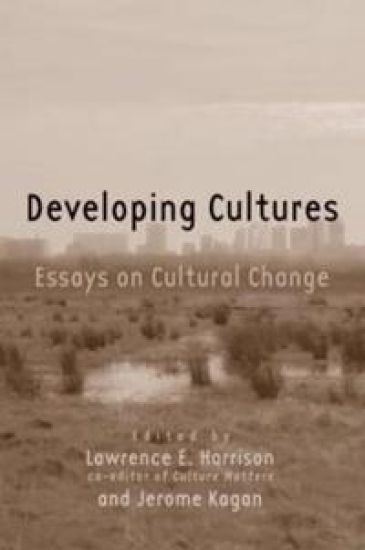
Developing Cultures: Essays on Cultural Change is a collection of 21 expert essays on the institutions that transmit cultural values from generation to generation. The essays are an outgrowth of a research project begun by Samuel Huntington and Larry Harrison in their widely discussed book Culture Matters the goal of which is guidelines for cultural change that can accelerate development in the Third World. The essays in this volume cover child rearing, several aspects of education, the world's major religions, the media, political leadership, and development projects. The book is companion volume to Developing Cultures: CaseStudies.(0415952808).
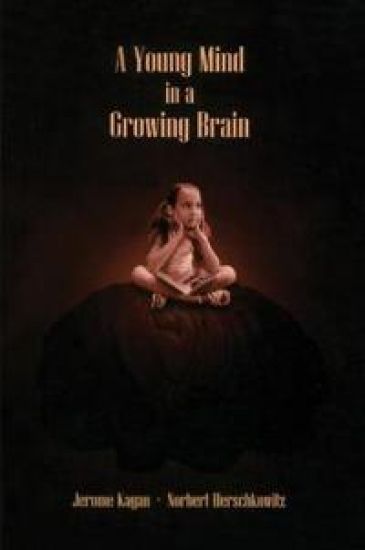
A Young Mind in a Growing Brain summarizes some initial conclusions that follow simultaneous examination of the psychological milestones of human development during its first decade and what has been learned about brain growth. This volume proposes that development is the process of experience working on a brain that is undergoing significant biological maturation. Experience counts, but only when the brain has developed to the point of being able to process, encode, and interact with these new environmental experiences. This book's aim is to acquaint developmental biologists and neuroscientists with what has been learned about human psychological development and to acquaint developmental psychologists with the biological evidence. The hope is that each group will gain a richer appreciation of both knowledge corpora. The authors hope to appeal to neuroscientists, psychologists, psychiatrists, pediatricians, and their students. The idea for this book was born in 1993 when the authors--a leading developmental psychologist and a pediatrician--met for the first time and recognized the complementarity of their backgrounds and the utility of a collaboration. The reception of their first two papers motivated this attempt to synthesize the available information over a longer developmental era. Learning a great deal over the past decade, the authors hope that their enthusiasm provokes an equally intense curiosity in readers.
When we are startled by the new, confronted with discrepancies, our knowing gives way to uncertainty—and changes. In the distinctive manner that has made him one of the most influential forces in developmental psychology, Jerome Kagan challenges scientific commonplaces about mental processes, pointing in particular to the significant but undervalued role of surprise and uncertainty in shaping behavior, emotion, and thought. Drawing on research in both animal and human subjects, Kagan presents a strong case for making qualitative distinctions among four different types of mental representation—perceptual schemata, visceral schemata, sensorimotor structures, and semantic networks—and describes how each is susceptible to the experience of discrepancy and the feeling of surprise or uncertainty. The implications of these findings are far-reaching, challenging current ideas about the cognitive understandings of infants and revealing the bankruptcy of contemporary questionnaire-based personality theory. More broadly, Kagan’s daring, thoroughly informed, and keenly reasoned book demonstrates the risks of making generalizations about human behavior, in which culture, context, and past experience play such paramount and unpredictable roles.
Do the first two years of life really determine a child’s future development? Are human beings, like other primates, only motivated by pleasure? And do people actually have stable traits, like intelligence, fear, anxiety, and temperament? This book, the product of a lifetime of research by one of the founders of developmental psychology, takes on the powerful assumptions behind these questions—and proves them mistaken. Ranging with impressive ease from cultural history to philosophy to psychological research literature, Jerome Kagan weaves an argument that will rock the social sciences and the foundations of public policy. Scientists, as well as lay people, tend to think of abstract processes—like intelligence or fear—as measurable entities, of which someone might have more or less. This approach, in Kagan’s analysis, shows a blindness to the power of context and to the great variability within any individual subject to different emotions and circumstances. “Infant determinism” is another widespread and dearly held conviction that Kagan contests. This theory—with its claim that early relationships determine lifelong patterns—underestimates human resiliency and adaptiveness, both emotional and cognitive (and, of course, fails to account for the happy products of miserable childhoods and vice versa). The last of Kagan’s targets is the vastly overrated pleasure principle, which, he argues, can hardly make sense of unselfish behavior impelled by the desire for virtue and self-respect—the wish to do the right thing. Written in a lively style that uses fables and fairy tales, history and science to make philosophical points, this book challenges some of our most cherished notions about human nature.
Nearly two thousand years ago a physician named Galen of Pergamon suggested that much of the variation in human behaviour could be explained by an individual's temperament. Since that time, inborn dispositions have fallen in and out of favour. Based on fifteen years of research, Galen's Prophecy now provides fresh insights into these complex questions, offering startling new evidence to support Galen's ancient classification of melancholic and sanguine adults. Integrating evidence and ideas from biology, philosophy, and psychology, Jerome Kagan examines the implications of the idea of temperament for aggressive behaviour, conscience, psychopathology, and the degree to which each of us can be expected to control our deepest emotions.