Kirjojen hintavertailu – 12 903 725 kirjaa ja 27 kauppaa

Kirjailija

Jerome L. Singer

Kirjat ja teokset yhdessä paikassa: 8 kirjaa, julkaisuja vuosilta 1992–2019, suosituimpiin kuuluu Repression and Dissociation. Vertaile teosten hintoja ja tarkista saatavuus suomalaisista kirjakaupoista.

8 kirjaa

Kirjojen julkaisuvuodet: 1992–2019.

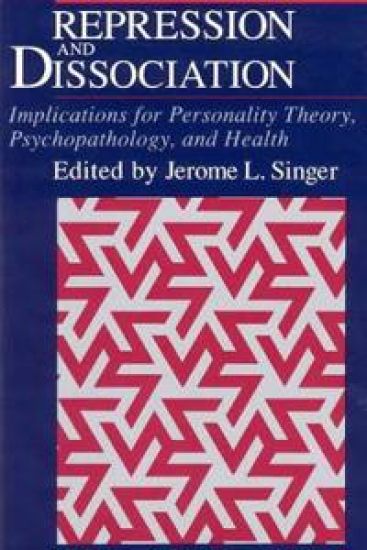
Repression and Dissociation

Repression and Dissociation

Jerome L. Singer

University of Chicago Press
1995
nidottu
This book features contributions from twenty six leading experts that survey the theoretical, historical, methodological, empirical, and clinical aspects of repression and the repressive personality style, from both psychoanalytic and cognitive psychological perspectives." Rarely does a volume present contributions on a controversial topic from such distinguished clinicians and experimentalists . . . . There is something of interest in this volume for almost anyone involved in experimental cognitive psychology and psychiatry."—Carroll E. Izard, Contemporary Psychology"The concept of repression is the cornerstone of psychoanalytic theory. . . . This is a delightful book, unusually well-written. . . . Recommended."—Choice"Readable, thorough, wide ranging and consistently interesting. . . . A testament to the continuing power of psychodynamic ideas when faced with individual psychopathology."—Sue Llewelyn, Psychologist"Singer has brought together some of the best empirical research in the areas of unconscious mental activity and repression—that is at once interdisciplinary and scholarly."—Howard D. Lerner, International Review of Psycho-analysis"A rich reference, replete with summaries and citations, covering a variety of topics related to the psychology of repression and dissociation. . . . A thoughtful, detailed and eclectic discussion of the scientific and theoretical basis of repression and dissociation."—Steven Lazrove, M. D., American Journal of Psychiatry
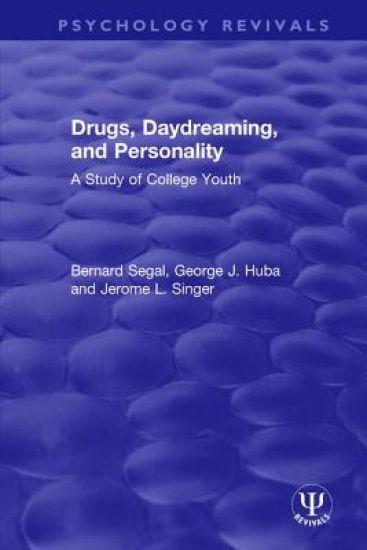
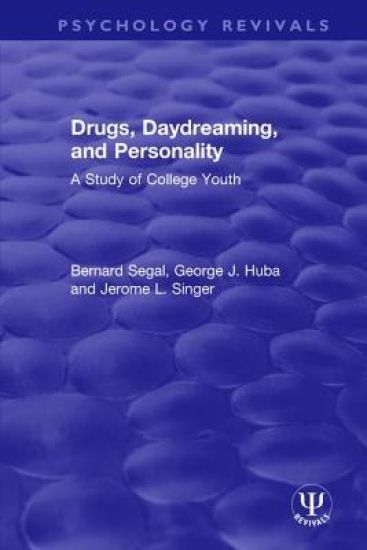
Drugs, Daydreaming, and Personality

Drugs, Daydreaming, and Personality

Bernard Segal; George J. Huba; Jerome L. Singer

CRC Press Inc
2019
nidottu
Originally published in 1980, this book presents a detailed account of a series of investigations that examined the patterns of resort to drugs and alcohol use in college youth, and how such substance uses are linked to personality characteristics and daydreaming patterns. The Editors chose to emphasize the more "private" features of the personality, because these had often been ignored in earlier research, despite popular assumptions that there are close ties between fantasy, inwardness, "spacey" qualities (all suggesting permanent changes in mental organization), and substance use in youth. This volume will be of interest to a wider audience than just drug and alcohol researchers, because of the effort to go beyond normative patterns of substance use toward explorations of personality and consciousness.
Drugs, Daydreaming, and Personality

Drugs, Daydreaming, and Personality

Bernard Segal; George J. Huba; Jerome L. Singer

CRC Press Inc
2017
sidottu
Originally published in 1980, this book presents a detailed account of a series of investigations that examined the patterns of resort to drugs and alcohol use in college youth, and how such substance uses are linked to personality characteristics and daydreaming patterns. The Editors chose to emphasize the more "private" features of the personality, because these had often been ignored in earlier research, despite popular assumptions that there are close ties between fantasy, inwardness, "spacey" qualities (all suggesting permanent changes in mental organization), and substance use in youth. This volume will be of interest to a wider audience than just drug and alcohol researchers, because of the effort to go beyond normative patterns of substance use toward explorations of personality and consciousness.
Daydreaming and Fantasy

Daydreaming and Fantasy

Jerome L. Singer

Routledge
2015
nidottu
Daydreaming, our ability to give ‘to airy nothing a local habitation and a name’, remains one of the least understood aspects of human behaviour. As children we explore beyond the boundaries of our experience by projecting ourselves into the mysterious worlds outside our reach. As adolescents and adults we transcend frustration by dreams of achievement or escape, and use daydreaming as a way out of intolerable situations and to help survive boredom, drudgery or routine. In old age we turn back to happier memories as a relief from loneliness or frailty, or wistfully daydream about what we would do if we had our time over again. Why is it that we have the ability to alternate between fantasy and reality? Is it possible to have ambition or the ability to experiment, create or invent without the catalyst of fantasy? Are sexual fantasies an inherent part of human behaviour? Are they universal, healthy, destructive? Is daydreaming itself destructive? Or is it a force which facilitates change and which can even be harnessed to positive advantage? In this provocative book, originally published in 1975, the product of the previous twenty-five years of research, the author debates the nature and function of daydreaming in the light of his own experiments. As well as investigating what is a normal ‘fantasy-life’ and outlining patterns and types of daydreaming, he describes the role of daydreaming in schizophrenia and paranoia, examines the fantasies and hallucinations induced by drugs and also the nature of altered states of consciousness in Zen and Transcendental Meditation. Among the many topics covered, he explains how it is possible to help children enlarge their capacity for fantasy, how adults can make positive use of daydreaming and how people on the verge of disturbed behaviour are often unconscious of their own fantasies. Advances in scientific methods and new experimental techniques had made it possible at this time to monitor both conscious daydreaming and sub-conscious fantasies in a way not possible before. Professor Singer is one of the few scientists who have conducted substantial research in this area and it is his belief that the study of daydreaming and fantasy is of great importance if we are to understand the workings of the human mind.
Daydreaming and Fantasy

Daydreaming and Fantasy

Jerome L. Singer

Routledge
2013
sidottu
Daydreaming, our ability to give ‘to airy nothing a local habitation and a name’, remains one of the least understood aspects of human behaviour. As children we explore beyond the boundaries of our experience by projecting ourselves into the mysterious worlds outside our reach. As adolescents and adults we transcend frustration by dreams of achievement or escape, and use daydreaming as a way out of intolerable situations and to help survive boredom, drudgery or routine. In old age we turn back to happier memories as a relief from loneliness or frailty, or wistfully daydream about what we would do if we had our time over again. Why is it that we have the ability to alternate between fantasy and reality? Is it possible to have ambition or the ability to experiment, create or invent without the catalyst of fantasy? Are sexual fantasies an inherent part of human behaviour? Are they universal, healthy, destructive? Is daydreaming itself destructive? Or is it a force which facilitates change and which can even be harnessed to positive advantage? In this provocative book, originally published in 1975, the product of the previous twenty-five years of research, the author debates the nature and function of daydreaming in the light of his own experiments. As well as investigating what is a normal ‘fantasy-life’ and outlining patterns and types of daydreaming, he describes the role of daydreaming in schizophrenia and paranoia, examines the fantasies and hallucinations induced by drugs and also the nature of altered states of consciousness in Zen and Transcendental Meditation. Among the many topics covered, he explains how it is possible to help children enlarge their capacity for fantasy, how adults can make positive use of daydreaming and how people on the verge of disturbed behaviour are often unconscious of their own fantasies. Advances in scientific methods and new experimental techniques had made it possible at this time to monitor both conscious daydreaming and sub-conscious fantasies in a way not possible before. Professor Singer is one of the few scientists who have conducted substantial research in this area and it is his belief that the study of daydreaming and fantasy is of great importance if we are to understand the workings of the human mind.
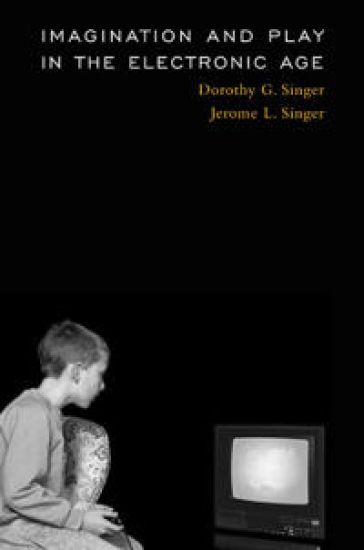
Imagination and Play in the Electronic Age

Imagination and Play in the Electronic Age

Dorothy G. Singer; Jerome L. Singer

Harvard University Press
2007
nidottu
Television, video games, and computers are easily accessible to twenty-first-century children, but what impact do they have on creativity and imagination? In this book, two wise and long-admired observers of children's make-believe look at the cognitive and moral potential--and concern--created by electronic media. As Dorothy and Jerome Singer show, violent images in games and TV are as toxic as many observers have feared by stimulating destructive ideas and troubling aggression. But should all electronic media be banned from children's lives? Calmly and authoritatively, the Singers argue that in fact some screen time can enrich children's creativity and play, and can even promote school readiness. With guidance from parents and teachers, empathy, creativity, and imagination can expand and intensify in the electronic age.
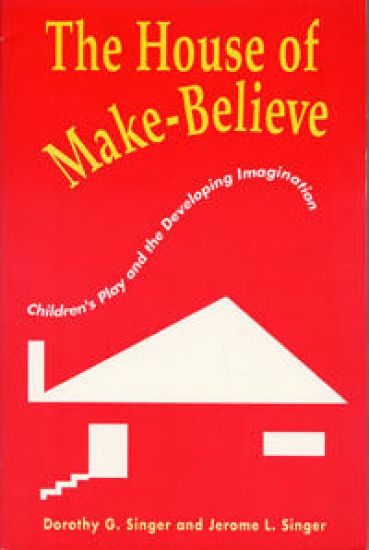
The House of Make-Believe

The House of Make-Believe

Dorothy G. Singer; Jerome L. Singer

Harvard University Press
1992
nidottu
In the most thorough attempt to cover all aspects of children’s make-believe, Dorothy and Jerome Singer examine how imaginative play begins and develops, from the infant’s first smiles to the toddler’s engagement in social pretend play. They provide intriguing examples and research evidence on the young child’s invocation of imaginary friends, the adolescent’s daring, rule-governed games, and the adult’s private imagery and inner thought. In chapters that will be important to parents and policymakers, the authors discuss television and the imagination, the healing function of play, and the effects of playfulness and creativity throughout the life span.