Kirjojen hintavertailu – 12 859 828 kirjaa ja 27 kauppaa

Kirjailija

Jerry Wellington

Kirjat ja teokset yhdessä paikassa: 29 kirjaa, julkaisuja vuosilta 1994–2020, suosituimpiin kuuluu Succeeding with Your Doctorate. Vertaile teosten hintoja ja tarkista saatavuus suomalaisista kirjakaupoista.

29 kirjaa

Kirjojen julkaisuvuodet: 1994–2020.

Research Methods for the Social Sciences

Research Methods for the Social Sciences

Jerry Wellington; Marcin Szczerbinski

Continuum International Publishing Group Ltd.
2007
sidottu
The aim of this book is to provide an introductory but not simplistic guide to research in the social and behavioural sciences. The book sets out to tackle difficult issues and concepts in a scholarly but accessible manner, providing ample guidance and signposts to further reading. We explore a wide range of questions about research and research methods, including:* What counts as 'good research? * Research approaches, paradigms, methods and methodology: what are they and what is the difference?* What is the so-called 'qualitative/ quantitative?* When and where is quantitative research indispensable?* If one suggests that research should be 'scientific what does that mean?* What methods and methodologies are used in social research?* What is the role of statistics in social and behavioural research? How should statistical evidence be interpreted?* What are the ways in which research can, and should, be disseminated and presented? This book is aimed as much at the reflective, researching professional as for the professional researcher.
Secondary Education: The Key Concepts

Secondary Education: The Key Concepts

Jerry Wellington

Routledge
2006
nidottu
A comprehensive critical survey of the controversies, theories and practices central to secondary education today, this book provides teachers, researchers, parents and policy-makers with a vital new reference resource. It covers important topics including:assessmentcitizenshipcurriculume-learningexclusiontheories of learningwork experience. Fully cross-referenced, with extensive suggestions for further reading and on-line resources, this is an essential guide to theory and practice in the twenty-first century classroom.
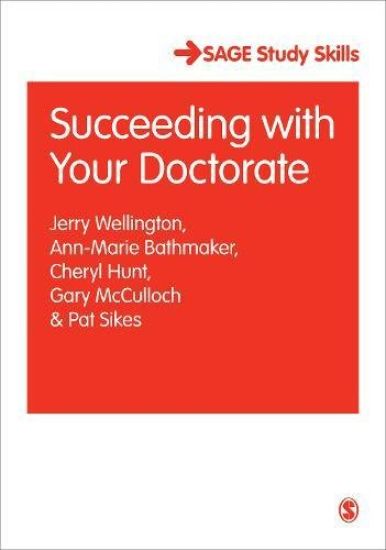
Succeeding with Your Doctorate

Succeeding with Your Doctorate

Jerry Wellington; Ann-Marie Bathmaker; Cheryl Hunt; Gary McCulloch; Pat Sikes

SAGE Publications Inc
2005
sidottu
'From page one the appeal of the book is evident in the jargon free, user friendly text. I would not hesitate to recommend it to other students whatever stage of their doctorate they have reached.' - Educate Journal Whether you undertaking a taught doctorate, or a course of study leading to a PhD, Succeeding with Your Doctorate offers complete, up-to-date guidance and discussion on all aspects of successful doctoral work. The five experienced authors give advice on every stage in the process of completing a doctorate, from helping you to engage in critical reflection to better understand your own research biases, to useful guidelines on preparing for, and surviving, the viva. Combining general discussion with practical advice, this book is an essential companion to your research. Topics include: Preparing for a doctorateEmbarking on your ResearchAdapting to life as a studentWorking with a supervisorReading criticallyConceptualising your researchThinking about methodologies and approachesProducing a thesisPreparing for and taking the vivaDisseminating your research. SAGE Study Skills are essential study guides for students of all levels. From how to write great essays and succeeding at university, to writing your undergraduate dissertation and doing postgraduate research, SAGE Study Skills help you get the best from your time at university. Visit the SAGE Study Skills hub for tips, resources and videos on study success!
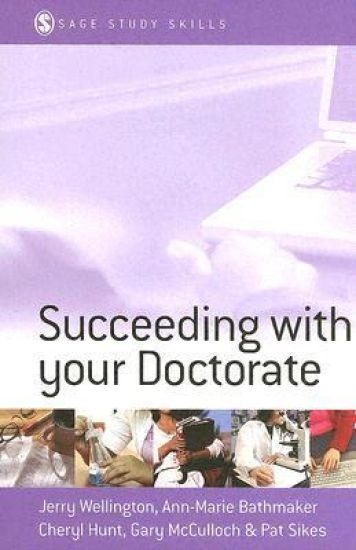
Succeeding with Your Doctorate

Succeeding with Your Doctorate

Jerry Wellington; Ann-Marie Bathmaker; Cheryl Hunt; Gary McCulloch; Pat Sikes

SAGE Publications Inc
2005
nidottu
'From page one the appeal of the book is evident in the jargon free, user friendly text. I would not hesitate to recommend it to other students whatever stage of their doctorate they have reached.' - Educate Journal Whether you undertaking a taught doctorate, or a course of study leading to a PhD, Succeeding with Your Doctorate offers complete, up-to-date guidance and discussion on all aspects of successful doctoral work. The five experienced authors give advice on every stage in the process of completing a doctorate, from helping you to engage in critical reflection to better understand your own research biases, to useful guidelines on preparing for, and surviving, the viva. Combining general discussion with practical advice, this book is an essential companion to your research. Topics include: Preparing for a doctorateEmbarking on your ResearchAdapting to life as a studentWorking with a supervisorReading criticallyConceptualising your researchThinking about methodologies and approachesProducing a thesisPreparing for and taking the vivaDisseminating your research. SAGE Study Skills are essential study guides for students of all levels. From how to write great essays and succeeding at university, to writing your undergraduate dissertation and doing postgraduate research, SAGE Study Skills help you get the best from your time at university. Visit the SAGE Study Skills hub for tips, resources and videos on study success!
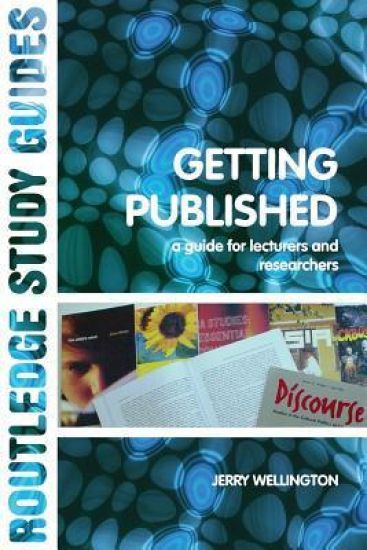
Getting Published

Getting Published

Jerry Wellington

Routledge
2003
nidottu
This handy guide for new and practising lecturers and researchers takes a rare insider's look at the activities of writing and publishing. Turning the spotlight inwards, it examines how and why professionals communicate with each other through writing and publishing. Written with great verve and pace, the author succeeds in providing sensible advice bolstered by many illustrative examples, case studies and anecdotes. For the academic needing insight into the serious business of getting published, this book will provide answers to many of their frequent questions: * Why do they write and publish? * Who are they writing for? * What channels of communication are available for their writing? * Who 'controls' these channels? * How can they successfully submit articles and papers to journals and newspapers, contribute chapters to books, or approach publishers with book proposals? Developed from a series of seminars on the subject by the author, this book will be an enjoyable and informative guide to anyone with an interest in getting their work published.
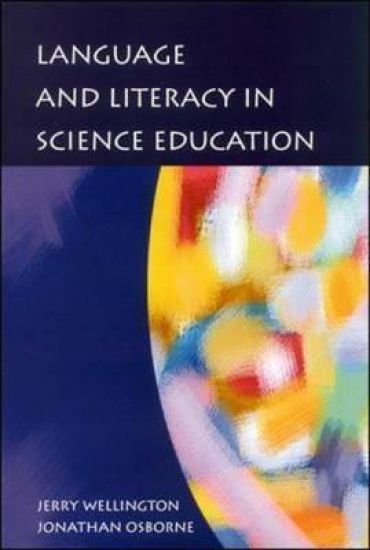
Language and Literacy in Science Education

Language and Literacy in Science Education

Jerry Wellington; Jonathan Osborne

Open University Press
2001
nidottu
Science in secondary schools has tended to be viewed mainly as a 'practical subject', and language and literacy in science education have been neglected. But learning the language of science is a major part of science education: every science lesson is a language lesson, and language is a major barrier to most school students in learning science. This accessible book explores the main difficulties in the language of science and examines practical ways to aid students in retaining, understanding, reading, speaking and writing scientific language. Jerry Wellington and Jonathan Osborne draw together and synthesize current good practice, thinking and research in this field. They use many practical examples, illustrations and tried-and-tested materials to exemplify principles and to provide guidelines in developing language and literacy in the learning of science. They also consider the impact that the growing use of information and communications technology has had, and will have, on writing, reading and information handling in science lessons. The authors argue that paying more attention to language in science classrooms is one of the most important acts in improving the quality of science education. This is a significant and very readable book for all student and practising secondary school science teachers, for science advisers and school mentors.
Teaching and Learning with Multimedia

Teaching and Learning with Multimedia

Janet Collins; Michael Hammond; Jerry Wellington

Routledge
1997
nidottu
This book is an introduction to the issues and practicalities of using multimedia in classrooms - both primary and secondary, and across a range of subject areas. The book draws on material from a range of case studies and focuses on areas of concern for teachers and researchers. Using IT effectively continues to be a problem for many teachers, and there is still a long way to go toward organising this properly. The book takes a thorough look at IT in the school, discussing and examining issues such as: * IT and the National Curriculum * foreign language teaching * differing curricular needs * opportunities and constraints of groupwork * talking books and primary reading * ways in which multimedia supports readers. The book also looks at some of the more philosophical issues such as the implications of home-computers and the limits of independent learning, and the notion of "edutainment" - the relationship of motivation and enjoyment to learning. Finally, the book makes comparisons across the curriculum and between primary and secondary sectors and raises questions about the future of IT in schools, arguing that teachers should make a significant contribution to decisions about future development.
Secondary Science

Secondary Science

Jerry Wellington

Routledge
1994
sidottu
Science education has changed radically in recent years, both as a result of debates within the subject and because of curriculum legislation. Jerry Wellington discusses the major issues in science education today - such questions as the balance of content and process in the curriculum, the role of practical work and the nature of science as a subject - and uses this discussion to support a very practical resource for teachers in training and their mentors. The book covers every aspect of science teaching, including: Planning Differentiation and special needs Assessment Practical work Problem solving and investigations IT in science Handling sensitive issues, e.g. sex education Building on children's prior learning Throughout, Wellington's guidance is accompanied by suggestions for discussion, activities for individual and group use and annotated lists of further reaing aimed at helping the reader to build up a personal approach to the teaching of the subject. Students will also be helped by the glossaries of specialist terminology at the end of each chapter and by the references to National Curriculum attainment targets at every point in the book.