Kirjojen hintavertailu – 12 903 725 kirjaa ja 27 kauppaa

Kirjailija

Jerry White

Kirjat ja teokset yhdessä paikassa: 31 kirjaa, julkaisuja vuosilta 1987–2026, suosituimpiin kuuluu Poor Bickerton. Vertaile teosten hintoja ja tarkista saatavuus suomalaisista kirjakaupoista.

31 kirjaa

Kirjojen julkaisuvuodet: 1987–2026.

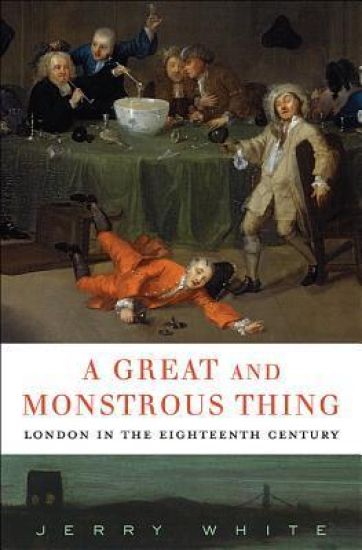
A Great and Monstrous Thing: London in the Eighteenth Century
London in the eighteenth century was a new city, risen from the ashes of the Great Fire of 1666 that had destroyed half its homes and great public buildings. The century that followed was an era of vigorous expansion and large-scale projects, of rapidly changing culture and commerce, as huge numbers of people arrived in the shining city, drawn by its immense wealth and power and its many diversions. Borrowing a phrase from Daniel Defoe, Jerry White calls London "this great and monstrous thing," the grandeur of its new buildings and the glitter of its high life shadowed by poverty and squalor. A Great and Monstrous Thing offers a street-level view of the city: its public gardens and prisons, its banks and brothels, its workshops and warehouses--and its bustling, jostling crowds. White introduces us to shopkeepers and prostitutes, men and women of fashion and genius, street-robbers and thief-takers, as they play out the astonishing drama of life in eighteenth-century London. What emerges is a picture of a society fractured by geography, politics, religion, history--and especially by class, for the divide between rich and poor in London was never greater or more destructive in the modern era than in these years. Despite this gulf, Jerry White shows us Londoners going about their business as bankers or beggars, reveling in an enlarging world of public pleasures, indulging in crimes both great and small--amidst the tightening sinews of power and regulation, and the hesitant beginnings of London democracy.
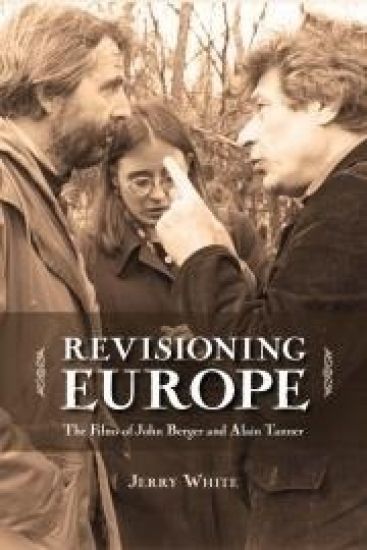
Revisioning Europe

Revisioning Europe

Jerry White

University of Calgary Press
2012
nidottu
Revisioning Europe is among the few existing English-language discussions of the films made by British novelist John Berger and Swiss film director Alain Tanner. It brings to light a political cinema that was unsentimental about the possibilities of revolutionary struggle and unsparing in its critique of the European left, and at the same time optimistic about the ability of radicalism - and radical art - to transform the world. Jerry White argues that Berger and Tanner's work is preoccupied with ideas that were both central to the Enlightenment and at the same time characteristically Swiss. Translations of previously unpublished essays by both John Berger and Alain Tanner are included as appendices.
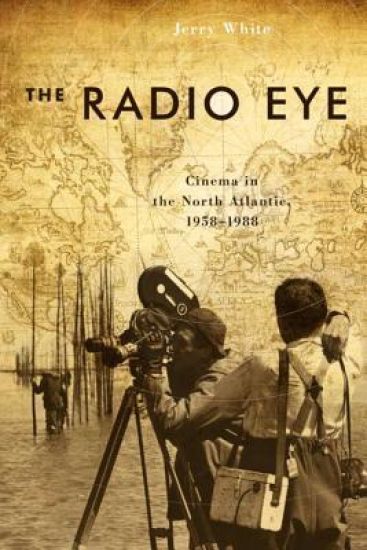
The Radio Eye

The Radio Eye

Jerry White

Wilfrid Laurier University Press
2009
sidottu
The Radio Eye: Cinema in the North Atlantic, 1958-1988, examines the way in which media experiments in Quebec, Newfoundland, the Faroe Islands, and the Irish-Gaelic-speaking communities of Ireland use film, video, and television to advocate for marginalized communities and often for ""smaller languages."" The Radio Eye is not, however, a set of isolated case studies. Author Jerry White illustrates the degree to which these experiments are interconnected, sometimes implicitly but more often quite explicitly. Media makers in the North Atlantic during the period 1958-1988 were very aware of each other's cultures and aspirations, and, by structuring the book in two interlocking parts, White illustrates the degree to which a common project emerged during those three decades. The book is bound together by White's belief that these experiments are following in the idealism of Soviet silent filmmaker Dziga Vertov, who wrote about his notion of ""the Radio Eye."" White also puts these experiments in the context of work by the Cuban filmmaker and theorist Julio García Espinosa and his notion of ""imperfect cinema,"" Jürgen Habermas and his notions of the ""public sphere,"" and Édourard Glissant's ideas about ""créolité"" as the defining aspect of modern culture. This is a genuinely internationalist moment, and these experiments are in conversation with a wide array of thought across a number of languages.
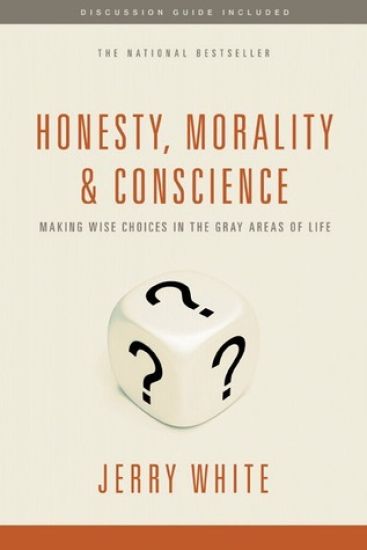
Honesty, Morality, and Conscience

Honesty, Morality, and Conscience

Jerry White

NavPress Publishing Group
2007
nidottu
In Honesty, Morality, and Conscience, Navigator author Jerry White takes a hard look at some of life's gray areas. Examining the origin and depth of our conscience, our moral compass, and truthful living, he explains how God has given us everything we need to face the ethical questions of today in all areas of our lives. Explore issues of identity, integrity, and accountability as you look at your sources for discernment and wisdom. This great leadership and character-building tool includes discussion questions.
Of This Place and Elsewhere

Of This Place and Elsewhere

Jerry White

Toronto International Film Festival
2007
pokkari
A key figure in the Toronto New Wave of the 1980s, Peter Mettler is one of the most intriguing and audacious filmmakers in English Canada, known not only for his work as a director but also as a cinematographer and editor. His films are distinguished by an innovative approach to the medium, regardless of genre, bridging the gap between experimental, narrative, personal essay, and documentary. All of his work is visually stunning, particularly the two films he is best known for: Picture of Light and Gambling, Gods and LSD. Mettler is also an accomplished photographer and a pioneer in multimedia work. His live visual mixing performances are groundbreaking and legendary, and he has long been considered a leader in this field. In Peter Mettler, Jerry White focuses on Mettler's career as a director, emphasizing the global nature of his films. White also discusses Mettler's groundbreaking explorations in the field of visual mixing and his work as a still photographer and cinematographer. The book is richly illustrated with examples of Mettler's work.
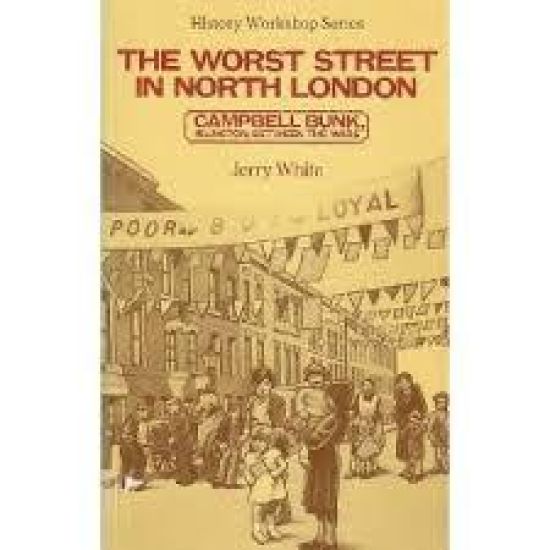
Campbell Bunk

Campbell Bunk

Jerry White

Vintage
2003
pokkari
From the 1880s to the Second World War, Campbell Road, Finsbury Park (known as Campbell Bunk), had a notorious reputation for violence, for breeding thieves and prostitutes, and for an enthusiastic disregard for law and order.
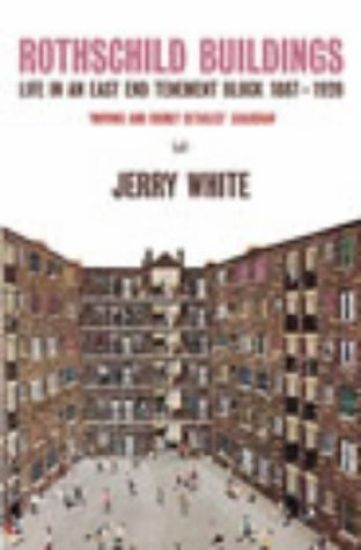
Rothschild Buildings

Rothschild Buildings

Jerry White

Pimlico
2003
pokkari
Winner of the Jewish Chronicle Harold H. Wingate Literary Award. Rothschild Buildings were typical of the 'model dwellings for the working classes' which were such an important part of the response to late-Victorian London's housing problem. They were built for poor but respectable Jewish immigrants from Eastern Europe, and the community which put down roots there was to be characteristic of the East End Jewish working class in its formative years. By talking to people who grew up in the Buildings in the 1890s and after, and using untapped documentary evidence from a wide range of public and private sources, the author re-creates the richly detailed life of that community and its relations with the economy and culture around it. The book shows how cramped and austere housing was made into homes; how the mechanism of class domination, of which the Buildings were part, was both accepted and fought against; how a close community was riven with constantly shifting tensions; and how that community co-existed in surprising ways with the East End casual poor of 'outcast London'. It provides unique and fascinating insights into immigrant and working-class life at the turn of the last century.
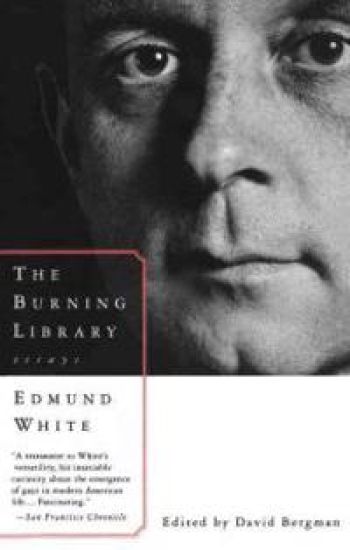
The Burning Library: Essays

The Burning Library: Essays

Edmund White; Jerry White

VINTAGE
1995
nidottu
From the National Book Award honored author of A Previous Life and a master of American literature comes a dazzling collection of 25 years of groundbreaking essays that redefined politics, language, identity, and friendship. "A testament to White's versatility, his insatiable curiosity about the emergence of gays in modern American life.... Fascinating." --San Francisco Chronicle Along with his essays of gay experience and desire, this magisterial collection of White's nonfiction writings includes dazzling subversive appreciations of cultural icons as diverse as Truman Capote and Cormac McCarthy, Robert Mapplethorpe and the singer formerly known as Prince.