
Kirjojen hintavertailu – 12 859 818 kirjaa ja 27 kauppaa

Kirjailija

Jes Bjarup

Kirjat ja teokset yhdessä paikassa: 2 kirjaa, julkaisuja vuosilta 2006–2010, suosituimpiin kuuluu The Role of Customary Law in Sustainable Development. Vertaile teosten hintoja ja tarkista saatavuus suomalaisista kirjakaupoista.

2 kirjaa

Kirjojen julkaisuvuodet: 2006–2010.

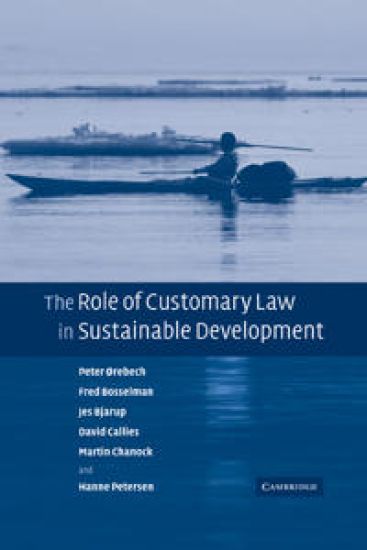
The Role of Customary Law in Sustainable Development

The Role of Customary Law in Sustainable Development

Peter Orebech; Fred Bosselman; Jes Bjarup; David Callies; Martin Chanock; Hanne Petersen

Cambridge University Press
2010
pokkari
For many nations, a key challenge is how to achieve sustainable development without a return to centralized planning. Using case studies from Greenland, Hawaii and northern Norway, this 2006 book examines whether 'bottom-up' systems such as customary law can play a critical role in achieving viable systems for managing natural resources. Customary law consists of underlying social norms that may become the acknowledged law of the land. The key to determining whether a custom constitutes customary law is whether the public acts as if the observance of the custom is legally obligated. While the use of customary law does not always produce sustainability, the study of customary methods of resource management can produce valuable insights into methods of managing resources in a sustainable way.
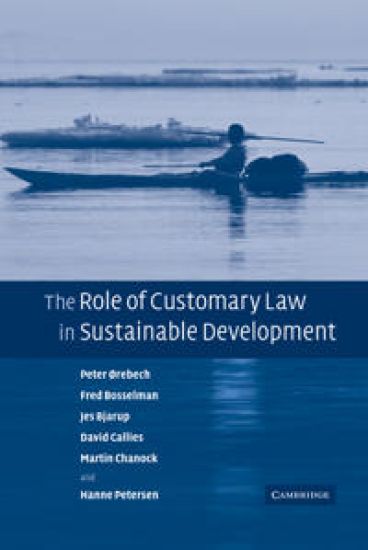
The Role of Customary Law in Sustainable Development

The Role of Customary Law in Sustainable Development

Peter Orebech; Fred Bosselman; Jes Bjarup; David Callies; Martin Chanock; Hanne Petersen

Cambridge University Press
2006
sidottu
For many nations, a key challenge is how to achieve sustainable development without a return to centralized planning. Using case studies from Greenland, Hawaii and northern Norway, this 2006 book examines whether 'bottom-up' systems such as customary law can play a critical role in achieving viable systems for managing natural resources. Customary law consists of underlying social norms that may become the acknowledged law of the land. The key to determining whether a custom constitutes customary law is whether the public acts as if the observance of the custom is legally obligated. While the use of customary law does not always produce sustainability, the study of customary methods of resource management can produce valuable insights into methods of managing resources in a sustainable way.