Kirjojen hintavertailu – 12 859 828 kirjaa ja 27 kauppaa

Kirjailija

Jessica Moss

Kirjat ja teokset yhdessä paikassa: 9 kirjaa, julkaisuja vuosilta 2012–2025, suosituimpiin kuuluu Digital Archaeologies, Material Worlds (Past and Present). Vertaile teosten hintoja ja tarkista saatavuus suomalaisista kirjakaupoista.

9 kirjaa

Kirjojen julkaisuvuodet: 2012–2025.

Our Play

Our Play

Jessica Moss

SAMUEL FRENCH LTD
2025
pokkari
Uh, hi. Yeah. Welcome to... this play that we're doing. Our Town. We're gonna show you some... well, like, I'm just going to show you around our rehearsal. We go up in a month. We're not ready. But here we are. Stage Manager Becky breaks the fourth wall to show us her fellow students mounting a production of Thornton Wilder's Our Town. Using the classic's structure as a guide, she takes us through the drama department, giving us glimpses into the lives of the cast, on a regular rehearsal day, the opening night, and... something else. Our Play is a play for young people now.
Plato's Epistemology

Plato's Epistemology

Jessica Moss

Oxford University Press
2023
nidottu
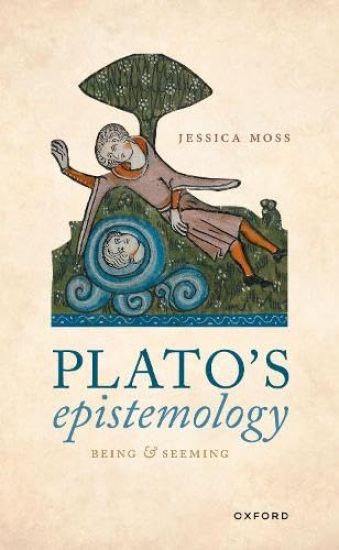
Plato's Epistemology: Being and Seeming presents an original interpretation of one of the central topics in Plato's work: epistemology. Jessica Moss argues that Plato's epistemology is radically different from our own. Going against the grain of recent scholarship, and drawing on ancient interpretations of Plato, Jessica Moss argues that Plato is not best understood as studying what we now call knowledge and belief. Instead, Moss proposes that the central players in his epistemology, epistêmê and doxa, are each essentially to be understood as cognition of a certain kind of object. Epistêmê is cognition of what Is - where this turns out to mean that it is a deep grasp of ultimate reality. Doxa is cognition of what seems - where this turns out to mean that it is atheoretical thought that mistakes images for reality. The book defends these characterizations by arguing that they explain important features of Plato's epistemology. In particular, it shows that they underlie and make sense of a view which was long attributed to Plato but has recently been deemed "outrageous": that there is no doxa of Forms, and no epistêmê of perceptibles. Finally, Moss contends that Plato's epistemology is so different from modern epistemology because it is motivated by his central ethical and metaphysical views. As the Cave allegory illustrates, he holds that the goal of life is to be in contact with genuine Being, and that the greatest obstacle to this goal is our tendency to rest content with appearances. Therefore, when Plato turns to epistemological investigations, the distinction he finds most salient is that between cognition of what Is and cognition of what seems.
Plato's Epistemology

Plato's Epistemology

Jessica Moss

Oxford University Press
2021
sidottu
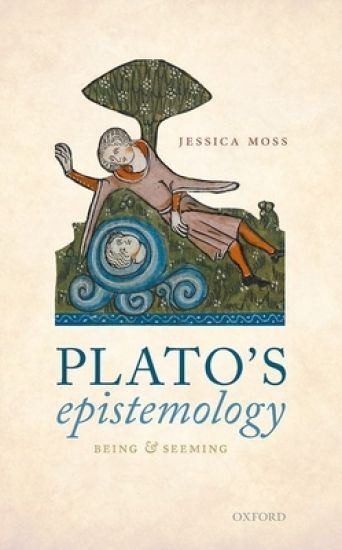
Plato's Epistemology: Being and Seeming presents an original interpretation of one of the central topics in Plato's work: epistemology. Jessica Moss argues that Plato's epistemology is radically different from our own. Going against the grain of recent scholarship, and drawing on ancient interpretations of Plato, Jessica Moss argues that Plato is not best understood as studying what we now call knowledge and belief. Instead, Moss proposes that the central players in his epistemology, epistêmê and doxa, are each essentially to be understood as cognition of a certain kind of object. Epistêmê is cognition of what Is - where this turns out to mean that it is a deep grasp of ultimate reality. Doxa is cognition of what seems - where this turns out to mean that it is atheoretical thought that mistakes images for reality. The book defends these characterizations by arguing that they explain important features of Plato's epistemology. In particular, it shows that they underlie and make sense of a view which was long attributed to Plato but has recently been deemed "outrageous": that there is no doxa of Forms, and no epistêmê of perceptibles. Finally, Moss contends that Plato's epistemology is so different from modern epistemology because it is motivated by his central ethical and metaphysical views. As the Cave allegory illustrates, he holds that the goal of life is to be in contact with genuine Being, and that the greatest obstacle to this goal is our tendency to rest content with appearances. Therefore, when Plato turns to epistemological investigations, the distinction he finds most salient is that between cognition of what Is and cognition of what seems.
Monster Roster

Monster Roster

John Corbett; Jim Dempsey; Jessica Moss; Richard A. Born

University of Chicago,David Alfred Smart Museum,US
2016
nidottu
Accompanying an exhibition at the University of Chicago’s Smart Museum of Art, this book is the definitive introduction to Chicago’s first artistic movement, the Monster Roster. The volume includes an overview of the artists involved, such as Leon Golub, June Leaf, Seymour Rosofsky, and Nancy Spero; an introduction to the historical context surrounding the group’s emergence in the 1950s; and a discussion of Monster Roster prints. In addition, key texts can be found reprinted here, such as Jean Dubuffet’s 1951 lecture “Anticultural Positions” and Franz Schulze’s 1972 essay “Chicago: The Setting and the Group.” Containing full-color reproductions of many Monster Roster works, ephemera, and historical photographs, as well as a detailed chronology and exhibition history, Monster Roster is a long-awaited history of one of the most essential Midwestern contributions to American art.
SQL Server Integration Services Design Patterns

SQL Server Integration Services Design Patterns

Tim Mitchell; Matt Masson; Andy Leonard; Jessica Moss; Michelle Ufford

APress
2014
nidottu
SQL Server Integration Services Design Patterns is newly-revised for SQL Server 2014, and is a book of recipes for SQL Server Integration Services (SSIS). Design patterns in the book help to solve common problems encountered when developing data integration solutions. The patterns and solution examples in the book increase your efficiency as an SSIS developer, because you do not have to design and code from scratch with each new problem you face. The book's team of expert authors take you through numerous design patterns that you'll soon be using every day, providing the thought process and technical details needed to support their solutions. SQL Server Integration Services Design Patterns goes beyond the surface of the immediate problems to be solved, delving into why particular problems should be solved in certain ways. You'll learn more about SSIS as a result, and you'll learn by practical example. Where appropriate, the book provides examples of alternative patterns and discusses when and where they should be used. Highlights of the book include sections on ETL Instrumentation, SSIS Frameworks, Business Intelligence Markup Language, and Dependency Services. Takes you through solutions to common data integration challengesProvides examples involving Business Intelligence Markup LanguageTeaches SSIS using practical examples
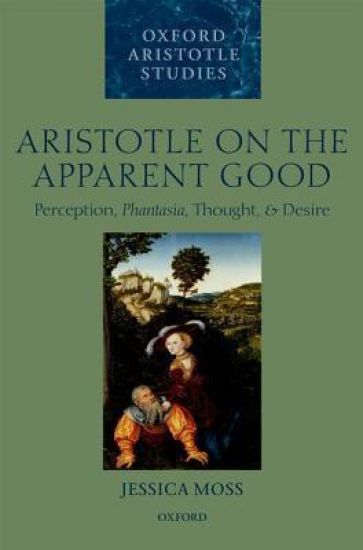
Aristotle on the Apparent Good

Aristotle on the Apparent Good

Jessica Moss

Oxford University Press
2014
nidottu
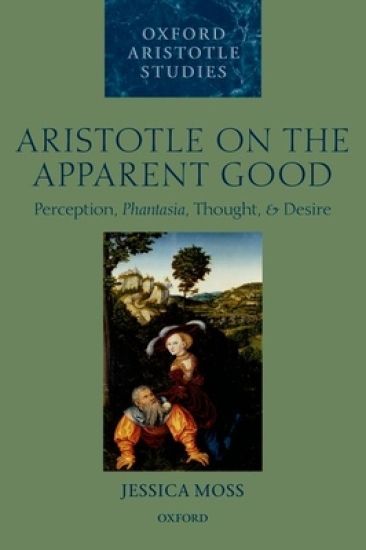
Aristotle holds that we desire things because they appear good to us--a view still dominant in philosophy now. But what is it for something to appear good? Why does pleasure in particular tend to appear good, as Aristotle holds? And how do appearances of goodness motivate desire and action? No sustained study of Aristotle has addressed these questions, or even recognized them as worth asking. Jessica Moss argues that the notion of the apparent good is crucial to understanding both Aristotle's psychological theory and his ethics, and the relation between them. Beginning from the parallels Aristotle draws between appearances of things as good and ordinary perceptual appearances such as those involved in optical illusion, Moss argues that on Aristotle's view things appear good to us, just as things appear round or small, in virtue of a psychological capacity responsible for quasi-perceptual phenomena like dreams and visualization: phantasia ('imagination'). Once we realize that the appearances of goodness which play so major a role in Aristotle's ethics are literal quasi-perceptual appearances, Moss suggests we can use his detailed accounts of phantasia and its relation to perception and thought to gain new insight into some of the most debated areas of Aristotle's philosophy: his accounts of emotions, akrasia, ethical habituation, character, deliberation, and desire. In Aristotle on the Apparent Good, Moss presents a new--and controversial--interpretation of Aristotle's moral psychology: one which greatly restricts the role of reason in ethical matters, and gives an absolutely central role to pleasure.

SQL Server 2012 Integration Services Design Patterns

SQL Server 2012 Integration Services Design Patterns

Andy Leonard; Matt Masson; Tim Mitchell; Jessica Moss; Michelle Ufford

APress
2012
nidottu
SQL Server 2012 Integration Services Design Patterns is a book of recipes for SQL Server Integration Services (SSIS). Design patterns in the book show how to solve common problems encountered when developing data integration solutions. Because you do not have to build the code from scratch each time, using design patterns improves your efficiency as an SSIS developer. In SSIS Design Patterns, we take you through several of these snippets in detail, providing the technical details of the resolution. SQL Server 2012 Integration Services Design Patterns does not focus on the problems to be solved; instead, the book delves into why particular problems should be solved in certain ways. You'll learn more about SSIS as a result, and you'll learn by practical example. Where appropriate, SQL Server 2012 Integration Services Design Patterns provides examples of alternative patterns and discusses when and where they should be used. Highlights of the book include sections on ETL Instrumentation, SSIS Frameworks, and Dependency Services. Takes you through solutions to several common data integration challenges Demonstrates new features in SQL Server 2012 Integration Services Teaches SSIS using practical examples
Aristotle on the Apparent Good

Aristotle on the Apparent Good

Jessica Moss

Oxford University Press
2012
sidottu
Aristotle holds that we desire things because they appear good to us--a view still dominant in philosophy now. But what is it for something to appear good? Why does pleasure in particular tend to appear good, as Aristotle holds? And how do appearances of goodness motivate desire and action? No sustained study of Aristotle has addressed these questions, or even recognized them as worth asking. Jessica Moss argues that the notion of the apparent good is crucial to understanding both Aristotle's psychological theory and his ethics, and the relation between them. Beginning from the parallels Aristotle draws between appearances of things as good and ordinary perceptual appearances such as those involved in optical illusion, Moss argues that on Aristotle's view things appear good to us, just as things appear round or small, in virtue of a psychological capacity responsible for quasi-perceptual phenomena like dreams and visualization: phantasia ('imagination'). Once we realize that the appearances of goodness which play so major a role in Aristotle's ethics are literal quasi-perceptual appearances, Moss suggests we can use his detailed accounts of phantasia and its relation to perception and thought to gain new insight into some of the most debated areas of Aristotle's philosophy: his accounts of emotions, akrasia, ethical habituation, character, deliberation, and desire. In Aristotle on the Apparent Good, Moss presents a new--and controversial--interpretation of Aristotle's moral psychology: one which greatly restricts the role of reason in ethical matters, and gives an absolutely central role to pleasure.