Kirjojen hintavertailu – 12 859 828 kirjaa ja 27 kauppaa

Kirjailija

Jesus F de La Teja

Kirjat ja teokset yhdessä paikassa: 3 kirjaa, julkaisuja vuosilta 2005–2018, suosituimpiin kuuluu Bundle: Texas: Crossroads of North America, 2nd + Major Problems in Texas History, 2nd. Vertaile teosten hintoja ja tarkista saatavuus suomalaisista kirjakaupoista.

Nimi esiintyy myös muodoissa: Jesus F.de la Teja, Jesús F. De la Teja

3 kirjaa

Kirjojen julkaisuvuodet: 2005–2018.

Faces of Béxar

Faces of Béxar

Jesús F. De la Teja

Texas A M University Press
2018
nidottu
Faces of Béxar showcases the finest work of Jesús F. de la Teja, a foremost authority on Spanish colonial Mexico and Texas through the Republic. For de la Teja, the Tejano experience in San Antonio is a case study of a community in transition, one moved by forces within and without. From its beginnings as an imperial outpost to becoming the center of another, newer empire, the history of San Antonio was central to Texas history. This book explores this and more, including San Antonio's origins as a military settlement, the community's economic ties to Saltillo, its role in the fight for Mexican independence, and the motivations of Tejanos for joining Anglo Texans in the struggle for independence. Taken together, Faces of Béxar stands to be a milestone in the growing literature on Tejano history.

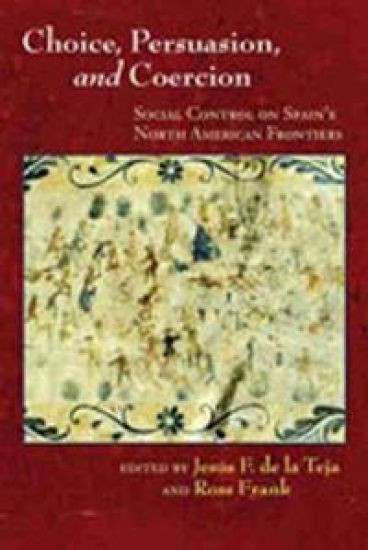
Choice, Persuasion, and Coercion

Choice, Persuasion, and Coercion

Jesus F.de la Teja

University of New Mexico Press
2005
nidottu
Brings together twelve original essays on Spain's presence in North America to understand the circumstances and application of social control. 'Social control' refers to the use of coercion particularly in response to what dominant groups consider deviant behaviour among subordinates. Spain attempted to maintain control of vast areas through persuasion, coercion, or indoctrination to make subordinates accept colonial government and behave according to Spanish expectations. This volume considers how Spain's monarchs faced competing economic, political, and racial interests. In the New World, others besides the rulers, authorities, and elites sought to effect social control. Ethnic groups and socio-economic classes within colonial communities also exercised control within their own circles. Institutions including the Church, schools, fraternal organisations, and families laboured to teach their members to understand their place in society. An examination of social control mechanisms shows how groups and individuals, including native peoples, formed and understood their options in response to colonial rule. These essays seek to understand how people negotiated their relationships with the Spanish state and institutions, and with each other, while conceiving of the frontier region as an incubator of cultural and economic interactions ranging from acceptance to rejection of European norms, often altering those norms in the process.