Kirjojen hintavertailu – 12 859 829 kirjaa ja 27 kauppaa

Kirjailija

Jiajia Liu

Kirjat ja teokset yhdessä paikassa: 4 kirjaa, julkaisuja vuosilta 2021–2025, suosituimpiin kuuluu Development and Application of National-Scale Dynamic Water Resources Assessment Model in China. Vertaile teosten hintoja ja tarkista saatavuus suomalaisista kirjakaupoista.

4 kirjaa

Kirjojen julkaisuvuodet: 2021–2025.

Development and Application of National-Scale Dynamic Water Resources Assessment Model in China

Development and Application of National-Scale Dynamic Water Resources Assessment Model in China

Huan Liu; Yangwen Jia; Jianhua Wang; Junkai Du; Cunwen Niu; Peng Hu; Jiajia Liu

TAYLOR FRANCIS LTD
2025
sidottu
This detailed book introduces China's national dynamic water resources assessment model, presenting its construction, application scenarios, and modern modeling approach to replace traditional statistics-based methods. The book thoroughly explores the applications of distributed hydrological modeling techniques in national water resources assessment. It presents the successful development of the China Water Assessment Model (CWAM), which is based on the WEP-L hydrological model. CWAM demonstrates broad potential in supporting national water information acquisition, uniquely covering both surveyed and un-surveyed regions. The work highlights the model's ability to account for China's diverse climatic and geological characteristics, while improving the efficiency of water resources assessment and providing solutions to dynamic assessment challenges, especially under climate change and human impacts. This work will serve as an essential reference for scholars and students in hydrology and water resources, as well as policy makers and engineers involved in water resources management and assessment.
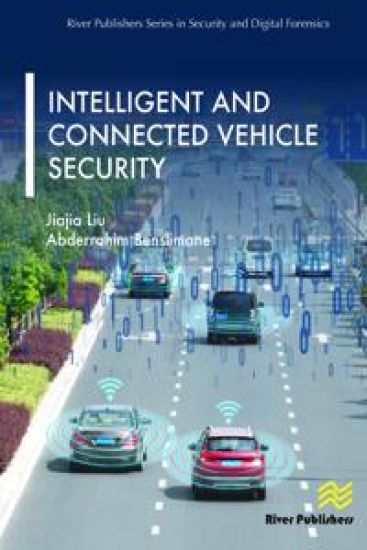
Intelligent and Connected Vehicle Security

Intelligent and Connected Vehicle Security

Jiajia Liu; Abderrahim Benslimane

River Publishers
2024
nidottu
Intelligent and Connected Vehicles (ICVs) are moving into the mainstream of the worldwide automotive industry. A lot of advanced technologies, like artificial intelligence, big data, millimeter wave radar, LiDAR and high-definition camera based real-time environmental perception, etc., are increasingly being applied in ICVs, making them more intelligent and connected with devices surrounding the vehicles. However, although the versatile connection and information exchange among ICVs, external devices and human beings provides vehicles with a better and faster perception of surrounding environments and a better driving experience for users, they also create a series of intrusion portals for malicious attackers which threaten the safety of drivers and passengers. This book is concerned with the recognition and protection against such threats. Security for ICVs includes information across the fields of automobile engineering, artificial intelligence, computer, microelectronics, automatic control, communication technology, big data, edge/cloud computing and others. This book comprehensively and systematically introduces security threats to ICVs coming from automotive technology development, on-board sensors, vehicle networking, automobile communications, intelligent transportation, big data, cloud computing, etc. Then, through discussion of some typical automobile cyber-attack cases studies, readers will gain a deeper understanding of the working principle of ICVs, so that they can test vehicles more objectively and scientifically. In this way they will find the existence of vulnerabilities and security risks and take the corresponding protective measures to prevent malicious attacks.
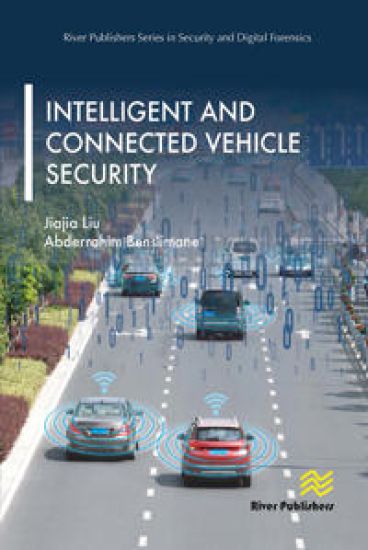
Intelligent and Connected Vehicle Security

Intelligent and Connected Vehicle Security

Jiajia Liu; Abderrahim Benslimane

River Publishers
2021
sidottu
Intelligent and Connected Vehicles (ICVs) are moving into the mainstream of the worldwide automotive industry. A lot of advanced technologies, like artificial intelligence, big data, millimeter wave radar, LiDAR and high-definition camera based real-time environmental perception, etc., are increasingly being applied in ICVs, making them more intelligent and connected with devices surrounding the vehicles. However, although the versatile connection and information exchange among ICVs, external devices and human beings provides vehicles with a better and faster perception of surrounding environments and a better driving experience for users, they also create a series of intrusion portals for malicious attackers which threaten the safety of drivers and passengers. This book is concerned with the recognition and protection against such threats. Security for ICVs includes information across the fields of automobile engineering, artificial intelligence, computer, microelectronics, automatic control, communication technology, big data, edge/cloud computing and others. This book comprehensively and systematically introduces security threats to ICVs coming from automotive technology development, on-board sensors, vehicle networking, automobile communications, intelligent transportation, big data, cloud computing, etc. Then, through discussion of some typical automobile cyber-attack cases studies, readers will gain a deeper understanding of the working principle of ICVs, so that they can test vehicles more objectively and scientifically. In this way they will find the existence of vulnerabilities and security risks and take the corresponding protective measures to prevent malicious attacks.