Kirjojen hintavertailu – 12 903 724 kirjaa ja 27 kauppaa

Kirjailija

Jie Wu

Kirjat ja teokset yhdessä paikassa: 13 kirjaa, julkaisuja vuosilta 1998–2025, suosituimpiin kuuluu Systematic Psychology. Vertaile teosten hintoja ja tarkista saatavuus suomalaisista kirjakaupoista.

13 kirjaa

Kirjojen julkaisuvuodet: 1998–2025.

Systematic Psychology

Systematic Psychology

Jie Wu

TROUBADOR PUBLISHING
2025
sidottu
Systematic Psychology applies the paradigm and method of systems science and systems philosophy to the study of Psychology and is a significant innovation to Psychology. The book covers a wide breadth of psychological theories and concepts, ranging from psychological thoughts of ancient Greece and Chinese philosophers, to that of various contemporary psychological schools. It establishes the structure of systematic psychology, composed of four types of elements: demand element, will element, cognitive element and emotional element, and concludes that psychological phenomena are formed by the mutual influence and interaction of these four elements. It also creatively proposes the three laws of psychology: the law of will orientation, the law of similarity and the law of butterfly effect, and proves, with mathematical methods, that the core of holistic optimization of mindset lies in the principle of "least action”, and the harmonious mindset is the Beauty of Overall Optimization. The book comes up with practical suggestions for the regulation and control of psychological diseases, and the how to achieve the harmony of mentality.

Politicized Medical Dispute Resolution in China

Politicized Medical Dispute Resolution in China

Jie Wu

SPRINGER VERLAG, SINGAPORE
2024
sidottu
This book investigates the politicization process of social dispute resolution and its unintended consequences, under the context of over 70 percent of China’s public hospitals have experienced hospital violence, with patients acting violently toward medical workers to express anger, protect their rights, or monetary reasons. The examination of interactions between patients, hospitals, and government representatives in China is based on fieldwork conducted in a Chinese mega-city from 2015 to 2017, combining over 700 archival mediation cases, 156 hospital violence cases and their legal outcomes, and 72 in-depth interviews with patients, mediators, and healthcare professionals. It examines the rise of mediation and finds how the party-state utilizes the traditional mediation channel to address emerging social disputes, and the art of persuasion in mediation and finds how political stability and moral concerns influence and shaped their strategies and mediation outcomes. The first-hand data and valuable archival documents help depict citizens’ social dispute resolution process and reflect another facet of non-electoral political participation in China, also enriching the understanding of evolving government strategies in dispute resolution. This book is reader-friendly and could engage a wide and dynamic audience of researchers, healthcare professionals, and readers interested in medical sociology, regional study, or political participation in China.
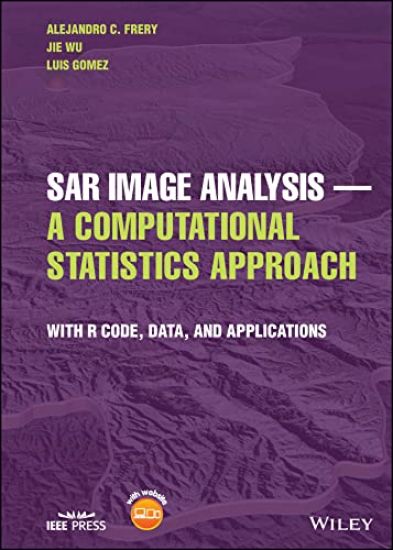
SAR Image Analysis - A Computational Statistics Approach

SAR Image Analysis - A Computational Statistics Approach

Alejandro C. Frery; Jie Wu; Luis Gomez

JOHN WILEY SONS INC
2022
sidottu
SAR IMAGE ANALYSIS — A COMPUTATIONAL STATISTICS APPROACH Discover how to use statistics to extract information from SAR imagery In SAR Image Analysis — A Computational Statistics Approach, an accomplished team of researchers delivers a practical exploration of how to use statistics to extract information from SAR imagery. The authors discuss various models, supply sample data and code, and explain theoretical aspects of SAR image analysis that are highly relevant to practitioners and students. The book offers the theoretical properties of models, estimators, interpretation, data visualization, and advanced techniques, along with the data and code samples, that students require to learn effectively and efficiently. SAR Image Analysis — A Computational Statistics Approach provides various exercises throughout the book to help readers reinforce and retain the extensive information on parameter estimation, applications, reproducibility, replicability, and advanced topics, like robust estimators and stochastic distances, contained within. The book also includes: Thorough introductions to data acquisition and the elements of data analysis and image processing with R, including useful R packages, preprocessing SAR data, and visualizationComprehensive explorations of intensity SAR data and the multiplicative model, including the (SAR) gamma distribution, the K distribution, the G0 distribution, and more general distributions under the multiplicative modelPractical discussions of parameter estimations, including the Bernoulli distribution, the negative binomial distribution, and the uniform distributionIn-depth examinations of applications, including statistical filters and classification Perfect for undergraduate and graduate students studying remote sensing, data analysis, and statistics, SAR Image Analysis — A Computational Statistics Approach is also an indispensable resource for researchers, practitioners, and professionals seeking a one-stop resource on how to use statistics to extract information from SAR imagery.
Distributed System Design
Future requirements for computing speed, system reliability, and cost-effectiveness entail the development of alternative computers to replace the traditional von Neumann organization. As computing networks come into being, one of the latest dreams is now possible - distributed computing. Distributed computing brings transparent access to as much computer power and data as the user needs for accomplishing any given task - simultaneously achieving high performance and reliability. The subject of distributed computing is diverse, and many researchers are investigating various issues concerning the structure of hardware and the design of distributed software. Distributed System Design defines a distributed system as one that looks to its users like an ordinary system, but runs on a set of autonomous processing elements (PEs) where each PE has a separate physical memory space and the message transmission delay is not negligible. With close cooperation among these PEs, the system supports an arbitrary number of processes and dynamic extensions. Distributed System Design outlines the main motivations for building a distributed system, including:inherently distributed applications performance/cost resource sharing flexibility and extendibility availability and fault tolerance scalabilityPresenting basic concepts, problems, and possible solutions, this reference serves graduate students in distributed system design as well as computer professionals analyzing and designing distributed/open/parallel systems. Chapters discuss: the scope of distributed computing systems general distributed programming languages and a CSP-like distributed control description language (DCDL) expressing parallelism, interprocess communication and synchronization, and fault-tolerant design two approaches describing a distributed system: the time-space view and the interleaving view mutual exclusion and related issues, including election, bidding, and self-stabilization prevention and detection of deadlock reliability, safety, and security as well as various methods of handling node, communication, Byzantine, and software faults efficient interprocessor communication mechanisms as well as these mechanisms without specific constraints, such as adaptiveness, deadlock-freedom, and fault-tolerance virtual channels and virtual networks load distribution problems synchronization of access to shared data while supporting a high degree of concurrency
New Aesthetic Thought, Methodology, and Structure of Systemic Philosophy
The methodologies of aesthetic thought have always had a deep, historic foundation and serve as a staple of philosophy. Researchers have begun re-examining the structure and levels of aesthetics by tracing the history of this practice and studying European and Asian traditions. This systematic perspective is an emerging topic of exploration yet requires an appropriate level of research that further investigates the recent discoveries of systemic aesthetics in today's modern world. New Aesthetic Thought, Methodology, and Structure of Systemic Philosophy is an essential reference source that discusses the organic connection between philosophy, mathematics, and aesthetics, as well as its application to other fields of human sciences. This book analyzes the history of aesthetics and studies the contemporary laws and function of beauty and nature. Featuring research on topics such as fundamental principles, mathematical methods, and humanistic logic, this book is ideally designed for philosophers, physicians, scientific researchers, mathematicians, systems engineers, complexity professionals, anthropologists, art designers, academicians, and students seeking coverage on the structure of artistic beauty through a systematic approach.
New Aesthetic Thought, Methodology, and Structure of Systemic Philosophy
The methodologies of aesthetic thought have always had a deep, historic foundation and serve as a staple of philosophy. Researchers have begun re-examining the structure and levels of aesthetics by tracing the history of this practice and studying European and Asian traditions. This systematic perspective is an emerging topic of exploration yet requires an appropriate level of research that further investigates the recent discoveries of systemic aesthetics in today's modern world. New Aesthetic Thought, Methodology, and Structure of Systemic Philosophy is an essential reference source that discusses the organic connection between philosophy, mathematics, and aesthetics, as well as its application to other fields of human sciences. This book analyzes the history of aesthetics and studies the contemporary laws and function of beauty and nature. Featuring research on topics such as fundamental principles, mathematical methods, and humanistic logic, this book is ideally designed for philosophers, physicians, scientific researchers, mathematicians, systems engineers, complexity professionals, anthropologists, art designers, academicians, and students seeking coverage on the structure of artistic beauty through a systematic approach.
Sulfur Dioxide Insertion Reactions for Organic Synthesis

Sulfur Dioxide Insertion Reactions for Organic Synthesis

Danqing Zheng; Jie Wu

Springer Verlag, Singapore
2017
nidottu
This brief summarizes the most commonly used sulfur dioxide surrogates and also shows the diverse reactivities to highlight the advances made in the development of synthetic methods through the insertion of sulfur dioxide. Depending on the nature of the transformation, these reactions are classified into four types: (i) pericyclic reactions; (ii) nucleophilic addition with organometallic reagents; (iii) transition metal catalysis; and (iv) free radical reactions. Highlighting recent advances in the insertion of sulfur dioxide, providing detailed descriptions of the experimental procedures for these valuable reactions, and discussing the remaining challenges in this field, the brief offers an appealing and highly useful guide for a wide readership in organic chemistry and medicinal chemistry from both academia and industry.
Energy-aware Scheduling on Multiprocessor Platforms

Energy-aware Scheduling on Multiprocessor Platforms

Dawei Li; Jie Wu

Springer-Verlag New York Inc.
2012
nidottu
Multiprocessor platforms play important roles in modern computing systems, and appear in various applications, ranging from energy-limited hand-held devices to large data centers. As the performance requirements increase, energy-consumption in these systems also increases signi?cantly. Dynamic Voltage and Frequency Scaling (DVFS), which allows processors to dynamically adjust the supply voltage and the clock frequency to operate on di?erent power/energy levels, is considered an e?ective way to achieve the goal of energy-saving. This book surveys existing works that have been on energy-aware task scheduling on DVFS multiprocessor platforms. Energy-aware scheduling problems are intrinsically optimization problems, the formulations of which greatly depend on the platform and task models under consideration. Thus, Energy-aware Scheduling on Multiprocessor Platforms covers current research on this topic and classi?es existing works according to two key standards, namely, homogeneity/heterogeneity of multi­processor platforms and the task types considered. Under this classi?cation, other sub-issues are also included, such as, slack reclamation, ?xed/dynamic priority sched­uling, partition-based/global scheduling, and application-speci?c power consumption, etc.
Distributed System Design

Distributed System Design

Jie Wu

CRC Press Inc
1998
sidottu
Future requirements for computing speed, system reliability, and cost-effectiveness entail the development of alternative computers to replace the traditional von Neumann organization. As computing networks come into being, one of the latest dreams is now possible - distributed computing. Distributed computing brings transparent access to as much computer power and data as the user needs for accomplishing any given task - simultaneously achieving high performance and reliability. The subject of distributed computing is diverse, and many researchers are investigating various issues concerning the structure of hardware and the design of distributed software. Distributed System Design defines a distributed system as one that looks to its users like an ordinary system, but runs on a set of autonomous processing elements (PEs) where each PE has a separate physical memory space and the message transmission delay is not negligible. With close cooperation among these PEs, the system supports an arbitrary number of processes and dynamic extensions. Distributed System Design outlines the main motivations for building a distributed system, including:inherently distributed applications performance/cost resource sharing flexibility and extendibility availability and fault tolerance scalabilityPresenting basic concepts, problems, and possible solutions, this reference serves graduate students in distributed system design as well as computer professionals analyzing and designing distributed/open/parallel systems. Chapters discuss: the scope of distributed computing systems general distributed programming languages and a CSP-like distributed control description language (DCDL) expressing parallelism, interprocess communication and synchronization, and fault-tolerant design two approaches describing a distributed system: the time-space view and the interleaving view mutual exclusion and related issues, including election, bidding, and self-stabilization prevention and detection of deadlock reliability, safety, and security as well as various methods of handling node, communication, Byzantine, and software faults efficient interprocessor communication mechanisms as well as these mechanisms without specific constraints, such as adaptiveness, deadlock-freedom, and fault-tolerance virtual channels and virtual networks load distribution problems synchronization of access to shared data while supporting a high degree of concurrency
Strategic Approaches to Enhance Innovation Performance in Enterprises

Strategic Approaches to Enhance Innovation Performance in Enterprises

Jie Wu; Jie Wu; Shasha Liu; Shasha Liu; Yingwen Sheng; Yingwen Sheng

SCHOLARS' PRESS
2025
pokkari
In the age of perpetual technological disruption and shortening product life-cycles, innovation has become the decisive battlefield on which firms either secure competitive advantage or fade into irrelevance. Yet the mere declaration that "innovation matters" is no longer sufficient; managers and scholars alike must understand how, under what conditions, and through which mechanisms knowledge is transformed into repeatable, scalable, and profitable innovation outcomes. This book tackles that challenge by integrating two traditionally separate conversations: the strategic-management discourse on knowledge-based capabilities and the operations-research literature on nonlinear innovation dynamics. Our central thesis is that sustainable innovation performance is not simply a function of how much a firm spends on R&D or how many patents it files; rather, it is an emergent property of a complex adaptive system in which environmental uncertainty, the structure of the knowledge base (breadth versus depth), the velocity of knowledge integration, and the intrinsic chaos of resource allocation interact in subtle, often counter-intuitive ways.