Kirjojen hintavertailu – 12 903 725 kirjaa ja 27 kauppaa

Kirjailija

Jill Gordon

Kirjat ja teokset yhdessä paikassa: 5 kirjaa, julkaisuja vuosilta 1999–2014, suosituimpiin kuuluu Medical Humanities Companion, Volume 4. Vertaile teosten hintoja ja tarkista saatavuus suomalaisista kirjakaupoista.

5 kirjaa

Kirjojen julkaisuvuodet: 1999–2014.

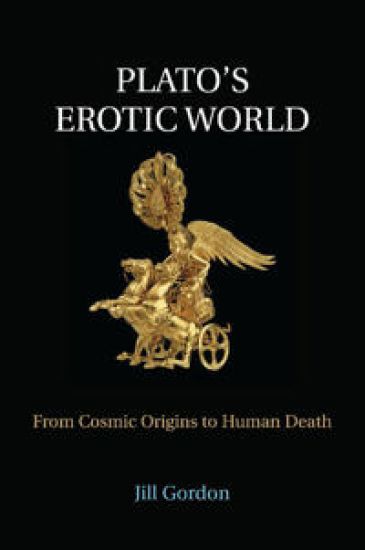
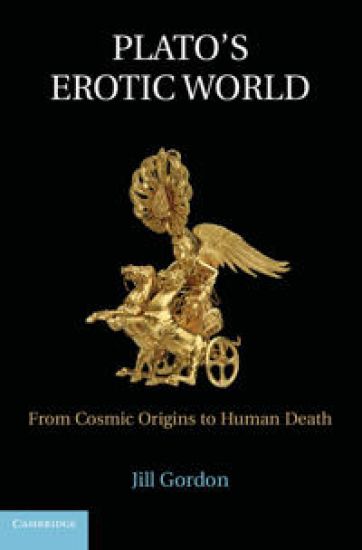
Plato's Erotic World

Plato's Erotic World

Jill Gordon

Cambridge University Press
2014
pokkari
Plato's entire fictive world is permeated with philosophical concern for Eros, well beyond the so-called erotic dialogues. Several metaphysical, epistemological and cosmological conversations - Timaeus, Cratylus, Parmenides, Theaetetus and Phaedo - demonstrate that Eros lies at the root of the human condition and that properly guided Eros is the essence of a life well lived. This book presents a holistic vision of Eros, beginning with the presence of Eros at the origin of the cosmos and the human soul, surveying four types of human self-cultivation aimed at good guidance of Eros and concluding with human death as a return to our origins. The book challenges conventional wisdom regarding the 'erotic dialogues' and demonstrates that Plato's world is erotic from beginning to end: the human soul is primordially erotic and the well-cultivated erotic soul can best remember and return to its origins, its lifelong erotic desire.
Plato's Erotic World

Plato's Erotic World

Jill Gordon

Cambridge University Press
2012
sidottu
Plato's entire fictive world is permeated with philosophical concern for Eros, well beyond the so-called erotic dialogues. Several metaphysical, epistemological and cosmological conversations - Timaeus, Cratylus, Parmenides, Theaetetus and Phaedo - demonstrate that Eros lies at the root of the human condition and that properly guided Eros is the essence of a life well lived. This book presents a holistic vision of Eros, beginning with the presence of Eros at the origin of the cosmos and the human soul, surveying four types of human self-cultivation aimed at good guidance of Eros and concluding with human death as a return to our origins. The book challenges conventional wisdom regarding the 'erotic dialogues' and demonstrates that Plato's world is erotic from beginning to end: the human soul is primordially erotic and the well-cultivated erotic soul can best remember and return to its origins, its lifelong erotic desire.
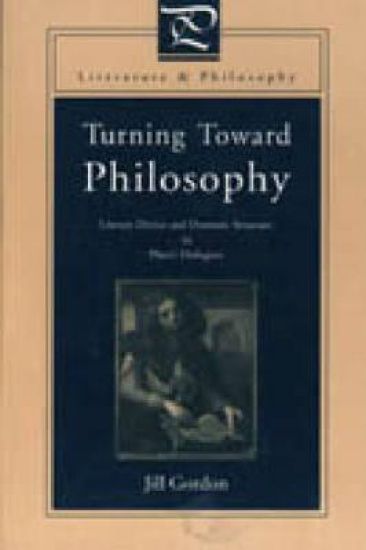
Turning Toward Philosophy

Turning Toward Philosophy

Jill Gordon

Pennsylvania State University Press
1999
sidottu
Acknowledging the powerful impact that Plato's dialogues have had on readers, Jill Gordon shows how the literary techniques Plato used function philosophically to engage readers in doing philosophy and attracting them toward the philosophical life. The picture of philosophical activity emerging from the dialogues, as thus interpreted, is a complex process involving vision, insight, and emotion basic to the human condition rather than a resort to pure reason as an escape from it. Since the literary features of Plato's writing are what draw the reader into philosophy, the book becomes an argument for the union of philosophy and literature—and against their disciplinary bifurcation—in the dialogues. Gordon construes the relationship of Plato's text to its audience as an analogue of Socrates' relationship with his interlocutors in the dialogues, seeing both as fundamentally dialectic. On this insight she builds her detailed analysis of specific literary devices in chapters on dramatic form, character development, irony, and image-making (which includes myth, metaphor, and analogy). In this way Gordon views Plato as not at all the enemy of the poets and image-makers that previous interpreters have depicted. Rather, Gordon concludes that Plato understands the power of words and images quite well. Since they, and not logico-deductive argumentation, are the appropriate means for engaging human beings, he uses them to great effect and with a sensitive understanding of human psychology, wary of their possible corrupting influences but ultimately willing to harness their power for philosophical ends.
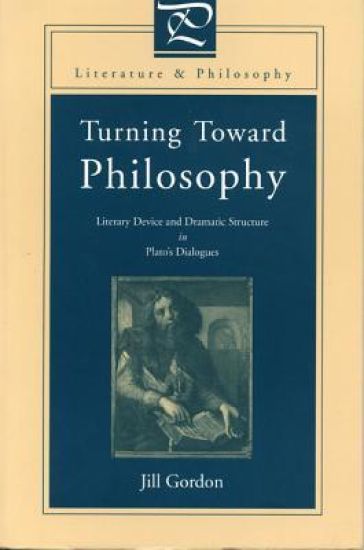
Turning Toward Philosophy

Turning Toward Philosophy

Jill Gordon

Pennsylvania State University Press
1999
pokkari
Acknowledging the powerful impact that Plato's dialogues have had on readers, Jill Gordon shows how the literary techniques Plato used function philosophically to engage readers in doing philosophy and attracting them toward the philosophical life. The picture of philosophical activity emerging from the dialogues, as thus interpreted, is a complex process involving vision, insight, and emotion basic to the human condition rather than a resort to pure reason as an escape from it. Since the literary features of Plato's writing are what draw the reader into philosophy, the book becomes an argument for the union of philosophy and literature—and against their disciplinary bifurcation—in the dialogues. Gordon construes the relationship of Plato's text to its audience as an analogue of Socrates' relationship with his interlocutors in the dialogues, seeing both as fundamentally dialectic. On this insight she builds her detailed analysis of specific literary devices in chapters on dramatic form, character development, irony, and image-making (which includes myth, metaphor, and analogy). In this way Gordon views Plato as not at all the enemy of the poets and image-makers that previous interpreters have depicted. Rather, Gordon concludes that Plato understands the power of words and images quite well. Since they, and not logico-deductive argumentation, are the appropriate means for engaging human beings, he uses them to great effect and with a sensitive understanding of human psychology, wary of their possible corrupting influences but ultimately willing to harness their power for philosophical ends.