Kirjojen hintavertailu – 12 903 725 kirjaa ja 27 kauppaa

Kirjailija

Jim Downs

Kirjat ja teokset yhdessä paikassa: 13 kirjaa, julkaisuja vuosilta 2005–2026, suosituimpiin kuuluu January 6 and the Politics of History. Vertaile teosten hintoja ja tarkista saatavuus suomalaisista kirjakaupoista.

13 kirjaa

Kirjojen julkaisuvuodet: 2005–2026.

January 6 and the Politics of History

January 6 and the Politics of History

Jim Downs; Stephanie McCurry; Joanne B. Freeman; Elizabeth Hinton; Jill Lepore; William Sturkey; Julian E. Zelizer

UNIVERSITY OF GEORGIA PRESS
2024
pokkari

Halvin toimitettuna 24,50 €

On January 6, 2021, more than two thousand rioters stormed the doors of the U. S. Capitol building in Washington, D. C., hoping to interrupt the peaceful transfer of power from former president Donald Trump to his successor, Joseph Biden. The deaths, property damage, and vicious rampage that ensued were witnessed on live television as an unprecedented attack on the democratic process and those who strive to protect it. As an installment of UGA Press’s History in the Headlines series, this book offers a rich discussion between highly respected scholars on the historical backdrop and context for contemporary issues from the headlines. In addition to the historical context, this conversation demonstrates how historians speak to one another about contentious topics and how they contribute in meaningful ways to the public’s understanding of momentous events. This volume focuses on the historical context of the January 6 attack and employs a free-flowing conversation style that allows the historians a more unconventional format. The participants discuss if—and if so, how—historians should engage in public debates and what that engagement means to their roles as academic authorities in the public.

January 6 and the Politics of History

January 6 and the Politics of History

Jim Downs; Stephanie McCurry; Joanne B. Freeman; Elizabeth Hinton; Jill Lepore; William Sturkey; Julian E. Zelizer

UNIVERSITY OF GEORGIA PRESS
2024
sidottu
On January 6, 2021, more than two thousand rioters stormed the doors of the U. S. Capitol building in Washington, D. C., hoping to interrupt the peaceful transfer of power from former president Donald Trump to his successor, Joseph Biden. The deaths, property damage, and vicious rampage that ensued were witnessed on live television as an unprecedented attack on the democratic process and those who strive to protect it. As an installment of UGA Press’s History in the Headlines series, this book offers a rich discussion between highly respected scholars on the historical backdrop and context for contemporary issues from the headlines. In addition to the historical context, this conversation demonstrates how historians speak to one another about contentious topics and how they contribute in meaningful ways to the public’s understanding of momentous events. This volume focuses on the historical context of the January 6 attack and employs a free-flowing conversation style that allows the historians a more unconventional format. The participants discuss if—and if so, how—historians should engage in public debates and what that engagement means to their roles as academic authorities in the public.
Bolezni imperii. Kak pytki rabov i zverstva vo vremja vojn izmenili meditsinu
Globalnye epidemii vsegda navodili uzhas na chelovechestvo - chuma, kholera, ospa i drugie opasnye bolezni. Ne tolko iz-za svoej smertonosnoj reputatsii, no i po prichine neizvestnosti, kotoruju taili v svoem pojavlenii i putjakh peredachi. Chtoby eto vyjasnit, vracham prishlos obratit vzory tuda, gde infektsii bushevali s neverojatnoj siloj, a imenno k nizshim slojam naselenija. Imenno nabljudenie za nimi posluzhilo osnovoj dlja stanovlenija odnogo iz samykh znachimykh napravlenij sovremennoj meditsiny - epidemiologii. Uznajte, v kakikh uslovijakh soderzhalis raby, pochemu sluzhbam goroda prishlos perestraivat tjurmy, kakim zhestokim ispytanijami podvergalis bolnye v gospitaljakh togo vremeni, i projdite ves put izuchenija bolezni s velikimi epidemiologami, sovershivshimi neverojatnye otkrytija. Perevod: Zudova E. V.
Maladies of Empire

Maladies of Empire

Jim Downs

HARVARD UNIVERSITY PRESS
2023
nidottu
“An eye-popping study of the history of infectious diseases, how they spread, and especially how they have been thwarted by experimentation on the bodies of soldiers, slaves, and colonial subjects…A timely, brilliant book about some of the brutal ironies in the story of medical progress.” —David W. Blight, author of Frederick Douglass“Brilliant…Jim Downs uncovers the origins of epidemiology in slavery, colonialism, and war. A most original global history, this book is required reading for historians, medical researchers, and really anyone interested in the origins of modern medicine.”—Sven Beckert, author of Empire of Cotton“[Sheds] light on the violent foundations of disease control interventions and public health initiatives [and] implores us to address their inequities in the present.”—Ragav Kishore, The Lancet“Captivating…A game-changing book.” —Deirdre Cooper Owens, author of Medical Bondage: Race, Gender, and the Origins of American GynecologyMost stories of medical progress come with ready-made heroes. John Snow traced the origins of London’s 1854 cholera outbreak to a water pump, leading to the birth of epidemiology. Florence Nightingale’s care of soldiers in the Crimean War revolutionized medical hygiene. Yet focusing on individual innovators ignores many of the darker, unacknowledged sources of medical knowledge. Reexamining the foundations of modern medicine, Jim Downs shows that the study of infectious disease depended crucially on the unrecognized contributions of conscripted soldiers, enslaved people, and subjects of empire. From Africa and India to the Americas, plantations, slave ships, and battlefields were the laboratories where physicians came to understand the spread of disease. Boldly argued and urgently relevant, Maladies of Empire gives a long overdue account of the true price of medical progress.
Maladies of Empire

Maladies of Empire

Jim Downs

The Belknap Press
2021
sidottu
A sweeping global history that looks beyond European urban centers to show how slavery, colonialism, and war propelled the development of modern medicine. Most stories of medical progress come with ready-made heroes. John Snow traced the origins of London’s 1854 cholera outbreak to a water pump, leading to the birth of epidemiology. Florence Nightingale’s contributions to the care of soldiers in the Crimean War revolutionized medical hygiene, transforming hospitals from crucibles of infection to sanctuaries of recuperation. Yet histories of individual innovators ignore many key sources of medical knowledge, especially when it comes to the science of infectious disease. Reexamining the foundations of modern medicine, Jim Downs shows that the study of infectious disease depended crucially on the unrecognized contributions of nonconsenting subjects—conscripted soldiers, enslaved people, and subjects of empire. Plantations, slave ships, and battlefields were the laboratories in which physicians came to understand the spread of disease. Military doctors learned about the importance of air quality by monitoring Africans confined to the bottom of slave ships. Statisticians charted cholera outbreaks by surveilling Muslims in British-dominated territories returning from their annual pilgrimage. The field hospitals of the Crimean War and the US Civil War were carefully observed experiments in disease transmission. The scientific knowledge derived from discarding and exploiting human life is now the basis of our ability to protect humanity from epidemics. Boldly argued and eye-opening, Maladies of Empire gives a full account of the true price of medical progress.
Stand By Me

Stand By Me

Jim Downs

University of Georgia Press
2020
pokkari
With Stand by Me, Jim Downs rewrites the history of gay life in the 1970s, arguing that the decade was about much more than sex and marching in the streets. Drawing on a vast trove of untapped records at LGBT community centers in Los Angeles, New York, and Philadelphia, Downs tells moving, revelatory stories of gay people who stood together—as friends, fellow believers, and colleagues—to create a sense of community among people who felt alienated from mainstream American life.
Stand by Me

Stand by Me

Jim Downs

Basic Books
2016
sidottu
Despite the tremendous gains of the LGBT movement in recent years, the history of gay life in this country remains poorly understood. According to conventional wisdom, gay liberation started with the Stonewall Riots in Greenwich Village in 1969. The 1970s represented a moment of triumph- both political and sexual- before the AIDS crisis in the subsequent decade, which, in the view of many, exposed the problems inherent in the so-called gay lifestyle". In Stand by Me , the acclaimed historian Jim Downs rewrites the history of gay life in the 1970s, arguing that the decade was about much more than sex and marching in the streets. Drawing on a vast trove of untapped records at LGBT community centres in Los Angeles, New York, and Philadelphia, Downs tells moving, revelatory stories of gay people who stood together- as friends, fellow believers, and colleagues- to create a sense of community among people who felt alienated from mainstream American life. As Downs shows, gay people found one another in the Metropolitan Community Church, a nationwide gay religious group in the pages of the Body Politic , a newspaper that encouraged its readers to think of their sexuality as a political identity at the Oscar Wilde Memorial Bookstore, the hub of gay literary life in New York City and at theatres putting on Gay American History," a play that brought to the surface the enduring problem of gay oppression. These and many other achievements would be largely forgotten after the arrival in the early 1980s of HIV/AIDS, which allowed critics to claim that sex was the defining feature of gay liberation. This reductive narrative set back the cause of gay rights and has shaped the identities of gay people for decades. An essential act of historical recovery, Stand by Me shines a bright light on a triumphant moment, and will transform how we think about gay life in America from the 1970s into the present day.
Sick from Freedom

Sick from Freedom

Jim Downs

Oxford University Press Inc
2015
nidottu
Bondspeople who fled from slavery during and after the Civil War did not expect that their flight toward freedom would lead to sickness, disease, suffering, and death. But the war produced the largest biological crisis of the nineteenth century, and as historian Jim Downs reveals in this groundbreaking volume, it had deadly consequences for hundreds of thousands of freed people. In Sick from Freedom, Downs recovers the untold story of one of the bitterest ironies in American history--that the emancipation of the slaves, seen as one of the great turning points in U. S. history, had devastating consequences for innumerable freedpeople. Drawing on massive new research into the records of the Medical Division of the Freedmen's Bureau-a nascent national health system that cared for more than one million freed slaves-he shows how the collapse of the plantation economy released a plague of lethal diseases. With emancipation, African Americans seized the chance to move, migrating as never before. But in their journey to freedom, they also encountered yellow fever, smallpox, cholera, dysentery, malnutrition, and exposure. To address this crisis, the Medical Division hired more than 120 physicians, establishing some forty underfinanced and understaffed hospitals scattered throughout the South, largely in response to medical emergencies. Downs shows that the goal of the Medical Division was to promote a healthy workforce, an aim which often excluded a wide range of freedpeople, including women, the elderly, the physically disabled, and children. Downs concludes by tracing how the Reconstruction policy was then implemented in the American West, where it was disastrously applied to Native Americans. The widespread medical calamity sparked by emancipation is an overlooked episode of the Civil War and its aftermath, poignantly revealed in Sick from Freedom.
Sick from Freedom

Sick from Freedom

Jim Downs

Oxford University Press Inc
2012
sidottu
Bondspeople who fled from slavery during and after the Civil War did not expect that their flight toward freedom would lead to sickness, disease, suffering, and death. But the war produced the largest biological crisis of the nineteenth century, and as historian Jim Downs reveals in this groundbreaking volume, it had deadly consequences for hundreds of thousands of freed people. In Sick from Freedom, Downs recovers the untold story of one of the bitterest ironies in American history--that the emancipation of the slaves, seen as one of the great turning points in U. S. history, had devastating consequences for innumerable freedpeople. Drawing on massive new research into the records of the Medical Division of the Freedmen's Bureau--a nascent national health system that cared for more than 500,000 freed slaves--he shows how the collapse of the plantation economy released a plague of lethal diseases. With emancipation, African Americans seized the chance to move, migrating as never before. But in their journey to freedom, they also encountered yellow fever, smallpox, cholera, dysentery, malnutrition, and exposure. To address this crisis, the Medical Division hired more than 120 physicians, establishing some forty underfinanced and understaffed hospitals scattered throughout the South, largely in response to medical emergencies. Downs shows that the goal of the Medical Division was to promote a healthy workforce, an aim which often excluded a wide range of freedpeople, including women, the elderly, the physically disabled, and children. Downs concludes by tracing how the Reconstruction policy was then implemented in the American West, where it was disastrously applied to Native Americans. The widespread medical calamity sparked by emancipation is an overlooked episode of the Civil War and its aftermath, poignantly revealed in Sick from Freedom.
Why We Write

Why We Write

Jim Downs

Routledge
2005
nidottu
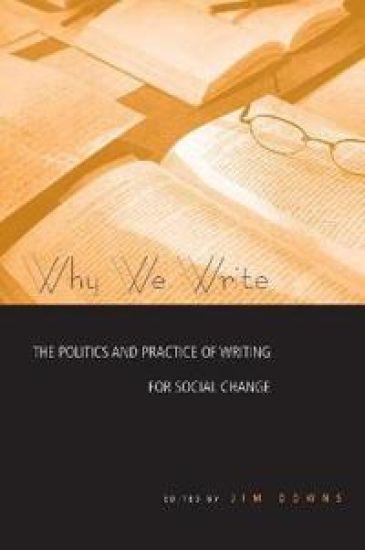
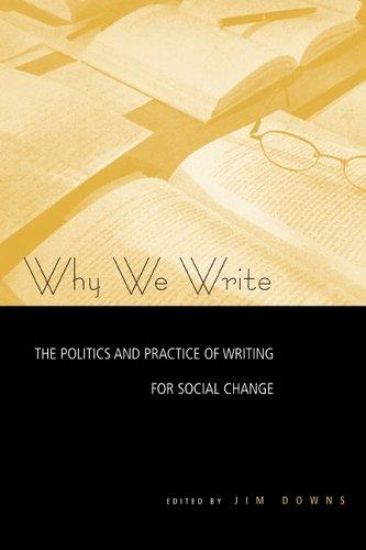
Why We Write provides a forum for scholars, activists, and novelists to reflect on the ways in which they use their writing and academic work to create social change. This volume uncovers the political agendas, social missions, and personal and professional experiences that compel writers to bring their stories to the page. Why We Write examines the dual commitment of writing articles and books that are committed to high scholarly standards as well as social justice. These essays will be of great interest to college and graduate students who currently lack a model of social justice scholarship.
Why We Write

Why We Write

Jim Downs

Routledge
2005
sidottu
Why We Write provides a forum for scholars, activists, and novelists to reflect on the ways in which they use their writing and academic work to create social change. This volume uncovers the political agendas, social missions, and personal and professional experiences that compel writers to bring their stories to the page. Why We Write examines the dual commitment of writing articles and books that are committed to high scholarly standards as well as social justice. These essays will be of great interest to college and graduate students who currently lack a model of social justice scholarship.