Kirjojen hintavertailu – 12 859 818 kirjaa ja 27 kauppaa

Kirjailija

Jim Fisher

Kirjat ja teokset yhdessä paikassa: 11 kirjaa, julkaisuja vuosilta 1994–2020, suosituimpiin kuuluu Ten Percent of Nothing. Vertaile teosten hintoja ja tarkista saatavuus suomalaisista kirjakaupoista.

11 kirjaa

Kirjojen julkaisuvuodet: 1994–2020.

The Thoughtful Leader

The Thoughtful Leader

Jim Fisher

University of Toronto Press
2018
pokkari
Leadership is a quality that is difficult to define. Some believe that it is innate, the gift of a selected few. Others believe that it is a skill that can be learned but don’t agree on what, exactly, should be taught. In The Thoughtful Leader, Jim Fisher provides an invigorating, inclusive and positive framework for teaching current and aspiring leaders in all walks of life. The author has incorporated various apparently opposing leadership ideas into an integrated model. In order to successfully meet the challenges of a fast changing world, leaders can no longer choose between managing, directing or engaging. The thoughtful leader is someone who simultaneously, consistently and coherently manages, directs and engages their followers. The framework provides a way for anyone who is motivated to lead, has the courage to act and is willing to think about their actions to become more effective. Thoughtful leaders can maintain integrity in their actions and activities regardless of the situations that they encounter day-to-day. The model developed in this book applies to many settings, including corporate and public service environments. The Thoughtful Leader offers a fresh and forward thinking framework that allows active and emerging leaders to be better prepared to live as a leader day to day.
Forensics Under Fire

Forensics Under Fire

Jim Fisher

Rutgers University Press
2008
sidottu
Television shows like CSI, Forensic Files, and The New Detectives make it look so easy. A crime-scene photographer snaps photographs, a fingerprint technician examines a gun, uniformed officers seal off a house while detectives gather hair and blood samples, placing them carefully into separate evidence containers. In a crime laboratory, a suspect's hands are meticulously examined for gunshot residue. An autopsy is performed in order to determine range and angle of the gunshot and time-of-death evidence. Dozens of tests and analyses are performed and cross-referenced. A conviction is made. Another crime is solved. The credits roll. The American public has become captivated by success stories like this one with their satisfyingly definitive conclusions, all made possible because of the wonders of forensic science. Unfortunately, however, popular television dramas do not represent the way most homicide cases in the United States are actually handled. Crime scenes are not always protected from contamination; physical evidence is often packaged improperly, lost, or left unaccounted for; forensic experts are not always consulted; and mistakes and omissions on the autopsy table frequently cut investigations short or send detectives down the wrong investigative path. In Forensics Under Fire, Jim Fisher makes a compelling case that these and other problems in the practice of forensic science allow offenders to escape justice and can also lead to the imprisonment of innocent people. Bringing together examples from a host of high-profile criminal cases and familiar figures, such as the JonBenet Ramsey case and Dr. Henry Lee who presented physical evidence in the O. J. Simpson trial, along with many lesser known but fascinating stories, Fisher presents daunting evidence that forensic science has a long way to go before it lives up to its potential and the public's expectations.
The Writer's Quotebook

The Writer's Quotebook

Jim Fisher

Rutgers University Press
2006
sidottu
If you have ever stared a page that remains stubbornly blank; if you have ever wondered why writers write, or whether good writers are born or made; if you are a novelist, playwright, poet, or journalist, or simply delight in the written word, The Writer’s Quotebook is for you. Whether you keep it in your office, on your coffee table, next to your keyboard or your bed, this rich compendium of over one thousand quotations will inspire, invigorate, and illuminate the often challenging, sometimes humorous, but always fascinating task of those who bring words to life. From William Faulkner and Ernest Hemingway to Doris Lessing and Joyce Carol Oates, more than five hundred published writers put pen to paper on what the literary life is all about. Selections come from seasoned professionals as well as those just establishing their voice, and they represent a variety of nationalities and genres. The book is divided into three sections. The first part is devoted to the creative process, including thoughts on where writers get their ideas, the role of inspiration, what kind of people write, and where talent comes from. In part two, the subject shifts to writing as a craft. Here, authors ponder the creation of protagonists and points of view, the writing of dialogue, setting and description, creating plots, and the anatomy of style. The final third of the book deals with the challenges and rewards that come with the writing life. Subjects in this section include the economic realities of writing, classes, conferences, and workshops, dealing with rejection and bad reviews, writing habits and rituals, despair, alcohol, suicide, and fame. Articulated with elegant metaphor, in straightforward prose, or with wry wit, the carefully selected and thoughtfully organized quotations come together to form a narrative that entertains, informs, and in the case of aspiring writers, shows the way to better writing.

Ten Percent of Nothing

Ten Percent of Nothing

Jim Fisher

Southern Illinois University Press
2004
sidottu
During the 1920s and 1930s at the Bryn Mawr Summer School for Women Workers, working-class women were educated in the liberal arts and instructed in writing to assume more powerful roles in the industrial workplace. In Liberating Voices: Writing at the Bryn Mawr Summer School for Women Workers, Karyn L. Hollis tells the remarkable story of how this multi-class, multi-ethnic American institution emerged from the broad social, economic, and ideological trends of the era with roots in composition pedagogy, literary history, and leftist thought. The summer school curriculum, Hollis shows, enhanced the individual and collective self-confidence of the 1,800 women who studied there between 1921 and 1938. Drawing heavily on the women's writings - including autobiography, poetry, labor drama, humor, and economic reporting - Liberating Voices adds significantly to the small oeuvre of published writing by working-class women, who were, in this case, mostly non-traditional students, immigrants, and minorities. Outlining a materialist pedagogy that centers on the women's daily economic struggles as well as their family and community experiences, Hollis reveals the tensions that stemmed from differences in race, ethnicity, class, and religion. She also shows how the students drew strength from their diversity, eventually insisting on a democratic sharing of power with faculty and administrators at the Summer School. Hollis provides a thorough ethnography of the Summer School with respect to its place in the social and political history of the 1920s and 1930s, then situates the school's pedagogy within the history of American education and composition instruction. Concepts from literary criticism and composition theory provide the framework for an analysis of the working women's autobiographical writing, revealing how the narrative voice of their prose grew from weak and individualized to empowered and collective as the women described their families, childhood, work, unions, and education over time.
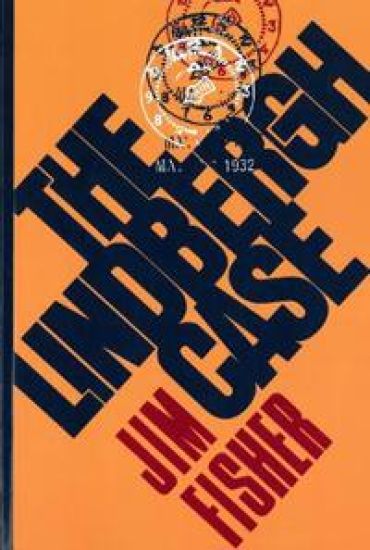
The Lindbergh Case

The Lindbergh Case

Jim Fisher

Rutgers University Press
1994
nidottu
"If I had only one book to read on the Lindbergh case I should . . . choose Fisher's. It is balanced, impartial, and contains much material not to be found elsewhere."--Francis Russell, The New York Review of Books "Fisher . . . goes against the revisionist tide and argues strongly--and persuasively--for Hauptmann's guilt . . . a compelling book."--Patrick Reardon, Chicago Tribune "A good real-life crime yarn."--Kirkus Reviews "A riveting book."--Harry Sayen, The Times, Trenton "A real detective story."--Sylvia Sachs, The Pittsburgh Press "One cannot help getting caught up in the search for the child, then in the search for justice. These events resonate more than 50 years after they occurred."--John Katzenback, The New York Times Book Review "Fisher thoroughly covers the case, from the night the baby was taken from his home in Hopewell, NJ, on March 1, 1932, to Hauptmann's execution on April 3, 1936 . . . a convincing case."--Publishers Weekly "A grimly fascinating account of the kidnapping and murder of Charles A. Lindbergh, Jr., son of the world-famous aviator."--The Columbus Dispatch "A richly detailed, engrossing, and well-written history of the kidnapping saga. . . . may well become the definitive work on the subject."