
Kirjojen hintavertailu – 12 903 725 kirjaa ja 27 kauppaa

Kirjailija

Jim Igoe

Kirjat ja teokset yhdessä paikassa: 3 kirjaa, julkaisuja vuosilta 2003–2008, suosituimpiin kuuluu Nature Unbound. Vertaile teosten hintoja ja tarkista saatavuus suomalaisista kirjakaupoista.

3 kirjaa

Kirjojen julkaisuvuodet: 2003–2008.

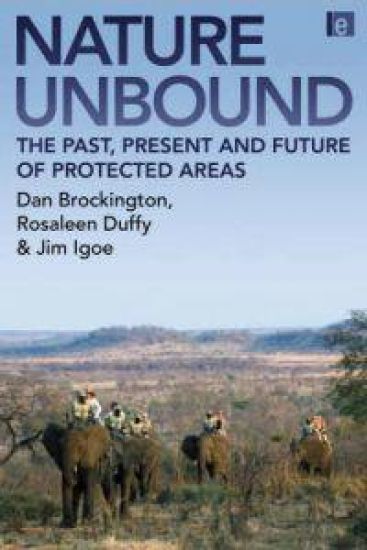
Nature Unbound

Nature Unbound

Dan Brockington; Rosaleen Duffy; Jim Igoe

Earthscan Ltd
2008
sidottu
This groundbreaking volume is the first comprehensive, critical examination of the rise of protected areas and their current social and economic position in our world. It examines the social impacts of protected areas, the conflicts that surround them, the alternatives to them and the conceptual categories they impose. The book explores key debates on devolution, participation and democracy; the role and uniqueness of indigenous peoples and other local communities; institutions and resource management; hegemony, myth and symbolic power in conservation success stories; tourism, poverty and conservation; and the transformation of social and material relations which community conservation entails. For conservation practitioners and protected area professionals not accustomed to criticisms of their work, or students new to this complex field, the book will provide an understanding of the history and current state of affairs in the rise of protected areas. It introduces the concepts, theories and writers on which critiques of conservation have been built, and provides the means by which practitioners can understand problems with which they are wrestling. For advanced researchers the book will present a critique of the current debates on protected areas and provide a host of jumping off points for an array of research avenues
Nature Unbound

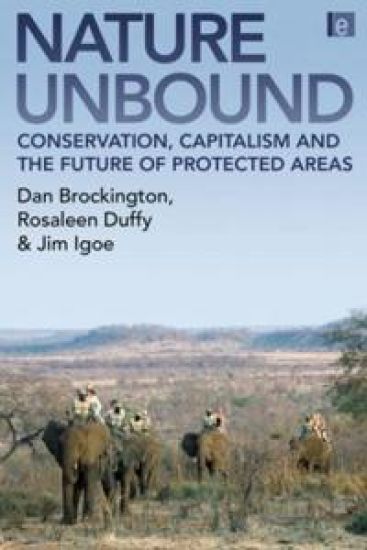
Nature Unbound

Dan Brockington; Rosaleen Duffy; Jim Igoe

Earthscan Ltd
2008
nidottu
This groundbreaking volume is the first comprehensive, critical examination of the rise of protected areas and their current social and economic position in our world. It examines the social impacts of protected areas, the conflicts that surround them, the alternatives to them and the conceptual categories they impose. The book explores key debates on devolution, participation and democracy; the role and uniqueness of indigenous peoples and other local communities; institutions and resource management; hegemony, myth and symbolic power in conservation success stories; tourism, poverty and conservation; and the transformation of social and material relations which community conservation entails. For conservation practitioners and protected area professionals not accustomed to criticisms of their work, or students new to this complex field, the book will provide an understanding of the history and current state of affairs in the rise of protected areas. It introduces the concepts, theories and writers on which critiques of conservation have been built, and provides the means by which practitioners can understand problems with which they are wrestling. For advanced researchers the book will present a critique of the current debates on protected areas and provide a host of jumping off points for an array of research avenues
Conservation and Globalization

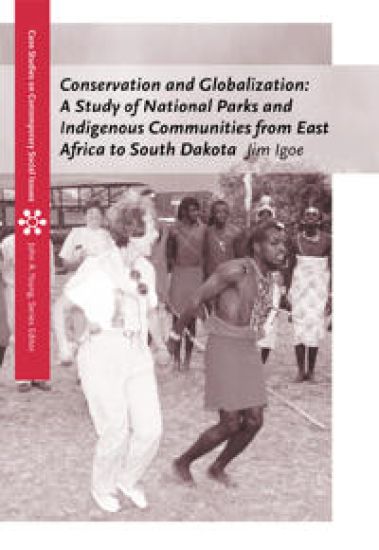
Conservation and Globalization

Jim Igoe

Wadsworth Publishing Co Inc
2003
nidottu
This book makes current issues in political ecology and the question of globalization accessible to undergraduate students, as well as to non-academic readers. It is also empirically and theoretically rigorous enough to appeal to an academic audience. CONSERVATION AND GLOBALIZATION opens with a discussion of these two broad issues as they relate to the author's fieldwork with Maasai herding communities on the margins of Tarangire National Park in Tanzania. It explores different theoretical perspectives (Neo-Marxist and Foucauldian) on globalization and why both are relevant to the case studies presented. Students are introduced to the practice of multi-sited ethnography and its centrality to the anthropological study of globalization. While drawing on examples from specific Maasai communities, the book is more broadly concerned with the historical and contemporary links between these communities and a global system of institutions, ideas, and money. The ecological incompatibility of Western national park-style conservation with East African savanna ecosystems and Maasai resource management practices, are highlighted. The concept of national parks is traced temporally and geographically from Maasai communities to the enclosure movement in 18th century England and westward expansion in 19th century North America. The relationships of parks to Judeo-Christian assumptions about "man's place in nature," colonial ideologies like Manifest Destiny and the Civilizing Mission, and capitalist notions of private property and "The Tragedy of the Commons," are explored. The book also looks at the latest conservation paradigm of "Community-Based Conservation," and explores its connections to the Soviet Collapse, economic and political liberalization, and the global proliferation of NGOs.