Kirjojen hintavertailu – 12 903 725 kirjaa ja 27 kauppaa

Kirjailija

Jim Mansell

Kirjat ja teokset yhdessä paikassa: 4 kirjaa, julkaisuja vuosilta 1994–2012, suosituimpiin kuuluu Active Support. Vertaile teosten hintoja ja tarkista saatavuus suomalaisista kirjakaupoista.

4 kirjaa

Kirjojen julkaisuvuodet: 1994–2012.

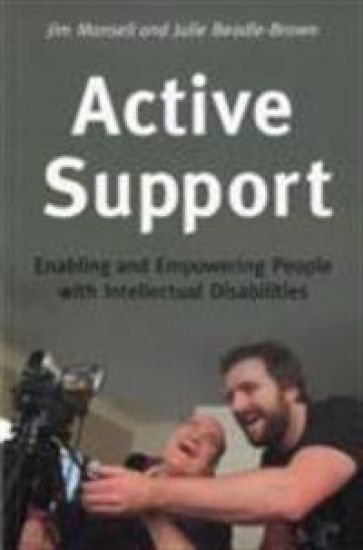
Active Support

Active Support

Jim Mansell; Julie Beadle-Brown

Jessica Kingsley Publishers
2012
pokkari
Active Support is a proven model of care that enables and empowers people with intellectual disabilities to participate fully in all aspects of their lives. This evidence-based approach is particularly effective for working with people with more severe disabilities, and is of growing interest to those responsible for providing support and services. The authors provide a comprehensive overview of Active Support and how it can be used in practice, based on the theory and research underpinning the methods involved. They describe how to engage people with intellectual disabilities in meaningful activity as active participants, and look at the communication style needed to foster positive relationships between carers and the people they are supporting. Highlighting the main issues for those trying to put Active Support into practice, they explain what is needed on a day-to-day basis to support the implementation, improvement and maintenance of the approach, along with possible solutions for the difficulties they may encounter. Finally, they look at how to integrate Active Support with other person-centred approaches, drawing on examples from various organisations and individual case studies. The definitive text on Active Support, this book will be essential reading for anyone professionally concerned with the quality of life of people with intellectual disabilities, including psychologists, behaviour specialists, social workers, care managers, occupational therapists and inspectors and regulators of services, as well as families.

Group Homes for People with Intellectual Disabilities

Group Homes for People with Intellectual Disabilities

Jim Mansell; Tim Clement; Christine Bigby

Jessica Kingsley Publishers
2009
pokkari
Group homes are the dominant form of residential accommodation for people with severe learning or intellectual disabilities, and yet there are significant problems within these living environments. This book seeks to highlight the key issues for both residents and staff, and offers practical suggestions for improving community living. Based on original empirical research and drawing on extensive field notes, the book paints a picture of life in group homes today. The authors propose a framework for increasing community presence and participation, and consider the barriers to be overcome if progress is to be made in achieving these key goals. The notion of 'homeliness', the challenge of maintaining a balance between individual and group needs and the concept of practice leadership are all explored. Group Homes for People with Intellectual Disabilities is essential reading for anyone working with people with learning or intellectual disabilities in residential services, as well as academics and students of disability studies, social work and health and social care programmes.
Planning and Support for People with Intellectual Disabilities
Thought-provoking, well-written, and offering a range of fresh and sometimes challenging perspectives, Planning and Support should be essential reading for people working in the field of learning disabilities. Highly recommended.'- Involve MagazineThe authors outline the skills needed and common issues in case management practice across a range of people with different disabilities at different stages of their life. Emphasising the importance of taking a rights-based approach to supporting people with learning disabilities, the authors argue that effective case management needs to be individualised and carried out in partnership with the individual and their family in order to draw up a lifestyle plan that meets their many needs, including employment, education, vocational training, therapy and behaviour support. The book includes chapters on inter-agency and cross-sector negotiation and collaboration, balancing rights and protection, listening to individuals and families, communication, optimising health outcomes, approaches to behaviour support, ethical decision-making and reflective supervision, and the text is complemented by case studies throughout. An essential reference for practitioners, the book is also an invaluable guide for policy makers, researchers and students, nurses, carers, and people with intellectual disabilities and their families.
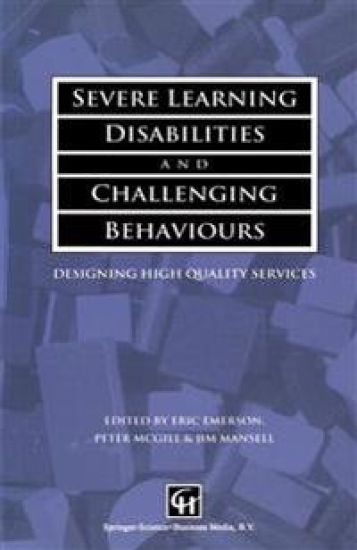
Severe Learning Disabilities and Challenging Behaviours: Designing High Quality Services
This is a timely book. The question of how to help people with challenging behaviour -and how to design and manage services so that staff, families and users feel that what should be done is being done - is at the top of the agenda. Failure to deal com- petently with the issue results in disaffection, poor quality ser- vices and a less than optimal quality of life for service users. Moreover, the credibility of services for all people with learning disabilities is intimately connected with how we cope with chal- lenging behaviour, a point made recently by a Department of Health Working Group chaired by Jim Mansell (Department of Health, 1993). The book is welcome because it draws together what is known about the important questions from a British perspective, although, of course, most of the underlying issues have world- wide relevance. The contributors, while all having a good deal of experience and authority, do not put forward simple portrayals of the problems, nor glib solutions, and this is one of the book's major strengths. Clarity in the field of challenging behaviour is sometimes elu- sive. What is presented here forces the reader to confront argu- ments in a rational and logical fashion.