Kirjojen hintavertailu – 12 903 725 kirjaa ja 27 kauppaa

Kirjailija

Jim Mattis

Kirjat ja teokset yhdessä paikassa: 5 kirjaa, julkaisuja vuosilta 2018–2021, suosituimpiin kuuluu The Marines, Counterinsurgency, and Strategic Culture. Vertaile teosten hintoja ja tarkista saatavuus suomalaisista kirjakaupoista.

5 kirjaa

Kirjojen julkaisuvuodet: 2018–2021.

Call Sign Chaos

Call Sign Chaos

Jim Mattis

Random House Trade Paperbacks
2021
nidottu

Halvin toimitettuna 22,00 €

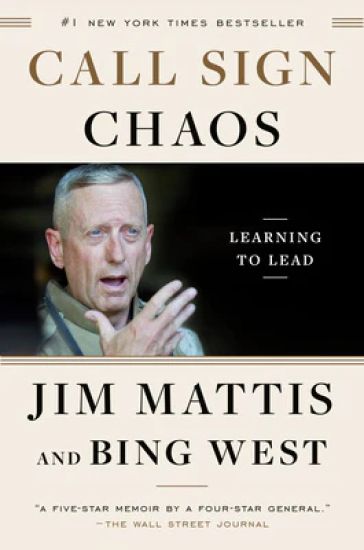
#1 NEW YORK TIMES BESTSELLER - A clear-eyed account of learning how to lead in a chaotic world, by General Jim Mattis--the former Secretary of Defense and one of the most formidable strategic thinkers of our time--and Bing West, a former assistant secretary of defense and combat Marine. "A four-star general's five-star memoir."--The Wall Street Journal Call Sign Chaos is the account of Jim Mattis's storied career, from wide-ranging leadership roles in three wars to ultimately commanding a quarter of a million troops across the Middle East. Along the way, Mattis recounts his foundational experiences as a leader, extracting the lessons he has learned about the nature of warfighting and peacemaking, the importance of allies, and the strategic dilemmas--and short-sighted thinking--now facing our nation. He makes it clear why America must return to a strategic footing so as not to continue winning battles but fighting inconclusive wars. Mattis divides his book into three parts: Direct Leadership, Executive Leadership, and Strategic Leadership. In the first part, Mattis recalls his early experiences leading Marines into battle, when he knew his troops as well as his own brothers. In the second part, he explores what it means to command thousands of troops and how to adapt your leadership style to ensure your intent is understood by your most junior troops so that they can own their mission. In the third part, Mattis describes the challenges and techniques of leadership at the strategic level, where military leaders reconcile war's grim realities with political leaders' human aspirations, where complexity reigns and the consequences of imprudence are severe, even catastrophic. Call Sign Chaos is a memoir of a life of warfighting and lifelong learning, following along as Mattis rises from Marine recruit to four-star general. It is a journey about learning to lead and a story about how he, through constant study and action, developed a unique leadership philosophy, one relevant to us all.
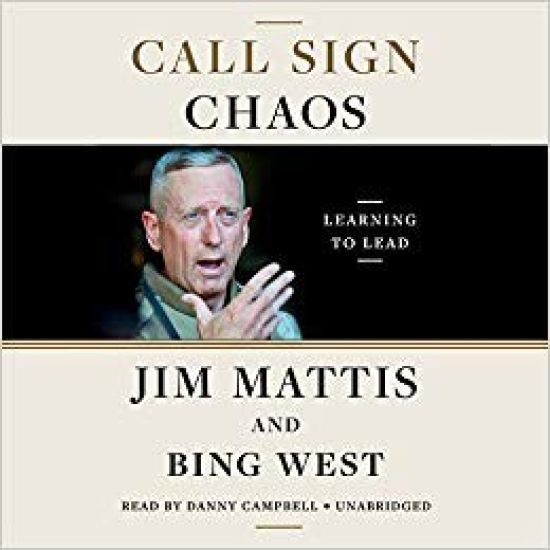
Call Sign Chaos

Call Sign Chaos

Jim Mattis; Bing West

Random House US Audio
2019
cd
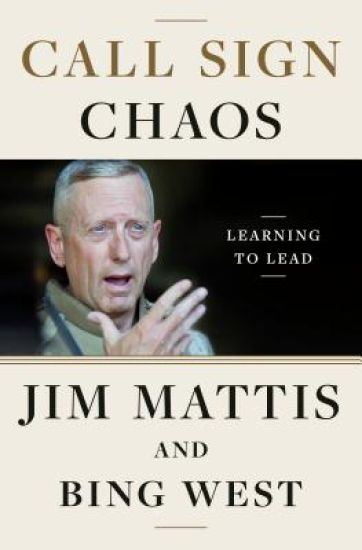
#1 NEW YORK TIMES BESTSELLER - A clear-eyed account of learning how to lead in a chaotic world, by General Jim Mattis--the former Secretary of Defense and one of the most formidable strategic thinkers of our time--and Bing West, a former assistant secretary of defense and combat Marine. "A four-star general's five-star memoir."--The Wall Street Journal Call Sign Chaos is the account of Jim Mattis's storied career, from wide-ranging leadership roles in three wars to ultimately commanding a quarter of a million troops across the Middle East. Along the way, Mattis recounts his foundational experiences as a leader, extracting the lessons he has learned about the nature of warfighting and peacemaking, the importance of allies, and the strategic dilemmas--and short-sighted thinking--now facing our nation. He makes it clear why America must return to a strategic footing so as not to continue winning battles but fighting inconclusive wars. Mattis divides his book into three parts: Direct Leadership, Executive Leadership, and Strategic Leadership. In the first part, Mattis recalls his early experiences leading Marines into battle, when he knew his troops as well as his own brothers. In the second part, he explores what it means to command thousands of troops and how to adapt your leadership style to ensure your intent is understood by your most junior troops so that they can own their mission. In the third part, Mattis describes the challenges and techniques of leadership at the strategic level, where military leaders reconcile war's grim realities with political leaders' human aspirations, where complexity reigns and the consequences of imprudence are severe, even catastrophic. Call Sign Chaos is a memoir of a life of warfighting and lifelong learning, following along as Mattis rises from Marine recruit to four-star general. It is a journey about learning to lead and a story about how he, through constant study and action, developed a unique leadership philosophy, one relevant to us all.
The Marines, Counterinsurgency, and Strategic Culture

The Marines, Counterinsurgency, and Strategic Culture

Jim Mattis; Jeannie L. Johnson

Georgetown University Press
2018
pokkari
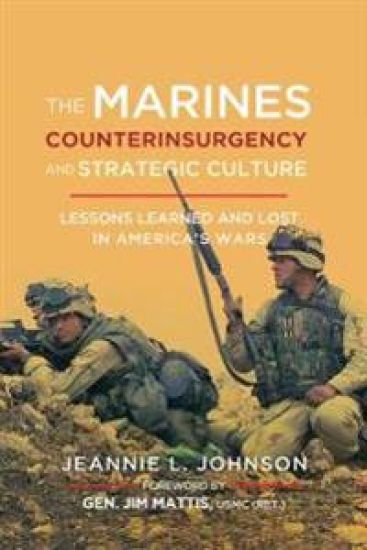
The United States Marine Corps has a unique culture that ensures comradery, exacting standards, and readiness to be the first to every fight. Yet even in a group that is known for innovation, culture can push leaders to fall back on ingrained preferences. Jeannie L. Johnson takes a sympathetic but critical look at the Marine Corps's long experience with counterinsurgency warfare. Which counterinsurgency lessons have been learned and retained for next time and which have been abandoned to history is a story of battlefield trial and error—but also a story of cultural collisions. The book begins with a fascinating and penetrating look inside the culture of the Marine Corps through research in primary sources, including Marine oral histories, and interviews with Marines. Johnson explores what makes this branch of the military distinct: their identity, norms, values, and perceptual lens. She then traces the history of the Marines' counterinsurgency experience from the expeditionary missions of the early twentieth century, through the Vietnam War, and finally to the Iraq War. Her findings break new ground in strategic culture by introducing a methodology that was pioneered in the intelligence community to forecast behavior. Johnson shows that even a service as self-aware and dedicated to innovation as the Marine Corps is constrained in the lessons-learned process by its own internal predispositions, by the wider US military culture, and by national preferences. Her findings challenge the conclusions of previous counterinsurgency scholarship that ignores culture. This highly readable book reminds us of Sun Tzu's wisdom that to be successful in war, it is important to know thyself as well as the enemy. This is a must-read for anyone interested in the Marines Corps, counterinsurgency warfare, military innovation, or strategic culture.
The Marines, Counterinsurgency, and Strategic Culture

The Marines, Counterinsurgency, and Strategic Culture

Jeannie L. Johnson; Jim Mattis

Georgetown University Press
2018
sidottu
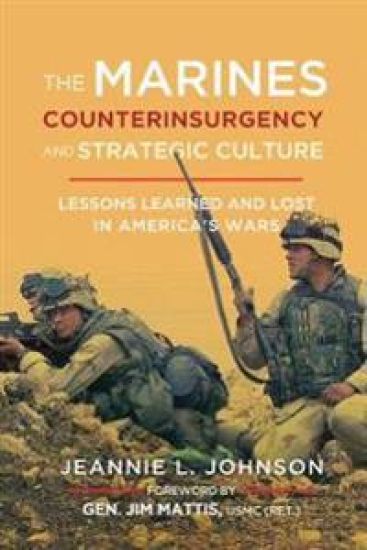
The United States Marine Corps has a unique culture that ensures comradery, exacting standards, and readiness to be the first to every fight. Yet even in a group that is known for innovation, culture can push leaders to fall back on ingrained preferences. Jeannie L. Johnson takes a sympathetic but critical look at the Marine Corps's long experience with counterinsurgency warfare. Which counterinsurgency lessons have been learned and retained for next time and which have been abandoned to history is a story of battlefield trial and error—but also a story of cultural collisions. The book begins with a fascinating and penetrating look inside the culture of the Marine Corps through research in primary sources, including Marine oral histories, and interviews with Marines. Johnson explores what makes this branch of the military distinct: their identity, norms, values, and perceptual lens. She then traces the history of the Marines' counterinsurgency experience from the expeditionary missions of the early twentieth century, through the Vietnam War, and finally to the Iraq War. Her findings break new ground in strategic culture by introducing a methodology that was pioneered in the intelligence community to forecast behavior. Johnson shows that even a service as self-aware and dedicated to innovation as the Marine Corps is constrained in the lessons-learned process by its own internal predispositions, by the wider US military culture, and by national preferences. Her findings challenge the conclusions of previous counterinsurgency scholarship that ignores culture. This highly readable book reminds us of Sun Tzu's wisdom that to be successful in war, it is important to know thyself as well as the enemy. This is a must-read for anyone interested in the Marines Corps, counterinsurgency warfare, military innovation, or strategic culture.