Kirjojen hintavertailu – 12 903 725 kirjaa ja 27 kauppaa

Kirjailija

Jim Phillips

Kirjat ja teokset yhdessä paikassa: 23 kirjaa, julkaisuja vuosilta 2001–2025, suosituimpiin kuuluu The Key to LIFE. Vertaile teosten hintoja ja tarkista saatavuus suomalaisista kirjakaupoista.

23 kirjaa

Kirjojen julkaisuvuodet: 2001–2025.

108 Psychopaths and Me

108 Psychopaths and Me

Jim Phillips

Boundless Publishing Group Ltd
2025
pokkari
What if your best friend turned out to be a master of deception? In 2005, Jim Phillips co-founded a marketing company with an old friend. Business boomed, contracts poured in and their client list expanded to include high-profile international brands. But as his partner's behaviour became increasingly erratic, Jim began to wonder: did he really know the man he had built his business with? Then, in 2012, everything fell apart. 108 Psychopaths and Me is the astonishing true story of how Jim's life was shattered by an extraordinary betrayal. One day, Jim was a successful entrepreneur, spearheading global campaigns for elite sports clients; the next, he finds himself in front of a judge at the Old Bailey, trapped in a living nightmare. From impersonating bank officials and a Chinese government minister to fabricating multimillion-pound contracts and feigning cancer, his 'best friend' had orchestrated an elaborate con with devastating consequences. In 108 Psychopaths and Me, Jim unravels a mind-boggling web of lies and offers a blow-by-blow account of how he uncovered the shocking truth about a man he once trusted. This is a cautionary tale which delves into the complexities of human nature, revealing our capacity for both callousness and compassion. Raw and unflinching, Jim seeks to understand what happened - and, more importantly, why - while proving that resilience can rebuild a life even when all hope seems lost.

I Did not Commit Adultery

I Did not Commit Adultery

Jim Phillips

UNIVERSITY OF TORONTO PRESS
2025
sidottu
This book chronicles the breakdown of the marriage of Robert and Eliza Campbell, a couple living in Whitby, Ontario. Their case precipitated a six-year battle in the Ontario courts and the Parliament of Canada in the 1870s. In the Court of Common Pleas, Robert Campbell successfully sued the man he alleged had seduced his wife for criminal conversation, and Eliza Campbell successfully sued Robert’s brother James Campbell for defamation. Eliza Campbell failed, however, to get an order for alimony in the Court of Chancery. When this litigation was concluded, Robert Campbell petitioned Parliament for an Act of Divorce: the only way to get a divorce in Ontario before 1930. In 1876, he failed to persuade the Senate divorce committee that Eliza had committed adultery – the only ground for a divorce at that time – but Eliza succeeded in having an Act of Separation passed in her favour. I Did Not Commit Adultery is a detailed study of how the law governed married women in the latter half of the nineteenth century. Along the way, Jim Phillips reveals the operations of the civil courts, the forensic skills of leading members of the Ontario legal profession, constitutional law, and parliamentary divorce, which has never before been examined in detail by Canadian historians.
Coalfield Justice

Coalfield Justice

Jim Phillips

EDINBURGH UNIVERSITY PRESS
2024
nidottu
In June 2022, former miners secured through the Scottish Parliament a collective pardon for convictions acquired during the 1984-85 miners' strike. The Miners' Strike (Pardons) (Scotland) Act recognised the distinct injustices facing Scottish strikers: twice as likely to be arrested as those in England and Wales and three times as likely to be sacked. This book analyses the injustices of the strike, and shows how the pardons were won, using thirty oral history testimonies from former strikers and family members. They remembered the injustices of arrest, conviction and employment dismissal. They emphasised how the National Coal Board, police and courts operated as confederates of Margaret Thatcher's Conservative government, silencing union voice and closing pits deemed unprofitable, to maximise returns from intended privatisation. These testimonies were used in the successful campaign which pushed the Scottish government to provide the broad-based collective and posthumous pardon that was won in Parliament in 2022.
Coalfield Justice

Coalfield Justice

Jim Phillips

EDINBURGH UNIVERSITY PRESS
2024
sidottu
In June 2022, former miners secured through the Scottish Parliament a collective pardon for convictions acquired during the 1984-85 miners' strike. The Miners' Strike (Pardons) (Scotland) Act recognised the distinct injustices facing Scottish strikers: twice as likely to be arrested as those in England and Wales and three times as likely to be sacked. This book analyses the injustices of the strike, and shows how the pardons were won, using thirty oral history testimonies from former strikers and family members. They remembered the injustices of arrest, conviction and employment dismissal. They emphasised how the National Coal Board, police and courts operated as confederates of Margaret Thatcher's Conservative government, silencing union voice and closing pits deemed unprofitable, to maximise returns from intended privatisation. These testimonies were used in the successful campaign which pushed the Scottish government to provide the broad-based collective and posthumous pardon that was won in Parliament in 2022.
Deindustrialisation and the Moral Economy in Scotland Since 1955

Deindustrialisation and the Moral Economy in Scotland Since 1955

Jim Phillips; Valerie Wright; Jim Tomlinson

EDINBURGH UNIVERSITY PRESS
2023
nidottu
Exploring the social, cultural and political implications of deindustrialisation in twentieth-century Scotland Examines deindustrialisation as long-running, phased and politicised process Draws on documentary source material from a range of industrial sectors, as well as transcripts from over 20 exclusive interviews with industry professionals Relates Scottish Home Rule to long-running debates about economic security and working class welfare Analyses longer history of deindustrialisation, with emergence of assembly goods manufacturing alongside shrinkage of established sectors such as shipbuilding Deindustrialisation is the central feature of Scotland's economic, social and political history since the 1950s, when employment levels peaked in the established sectors of coal, shipbuilding, metals and textiles, along with the railways and docks. This book moves analysis beyond outmoded tropes of economic decline and industrial catastrophe, and instead examines the political economy of deindustrialisation with a sharp eye on cultural and social dimensions that were not uniformly negative, as often assumed. Viewing the long-term process of deindustrialisation through a moral economy framework, the book carefully reconstructs the impact of economic change on social class, gender relations and political allegiances, including a reawakened sense of Scottish national identity. In doing so, it reveals deindustrialisation as a more complex process than the customary body count of closures and job losses suggests, and demonstrates that socioeconomic change did not just happen, but was influenced by political agency.
A History of Law in Canada, Volume Two

A History of Law in Canada, Volume Two

Jim Phillips; Philip Girard; R. Blake Brown

UNIVERSITY OF TORONTO PRESS
2022
sidottu
This is the second of three volumes in an important collection that recounts the sweeping history of law in Canada. The period covered in this volume witnessed both continuity and change in the relationships among law, society, Indigenous peoples, and white settlers. The authors explore how law was as important to the building of a new urban industrial nation as it had been to the establishment of colonies of agricultural settlement and resource exploitation. The book addresses the most important developments in the seventeenth, eighteenth, and nineteenth centuries, including legal pluralism and the co-existence of European and Indigenous law. It pays particular attention to the Métis and the Red River Resistance, the Indian Act, and the origins and expansion of residential schools in Canada. The book is divided into four parts: the law and legal institutions; Indigenous peoples and Dominion law; capital, labour, and criminal justice; and those less favoured by the law. A History of Law in Canada examines law as a dynamic process, shaped by and affecting other histories over the long term.
Deindustrialisation and the Moral Economy in Scotland Since 1955

Deindustrialisation and the Moral Economy in Scotland Since 1955

Jim Phillips; Valerie Wright; Jim Tomlinson

Edinburgh University Press
2021
sidottu
Deindustrialisation is the central feature of Scotland's economic, social and political history since the 1950s, when employment levels peaked in the established sectors of coal, shipbuilding, metals and textiles, along with the railways and docks. This book moves analysis beyond outmoded tropes of economic decline and industrial catastrophe, and instead examines the political economy of deindustrialisation with a sharp eye on cultural and social dimensions that were not uniformly negative, as often assumed. Viewing the long-term process of deindustrialisation through a moral economy framework, the book carefully reconstructs the impact of economic change on social class, gender relations and political allegiances, including a reawakened sense of Scottish national identity. In doing so, it reveals deindustrialisation as a more complex process than the customary body count of closures and job losses suggests, and demonstrates that socioeconomic change did not just happen, but was influenced by political agency.
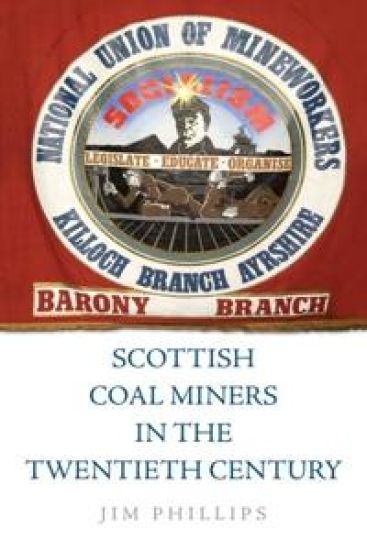
Scottish Coal Miners in the Twentieth Century

Scottish Coal Miners in the Twentieth Century

Jim Phillips

Edinburgh University Press
2021
nidottu
Examining working class welfare in the age of deindustrialisation through the experiences of the Scottish coal minerThroughout the twentieth century Scottish miners resisted deindustrialisation through collective action and by leading the campaign for Home Rule. This book argues that coal miners occupy a central position in Scotland's economic, social and political history, and highlights the role of miners in formulating labour movement demands for political-constitutional reforms that eventually resulted in the establishment of the Scottish Parliament in 1999. The book also uses the struggle of the mineworkers to explore working class wellbeing more broadly during the prolonged and politicised period of deindustrialisation that saw jobs, workplaces and communities devastated. Key featuresExamines deindustrialisation as long-running, phased and politicised processUses generational analysis to explain economic and political changeRelates Scottish Home Rule to long-running debates about economic security and working class welfareAnalyses the longer history of Scottish coal miners in terms of changing industrial ownership, production techniques and workplace safetyRelates this economic and industrial history to changes in mining communities and gender relations
Scottish Coal Miners in the Twentieth Century

Scottish Coal Miners in the Twentieth Century

Jim Phillips

Edinburgh University Press
2019
sidottu
Examining working class welfare in the age of deindustrialisation through the experiences of the Scottish coal minerThroughout the twentieth century Scottish miners resisted deindustrialisation through collective action and by leading the campaign for Home Rule. This book argues that coal miners occupy a central position in Scotland's economic, social and political history, and highlights the role of miners in formulating labour movement demands for political-constitutional reforms that eventually resulted in the establishment of the Scottish Parliament in 1999. The book also uses the struggle of the mineworkers to explore working class wellbeing more broadly during the prolonged and politicised period of deindustrialisation that saw jobs, workplaces and communities devastated. Key featuresExamines deindustrialisation as long-running, phased and politicised processUses generational analysis to explain economic and political changeRelates Scottish Home Rule to long-running debates about economic security and working class welfareAnalyses the longer history of Scottish coal miners in terms of changing industrial ownership, production techniques and workplace safetyRelates this economic and industrial history to changes in mining communities and gender relations
A History of Law in Canada, Volume One

A History of Law in Canada, Volume One

Philip Girard; Jim Phillips; R. Blake Brown

University of Toronto Press
2019
pokkari
A History of Law in Canada is an important three-volume project. Volume One begins at a time just prior to European contact and continues to the 1860s, Volume Two covers the half century after Confederation, and Volume Three covers the period from the beginning of the First World War to 1982, with a postscript taking the account to approximately 2000. The history of law includes substantive law, legal institutions, legal actors, and legal culture. The authors assume that since 1500 there have been three legal systems in Canada – the Indigenous, the French, and the English. At all times, these systems have co-existed and interacted, with the relative power and influence of each being more or less dominant in different periods. The history of law cannot be treated in isolation, and this book examines law as a dynamic process, shaped by and affecting other histories over the long term. The law guided and was guided by economic developments, was influenced and moulded by the nature and trajectory of political ideas and institutions, and variously exacerbated or mediated intercultural exchange and conflict. These themes are apparent in this examination, and through most areas of law including land settlement and tenure, and family, commercial, constitutional, and criminal law.
Lunar Domes

Lunar Domes

Raffaello Lena; Christian Wöhler; Jim Phillips; Maria Teresa Chiocchetta

Springer Verlag
2015
nidottu
Lunar domes are structures of volcanic origin which are usually difficult to observe due to their low heights. The Lunar Domes Handbook is a reference work on these elusive features. It provides a collection of images for a large number of lunar domes, including telescopic images acquired with advanced but still moderately intricate amateur equipment as well as recent orbital spacecraft images. Different methods for determining the morphometric properties of lunar domes (diameter, height, flank slope, edifice volume) from image data or orbital topographic data are discussed. Additionally, multispectral and hyperspectral image data are examined, providing insights into the composition of the dome material. Several classification schemes for lunar domes are described, including an approach based on the determined morphometric quantities and spectral analyses. Furthermore, the book provides a description of geophysical models of lunar domes, which yield information about the properties of the lava from which they formed and the depth of the magma source regions below the lunar surface.
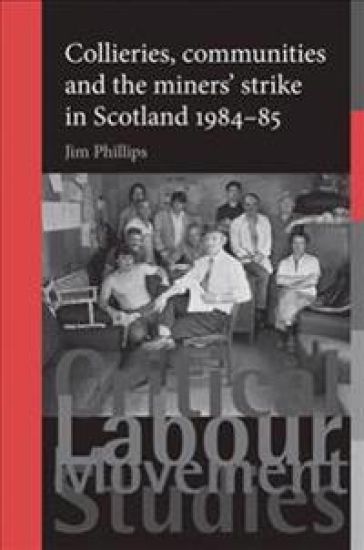
Collieries, Communities and the Miners' Strike in Scotland, 1984–85
This book, available at last in paperback, analyses the 1984–85 miners’ strike by focusing on its vital Scottish dimensions, especially the role of workplace politics and community mobilisation. The year-long strike began in Scotland, with workers defending the moral economy of the coalfields, and resisting pit closures and management attacks on trade unionism. The book relates the strike to an analysis of changing coalfield community and industrial structures from the 1960s to the 1980s. It challenges the stereotyped view that the strike began in March 1984 as a confrontation between Arthur Scargill, the miners’ leader, and Margaret Thatcher’s Conservative government. Before this point, in fact, fifty percent of Scottish miners were already on strike or engaged in a significant pit-level dispute with their managers, who were far more confrontational than their counterparts in England and Wales. The book explores the key features of the strike that followed in Scotland: the unusual industrial politics; the strong initial pattern of general solidarity; and then the emergence of varieties of pit-level commitment.
Lunar Domes

Lunar Domes

Raffaello Lena; Christian Wöhler; Jim Phillips; Maria Teresa Chiocchetta

Springer Verlag
2013
sidottu
Lunar domes are structures of volcanic origin which are usually difficult to observe due to their low heights. The Lunar Domes Handbook is a reference work on these elusive features. It provides a collection of images for a large number of lunar domes, including telescopic images acquired with advanced but still moderately intricate amateur equipment as well as recent orbital spacecraft images. Different methods for determining the morphometric properties of lunar domes (diameter, height, flank slope, edifice volume) from image data or orbital topographic data are discussed. Additionally, multispectral and hyperspectral image data are examined, providing insights into the composition of the dome material. Several classification schemes for lunar domes are described, including an approach based on the determined morphometric quantities and spectral analyses. Furthermore, the book provides a description of geophysical models of lunar domes, which yield information about the properties of the lava from which they formed and the depth of the magma source regions below the lunar surface.
Collieries, Communities and the Miners' Strike in Scotland, 1984–85
This book analyses the 1984-5 miners’ strike by focusing on its vital Scottish dimensions, especially the role of workplace politics and community mobilisation. The year-long strike began in Scotland, with workers defending the moral economy of the coalfields, and resisting pit closures and management attacks on trade unionism. The book relates the strike to an analysis of changing coalfield community and industrial structures from the 1960s to the 1980s. It challenges the stereotyped view that the strike began in March 1984 as a confrontation between Arthur Scargill, the miners’ leader, and Margaret Thatcher’s Conservative government. Before this point, in fact, 50 per cent of Scottish miners were already on strike or engaged in a significant pit-level dispute with their managers, who were far more confrontational than their counterparts in England and Wales. The book explores the key features of the strike that followed in Scotland: the unusual industrial politics; the strong initial pattern of general solidarity; and then the emergence of varieties of pit-level commitment. These were shaped by differential access to community-level moral and material resources, including the economic and cultural role of women, and pre-strike pit-level economic performance. Against the trend elsewhere, notably in the English Midlands, relatively good performance prior to 1984 was a positive factor in building strike endurance in Scotland. The book shows that the outcome of the strike was also distinctive in Scotland, with an unusually high level of victimisation of activists, and the acceleration of deindustrialisation consolidating support for devolution, contributing to the establishment of the Scottish Parliament in 1999.
Cheated Not Poisoned?

Cheated Not Poisoned?

Michael French; Jim Phillips

Manchester University Press
2009
nidottu
Newly available in paperback, this book provides the first comprehensive evaluation of Britain’s food laws from the 1860s to the 1930s and the first analysis of the Victorian anti-adulteration legislation for over 25 years. The book brings important historical perspectives to the pressing contemporary debate about food safety and the most appropriate forms of regulation by indicating that government policy has historically been shaped by competing business and consumer-protectionist pressures. The book will interest teachers, students and general readers concerned with British history and economic and social history, and appeal to specialists in the fields of business history, regulation and food, medicine and nutrition.
Murdering Holiness

Murdering Holiness

Jim Phillips; Rosemary Gartner

University of British Columbia Press
2009
pokkari
Murdering Holiness explores the story of the "HolyRoller" sect led by Franz Creffield in the early years of thetwentieth century. In the opening chapters, the authors introduce us tothe community of Corvallis, Oregon, where Creffield, a charismatic,self-styled messiah, taught his followers to forsake their families andworldly possessions and to seek salvation through him. As his teachingsbecame more extreme, the local community reacted: Creffield was tarredand feathered and his followers were incarcerated in the state asylum. Creffield himself was later imprisoned for adultery, but shortly afterhis release he revived the sect. This proved too much for some of theadherents' families, and in May 1906 George Mitchell, the brotherof two women in the sect, pursued Creffield to Seattle and shot himdead. The authors take us into the courtroom for the trial that madeheadlines across North America, as Mitchell was acquitted of murder. Though the formal plea was insanity, the defence built its case on the"unwritten law" that justified killing to protect or avengefamily honour. Based on court records and archival sources, this casestudy includes a detailed examination of the trial, the media'sresponse to it, and the dramatic aftermath, and sheds light on the riseof ardent religion in the Pacific Northwest, the justice system inSeattle, and the role of the press in influencing public opinion.
The Skateboard Art of Jim Phillips

The Skateboard Art of Jim Phillips

Jim Phillips

Schiffer Publishing Ltd
2007
nidottu

Halvin toimitettuna 31,90 €

This retropspective on Jim's skateboard art bobards the reader wtih colorful skateboard decks, logos, ad art, ad layouts, photos and stickers to illustrate the history of skateboarding from the urethane revolution up to the present. You are invited for a ride, an inside view of Phillips Studios, to observe the wacky world of his crazed studio artists, and examine their graphic assignments. The story traces the roots of skateboarding with more than a half-century of Phillips' involvement. It provides insight into the creative evolution of the sport and the worldwide interest and influence that has occurred from this California artist.