Kirjojen hintavertailu – 12 903 725 kirjaa ja 27 kauppaa

Kirjailija

Jim Tomlinson

Kirjat ja teokset yhdessä paikassa: 24 kirjaa, julkaisuja vuosilta 1993–2026, suosituimpiin kuuluu The Triumph of Textiles. Vertaile teosten hintoja ja tarkista saatavuus suomalaisista kirjakaupoista.

24 kirjaa

Kirjojen julkaisuvuodet: 1993–2026.

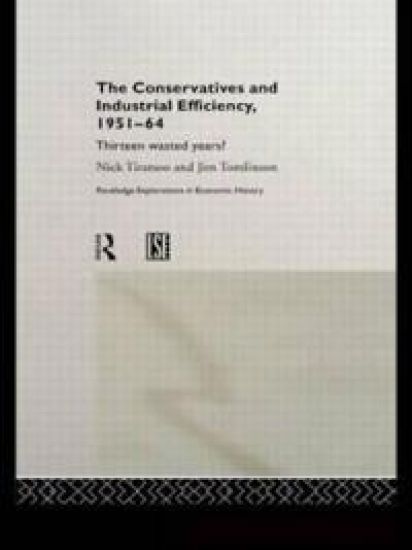
The Conservatives and Industrial Efficiency, 1951-1964

The Conservatives and Industrial Efficiency, 1951-1964

Nick Tiratsoo; Jim Tomlinson

Routledge
1998
sidottu
The Conservatives and Industrial Efficiency, 1951-1964 responds to the need for a full assessment of the Conservatives performance in this crucial period. Drawing upon a wide range of archival sources, Nick Tiratsoo and Jim Tomlinson explore the different aspects of the efficiency question. Beginning with the major issue of attempts in the 1950s to americanize British industry, the authors also discuss the Conservatives policy on ompetition, education and training, investment and research and development. This new survey reveals that the Conservatives were informed about each of these issues, yet shrank from effective reform. They were, rather, reduced to inertia by ideological dilemmas, internal party antagonisms and conflicting strategic objectives. Tiratsoo and Tomlinson conclude that 1951 - 1964 were indeed 'thirteen wasted years'. This book will be of interest to all those concerned with the post-1945 economic and political history of Britain.
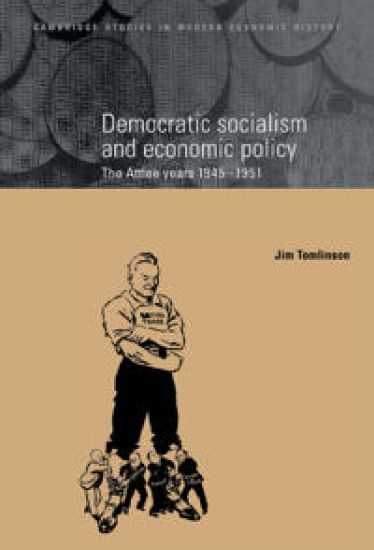
Democratic Socialism and Economic Policy

Democratic Socialism and Economic Policy

Jim Tomlinson

Cambridge University Press
1996
sidottu
This major study analyses the economic policies of the Attlee government, both international and domestic, in the light of Labour's issues and doctrines about the economy. Jim Tomlinson highlights the concern of the government with issues of industrial efficiency, and how this concern pervaded all areas of economic policy. He focuses on the economic aspects of the creation of the welfare state, and how efficiency concerns led to a great deal of austerity in the design of welfare provision. In addition, Tomlinson offers detailed discussion of the labour market in this period, both the attempts to 'plan' that market and the tensions in the policies created by attempts to attract more women into paid work. Students, professional historians and even politicians will greatly benefit from this broad-based reappraisal of a crucial era.
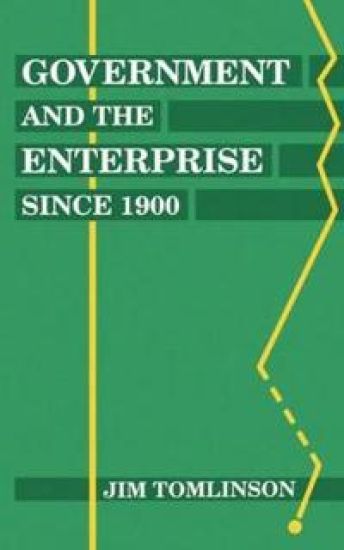
Government and the Enterprise since 1900

Government and the Enterprise since 1900

Jim Tomlinson

Oxford University Press
1994
sidottu
A chronological account of industrial policy This book surveys governmental industrial policy in Britain from 1900 to the early 1990s, exploring the perennial concern of governments to improve the efficiency and the competitiveness of British industry. Organized chronologically, it focuses on the formation of policy-making, and policy implementation, according to the ideas and beliefs that have dominated during the century. Thus industrial policy is traced through time of war and recession, through the building of the welfare state and times of growth, and through stagflation, economic liberalism, and deindustrialization. The constant theme of the book is the attempt by all governments to achieve the objectives of high growth, low unemployment, and international competitiveness. An examination of the effects of government ideologies Dr Tomlinson reveals both the microeconomic context of industrial policy, and microeconomic effects of these policies. The emphasis is on the formation of policy according to the ideology of the political party in power. Tomlinson also deals with the capacity of each government to carry out its policy, and the ways in which this capacity may be limited by economic constraints, or by the institutions through which industrial policy is implemented. Detailed case studies The focus of the book is on British industry, although in parts Tomlinson uses a comparative perspective to set British policy in the world context, most notably during the chapter on the 1980s. The book ends with two case studies, the industries of cotton and cars, to illuminate the policy explored in the previous chapters. Tomlinson concludes that the British government has continuously found an acceptable industrial policy problematic.
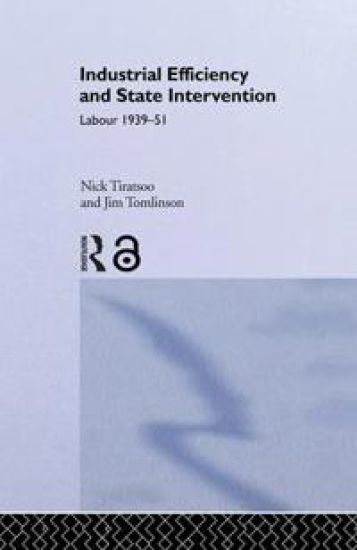
Industrial Efficiency and State Intervention

Industrial Efficiency and State Intervention

Tiratsoo Nick; Jim Tomlinson

TAYLOR FRANCIS LTD
1993
sidottu
Nick Tiratsoo and Jim Tomlinson describe and assess the Labour Party's development of a policy of improving industrial efficiency. They concentrate on the debates and initiatives of the wartime period and subsequent implementation of policy under Attlee. The book modifies existing historiography in two ways - it shows that the Labour Party of 1945-51 was concerned mainly with industrial modernization, not with creating the Welfare State, and it tackles the consequently necessary re-evaluation of wider theories about Britain's economic decline.