Kirjojen hintavertailu – 12 903 725 kirjaa ja 27 kauppaa

Kirjailija

Jim Willis

Kirjat ja teokset yhdessä paikassa: 45 kirjaa, julkaisuja vuosilta 1988–2026, suosituimpiin kuuluu A Mystery to be Lived. Vertaile teosten hintoja ja tarkista saatavuus suomalaisista kirjakaupoista.

45 kirjaa

Kirjojen julkaisuvuodet: 1988–2026.

Lost Civilizations

Lost Civilizations

Jim Willis

Visible Ink Press
2019
nidottu
What remains of past inhabitants of the jungles, lost cities, underground and underwater structures and their civilizations? The reminders of the Ancients are everywhere. They are preserved in remnants in archaeology. They are found in stories from mythology. Who were these people? Aliens, humans, or myths? How did they rise, fall, and will they rise again? From pyramids and underground bunkers to watery graves and ancient astronauts, Lost Civilizations explores the archaeological evidence left behind by more than 70 of these ancient civilizations.
Daily Life in the 1960s Counterculture

Daily Life in the 1960s Counterculture

Jim Willis

Greenwood Publishing Group Inc
2019
sidottu
This book looks at daily life during a pivotal decade in American history: the 1960s. It covers the Vietnam War and the civil rights movement as well as counterculture and protest movements. The 1960s saw the assassination of a popular president; a confusing and unpopular war that claimed the lives of thousands of American combatants; the passage of a national civil rights act that mandated equal rights across all races; countless violent exchanges among Americans with polarized views on the Vietnam War and civil rights; and through it all, the rise of a counterculture movement that challenged long-established American social and cultural traditions. Daily Life in the 1960s Counterculture looks at the 1960s from the perspective of Americans who, despite their best efforts to live normal lives, could not escape the tension, conflict, and controversy that surrounded them. The war and the violence associated with protests of it came at great personal cost to many American families. This book looks those social and cultural changes, examining such topics as the sexual revolution; recreational drug culture; the roles of film, television, and music; and more.
Supernatural Gods: Spiritual Mysteries, Psychic Experiences, And Scientific Truths
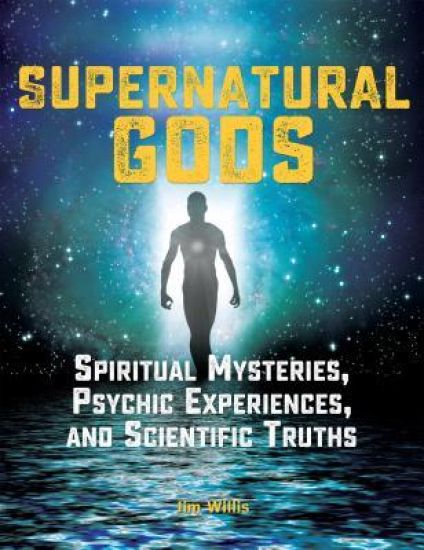
Black Holes. Dark Energy. Dark Matter. Entanglement Theory. Quantum Physics. Modern science estimates dark energy permeates roughly 68% of the universe. Dark matter makes up another 27%, leaving the 'normal' matter visible to humans at less than 5% of the cosmos around us. String Theory and Membrane Theory both suggest that parallel dimensions very probably exist. Quantum Entanglement Theory shows two objects connected despite being large distances apart. What does the universe hold-and hide? Where do we come from and where are we headed? Can science explain psychic and supernatural phenomena?
Tweeting to Freedom

Tweeting to Freedom

Jim Willis; Anthony R. Fellow

Greenwood Press
2017
sidottu
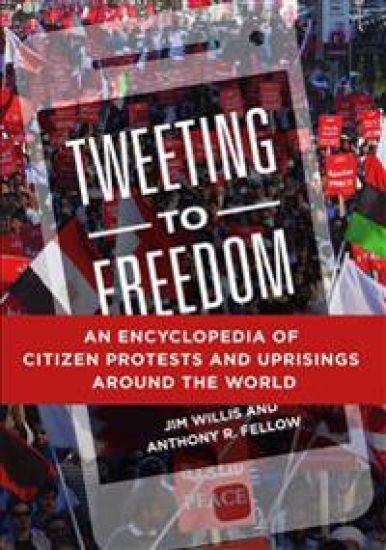
This book provides an insightful and comprehensive look at the issues regarding the use of the Internet and social media by activists in more than 30 countries—and how many governments in these countries are trying to blunt these efforts to promote freedom. The innovators who created social media might never have imagined the possibility: that activists living in countries where oppressive conditions are the norm would use social media to call for changes to bring greater freedom, opportunity, and justice to the masses. The attributes of social media that make it so powerful for casual socializing—the ability to connect with nearly limitless numbers of like-minded individuals instantaneously—enables political activists to recruit, communicate, and organize like never before. This book examines three aspects of the use of social media for political activism: the degrees of media freedom practiced in countries around the world; the methods by which governments attempt to block access to information; and the various ways in which activists use the media—especially social media—to advance their cause of greater freedoms. Readers will learn how these political uprisings came from the grassroots efforts of oppressed and unhappy citizens desperate to make better lives for themselves and others like them—and how the digital age is allowing them to protest and call attention to their plights in unprecedented ways.
Ancient Gods

Ancient Gods

Jim Willis

Visible Ink Press
2017
nidottu
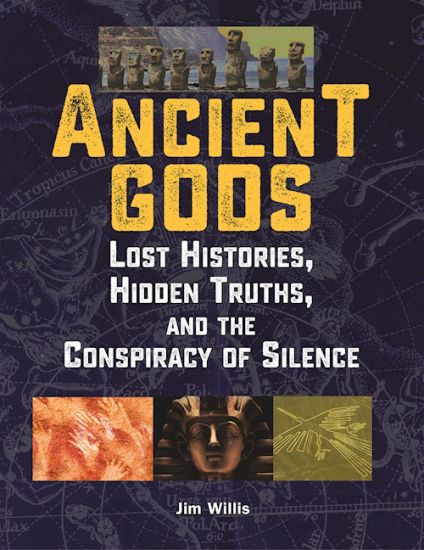
Sifting through the historical and archaeological evidence, Ancient Gods: Lost Histories, Hidden Truths, and the Conspiracy of Silence by Jim Wills probes the myths, stories, history and facts of ancient civilisations, lost technologies, past catastrophes, archetypical astronauts and bygone religions to tease out the truth of our distant past and modern existence.
1960s Counterculture

1960s Counterculture

Jim Willis

ABC-CLIO
2015
sidottu
An era that changed America forever is analyzed through the words of those who led, participated in, and opposed the protest movements that made the 1960s a signature epoch in U. S. culture. There is no better way to understand the 1960s than to read key speeches and texts from the decade, experiencing firsthand writings that capture a signature sense of passion and conviction. That is exactly the approach taken by this book as it analyzes major protest movements of the era, including the Vietnam War protests, the Civil Rights Movement, Women's Lib, the hippie movement, and the nascent GLBQT movement. Organized by movement, the work presents speeches, testimonies, and other important documents side-by-side with accessibly written, expert commentary. The documents and the themes they represent are linked to each other and to events during the decade to put the passionate thinking of the time in context and demonstrate its importance and legacy. By allowing readers to explore the 1960s in this visceral way, the book will provide an engaging learning experience for secondary school and university students, who will also gain helpful insights on how to evaluate historical documents. For the same reason, the volume will be a welcome resource for the general reader interested in understanding—or recalling—why the 1960s produced so many lasting changes in the American psyche.
Daily Life behind the Iron Curtain

Daily Life behind the Iron Curtain

Jim Willis

Greenwood Press
2013
sidottu
This compelling book describes how everyday people courageously survived under repressive Communist regimes until the voices and actions of rebellious individuals resulted in the fall of the Iron Curtain in Europe. Part of Greenwood's Daily Life through History series, Daily Life behind the Iron Curtain enables today's generations to understand what it was like for those living in Eastern Europe during the Cold War, particularly the period from 1961 to 1989, the era during which these people—East Germans in particular—lived in the imposing shadow of the Berlin Wall. An introductory chapter discusses the Russian Revolution, the end of World War II, and the establishment of the Socialist state, clarifying the reasons for the construction of the Berlin Wall. Many historical anecdotes bring these past experiences to life, covering all aspects of life behind the Iron Curtain, including separation of families and the effects on family life, diet, rationing, media, clothing and trends, strict travel restrictions, defection attempts, and the evolving political climate. The final chapter describes Eastern Europe after the fall of the Berlin wall and the slow assimilation of East into West, and examines Europe after Communism.
100 Media Moments That Changed America

100 Media Moments That Changed America

Jim Willis

Greenwood Press
2009
sidottu
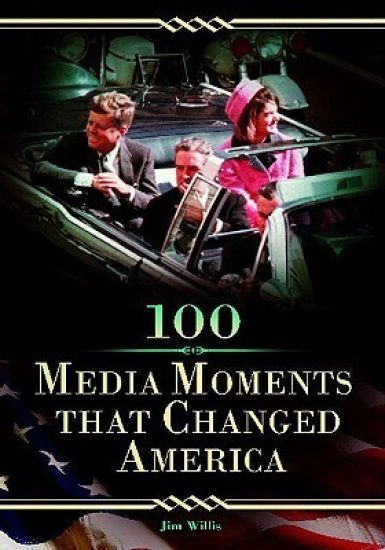
From the launching of America's first newspaper to YouTube's latest phone-videoed crime, the media has always been guilty of indulging America's obsession with controversy. This encyclopedia covers 100 events in world history from the 17th century to the present—moments that alone were major and minor, but ones that exploded in the public eye when the media stepped in. Topics covered include yellow journalism, the War of the Worlds radio broadcast, the Kennedy-Nixon debates, JFK's assassination, the Pentagon papers, and Hurricane Katrina. These are events that changed the way the media is used—not just as a tool for spreading knowledge, but as a way of shaping and influencing the opinions and reactions of America's citizens. Thanks to the media's representations of these events, history has been changed forever. From classified military plans that leaked out to the public to the first televised presidential debates to the current military tortures caught on tape, 100 Media Moments That Changed America will demonstrate not only an ever-evolving system of news reporting, but also the ways in which historical events have ignited the media to mold news in a way that resonates with America's public. This must-have reference work is ideal for journalism and history majors, as well as for interested general readers. Chapters are in chronological order, beginning with the 17th century. Each chapter starts with a brief introduction, followed by media event entries from that decade. Each entry explains the moment, and then delivers specific details regarding how the media covered the event, America's response to the coverage, and how the media changed history.

The Media Effect

The Media Effect

Jim Willis

Praeger Publishers Inc
2007
sidottu
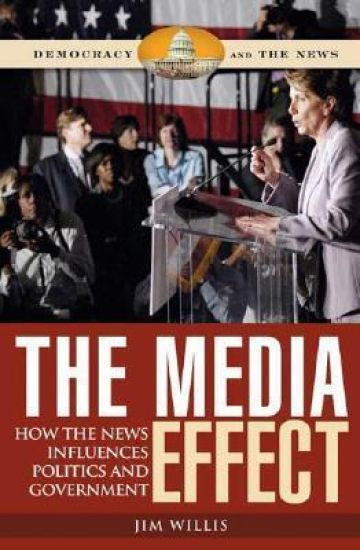
In a postmodern age where the media's depictions of reality serve as stand-ins for the real thing for so many Americans, how much government policy is being made on the basis of those mediated realities and on the public reaction to them? When those mediated depictions deviate from the truth of the actual situation, how serious a situation is that? Time and again, both anecdotal evidence and scientific research seem to confirm that the news media often influence government action. At the least, they speed up policy making that would otherwise take a slower, more reasoned course. Sometimes the media serve as the communication link among world leaders who may be ideological enemies. Because of the enduring popularity of television news, government leaders monitor the networks' story selections and track public opinion trends generated by interviews done in these stories. These then become the substance of proposed legislation and/or executive action, as politicians strive to prove themselves able listeners to the heartland of America and also prove themselves worthy of re-election. This book examines many specific events that show how major news operations either painted a truthful or distorted picture of national and international events, and how governmental leaders responded following those representations.
Armagedon Now

Armagedon Now

Jim Willis; Barbara Willis

Visible Ink Press
2005
nidottu
Authors Jim and Barbara Willis mine the religious and secular divide as they examine the history of apocalyptic beliefs in Armageddon Now. The authors explain the various omens and prophecies as well as the actual events that may trigger the end, such as collisions with asteroids, nuclear war, the oil crisis, global warming, and famine. From alpha to omega, it is packed with 200 entries and 100 illustrations. In the end, the end has never been so thoroughly covered as in Armageddon Now: The End of the World A to Z. It's the last word for the end user.
The Human Journalist

The Human Journalist

Jim Willis

Praeger Publishers Inc
2003
nidottu
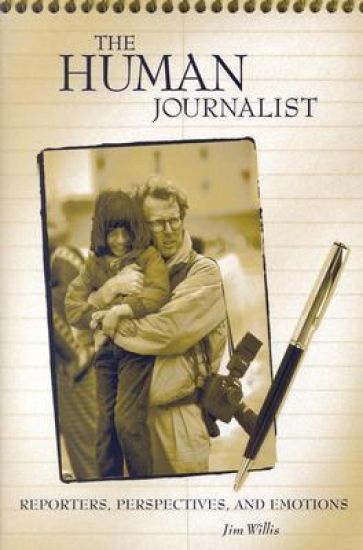
Willis examines the many orientations and perspectives of reporters that gather and present the news of the day. Debunking the notion that there are limited perspectives journalists may use, Willis examines up to 15 different orientations that reporters bring to their work. These perspectives run the gamut, from the traditional approach of distancing oneself completely from events and people involved to becoming part of the story's fabric to ascertain the story's true essence. Willis also suggests that, for many stories, it is wholly appropriate for journalists to feel what a non-professional would experience at such an event, and to allow those emotions to fuel the reporting and writing of the story. Several examples are discussed in detail, including the coverage of the bombing of the Alfred P. Murrah Federal Building in Oklahoma City on April 19, 1995, and the terrorist attacks of September 11, 2001.
The Human Journalist

The Human Journalist

Jim Willis

Praeger Publishers Inc
2003
sidottu
Willis examines the many orientations and perspectives of reporters that gather and present the news of the day. Debunking the notion that there are limited perspectives journalists may use, Willis examines up to 15 different orientations that reporters bring to their work. These perspectives run the gamut, from the traditional approach of distancing oneself completely from events and people involved to becoming part of the story's fabric to ascertain the story's true essence. Willis also suggests that, for many stories, it is wholly appropriate for journalists to feel what a non-professional would experience at such an event, and to allow those emotions to fuel the reporting and writing of the story. Several examples are discussed in detail, including the coverage of the bombing of the Alfred P. Murrah Federal Building in Oklahoma City on April 19, 1995, and the terrorist attacks of September 11, 2001.
The Religion Book

The Religion Book

Jim Willis

Visible Ink Press
2003
nidottu
Its handy size, comprehensive content, 100 photographs, additional resources chapter as well as a search-friendly index make The Religion Book a must-have reference for the introductory study of religion and a beacon for every reader who seeks his or her own holy grail. Containing five hundred-plus pages Willis explores 300 key religious figures, prophets, deities, places, and scriptures that play important roles in the major religions of the world. Willis respectfully explains terms and concepts as they relate to their respective belief systems.
Images of Germany in the American Media

Images of Germany in the American Media

Jim Willis

Praeger Publishers Inc
1999
sidottu
The start of the 1990s saw the fall of the Berlin Wall and the reunification of Germany into one new nation that would be a formidable economic force around the world. But to many Americans educated by the news and entertainment media, the image of Germany remained a holdover from World War II and the Holocaust. When the American media were not presenting an outdated, jackbooted view of Germany, they were portraying it as a country epitomizing the world's Communist/Capitalist struggle. For three decades the American news and entertainment media presented the image of Germany as being a country hopelessly divided. Now they were faced with a new country and a new set of images to deal with just as Germany exerts itself more powerfully than ever on the world economic scene. How much attention has this new Germany received in the American media, and how accurate are the new portrayals? Have the media images changed during the 1990s and, if so, how much and in what direction? Willis examines these issues as well as the status of international news in the American media. The result is a book of great interest to scholars, researchers, and students involved with the mass media, contemporary affairs, and European Studies.
Reporting on Risks

Reporting on Risks

Albert Okunade; Jim Willis

Praeger Publishers Inc
1997
sidottu
Health and safety risk issues such as AIDS, hazardous waste disposal, airline disasters, and health care policy frequently dominate the news and require a new level of sensitivity and expertise on the part of journalists. This volume focuses on a study of the trends in risk reporting and offers guidelines on how to report the dangers of these risks more accurately. It also examines the ethical implications of reporting risks to the public. This work will be of interest to those studying communication, specifically in the areas of ethics in journalism and public health and medical reporting.