Kirjojen hintavertailu – 12 903 725 kirjaa ja 27 kauppaa

Kirjailija

Jing Lin

Kirjat ja teokset yhdessä paikassa: 12 kirjaa, julkaisuja vuosilta 1991–2024, suosituimpiin kuuluu Compliance and Money Laundering Control by Banking Institutions in China.. Vertaile teosten hintoja ja tarkista saatavuus suomalaisista kirjakaupoista.

12 kirjaa

Kirjojen julkaisuvuodet: 1991–2024.

Storying our Relationship with Nature

Storying our Relationship with Nature

Amanda Fiore; Jing Lin

BLOOMSBURY PUBLISHING PLC
2024
sidottu
This book takes readers on a journey that is part storytelling, part academic analysis, and part spiritual exploration. The authors identify the climate emergency as a breakdown in spiritual consciousness which fails to recognize our deep interconnection with Nature. To meet this crisis of spirit, Storying Our Relationship with Nature serves as a guide for transforming ourselves and our lives through story and highlights the importance of social and emotional aspects of environmental education. The authors introduce the philosophical and historical foundations of our objectification of Nature as a commodity and describe the effect this view has on our lives. They detail a path forward through storytelling, contemplative practice, Eastern philosophy, and the transformative power of education. Throughout the book, reflective activities provide a space for the reader to personalize their learning, leading the reader towards the book’s central message: once we learn to consciously re-story our relationship with Nature, we can transform our cultural narrative of fatalism and greed into one of love, determination, and possibility, helping us move towards a sustainable future.

Storying our Relationship with Nature

Storying our Relationship with Nature

Amanda Fiore; Jing Lin

BLOOMSBURY PUBLISHING PLC
2024
nidottu
This book takes readers on a journey that is part storytelling, part academic analysis, and part spiritual exploration. The authors identify the climate emergency as a breakdown in spiritual consciousness which fails to recognize our deep interconnection with Nature. To meet this crisis of spirit, Storying Our Relationship with Nature serves as a guide for transforming ourselves and our lives through story and highlights the importance of social and emotional aspects of environmental education. The authors introduce the philosophical and historical foundations of our objectification of Nature as a commodity and describe the effect this view has on our lives. They detail a path forward through storytelling, contemplative practice, Eastern philosophy, and the transformative power of education. Throughout the book, reflective activities provide a space for the reader to personalize their learning, leading the reader towards the book’s central message: once we learn to consciously re-story our relationship with Nature, we can transform our cultural narrative of fatalism and greed into one of love, determination, and possibility, helping us move towards a sustainable future.
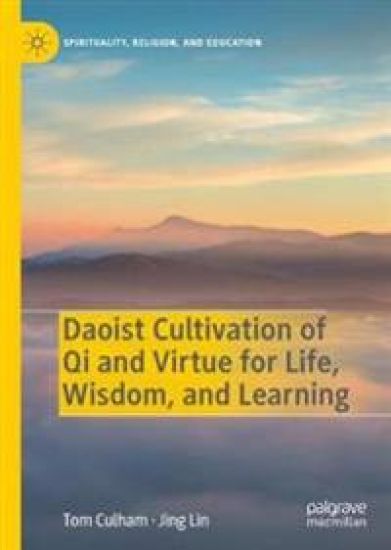
Daoist Cultivation of Qi and Virtue for Life, Wisdom, and Learning

Daoist Cultivation of Qi and Virtue for Life, Wisdom, and Learning

Tom Culham; Jing Lin

Springer Nature Switzerland AG
2021
nidottu
This book explores Daoist philosophies of qi and virtue through inquiry into their potential as technologies for cultivating good among individuals and society within educational settings, as well as in the modern world. The first part of the book, authored by Jing Lin, examines Daoist cosmology, axiology, and epistemology. She illuminates qi cultivation’s reliance on the accumulation of virtues, leading to transformation of the body and even—extraordinarily—the abilities of Daoist masters to transcend physical limitations to achieve health, longevity, and immortality. The second part of the book, authored by Tom Culham, establishes an understanding of qi and virtue as a technology within the Daoist paradigm, outlining the benefits of its cultivation while illuminating how contemporary Western philosophy and science support this paradigm. Both authors explore new forms of education to incorporate Daoist wisdom in schooling.
Daoist Cultivation of Qi and Virtue for Life, Wisdom, and Learning

Daoist Cultivation of Qi and Virtue for Life, Wisdom, and Learning

Tom Culham; Jing Lin

Springer Nature Switzerland AG
2020
sidottu
This book explores Daoist philosophies of qi and virtue through inquiry into their potential as technologies for cultivating good among individuals and society within educational settings, as well as in the modern world. The first part of the book, authored by Jing Lin, examines Daoist cosmology, axiology, and epistemology. She illuminates qi cultivation’s reliance on the accumulation of virtues, leading to transformation of the body and even—extraordinarily—the abilities of Daoist masters to transcend physical limitations to achieve health, longevity, and immortality. The second part of the book, authored by Tom Culham, establishes an understanding of qi and virtue as a technology within the Daoist paradigm, outlining the benefits of its cultivation while illuminating how contemporary Western philosophy and science support this paradigm. Both authors explore new forms of education to incorporate Daoist wisdom in schooling.
Compliance and Money Laundering Control by Banking Institutions in China.
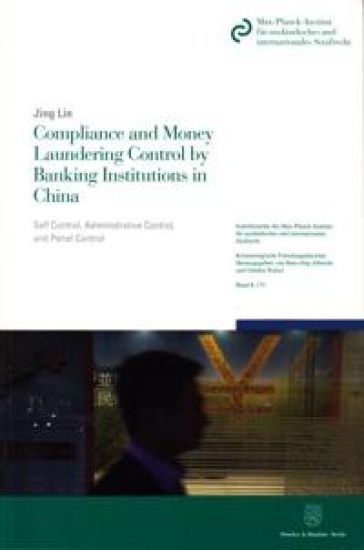
Is criminal law an effective instrument to control corporate crime? Do alternative control instruments exist? Is it possible to conduct corporate compliance programs in developing economies? Are Western-developed control theories applicable in other regions? Using money laundering control in Chinese banking institutions as an example, this book provides answers to these questions. Three severity escalated control systems, i.e., self-control, administrative control, and penal control, are introduced by the author, and the legal framework of each of these approaches - as well as their practical advantages and limitations - are observed. The author concludes that none of the individual control instruments are, on their own, capable of successfully controlling corporate crime and promoting compliance. Control instruments are interdependent, meaning that each is incomplete without the other. Therefore, a comprehensive control approach that includes persuasive strategies and deterrence strategies is essential for sound compliance. In addition to the involvement of various control instruments, a comprehensive approach also requires proper linkage between these instruments. To answer the critical question of when to take a persuasive strategy and when to take a deterrence strategy, the author proposes a "distinction approach". This would abandon the model of "one size fits all" and underline various distinctions that should be given special attention in choosing control instruments.
Portraits of 21st Century Chinese Universities:

Portraits of 21st Century Chinese Universities:

Ruth Hayhoe; Jun Li; Jing Lin; Qiang Zha

Springer
2016
nidottu
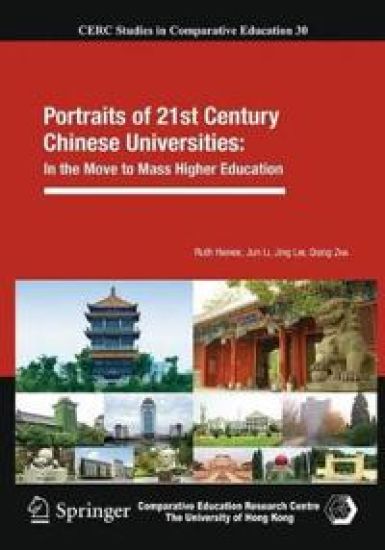
This book examines the ways in which China’s universities have changed in the dramatic move to a mass stage which has unfolded since the late 1990s. Twelve universities in different regions of the country are portrayed through the eyes of their students, faculty and leaders. The book begins with the national level policy process around the move to mass higher education. This is followed by an analysis of the views of 2,300 students on the 12 campuses about how the changes have affected their learning experiences and civil society involvement. The 12 portraits in the next section are of three comprehensive universities, three education-related universities, three science and technology universities, and three newly emerging private universities. The final chapter sketches the contours of an emerging Chinese model of the university, and explores its connections to China’s longstanding scholarly traditions
Portraits of 21st Century Chinese Universities:

Portraits of 21st Century Chinese Universities:

Ruth Hayhoe; Jun Li; Jing Lin; Qiang Zha

Springer
2011
sidottu
This book examines the ways in which China’s universities have changed in the dramatic move to a mass stage which has unfolded since the late 1990s. Twelve universities in different regions of the country are portrayed through the eyes of their students, faculty and leaders. The book begins with the national level policy process around the move to mass higher education. This is followed by an analysis of the views of 2,300 students on the 12 campuses about how the changes have affected their learning experiences and civil society involvement. The 12 portraits in the next section are of three comprehensive universities, three education-related universities, three science and technology universities, and three newly emerging private universities. The final chapter sketches the contours of an emerging Chinese model of the university, and explores its connections to China’s longstanding scholarly traditions
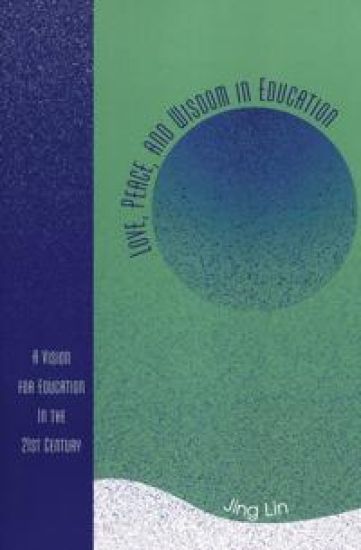
Love, Peace, and Wisdom in Education

Love, Peace, and Wisdom in Education

Jing Lin

Rowman Littlefield Education
2006
nidottu
Author Jing Lin contends that there is a great need for educators to reconceptualize education in the 21st century. Here, she discusses the danger of global wars, environmental breakdown, moral vacuum and nihilism in society, and the problems in current debates on school reform. This book calls for a school that facilitates the formation of a compassionate and loving global community-one that teaches the younger generation to gain a harmonious, respectful relationship with nature. The author envisions a school where the teaching of our interconnectedness based on love, changes the learning atmosphere, school curriculum focus, teacher-student relationships, school leadership, and the role of education in society as a transformative power. The book challenges our schools to shift from a rationalistic, functionalist perspective that primarily emphasizes tests and efficiency, to a constructive, transformative paradigm in which the integrated development of students' intellectual, moral, emotional, spiritual, and ecological abilities to promote understanding of the world helps nurture respect for all human beings and nature. In all, constructing a loving world should be the central purpose of education in the 21st century. This book will be of interest t policy makers, teachers, school administrators, peace and environmental activists, and students.
Social Transformation and Private Education in China
Private schools resurfaced in China after 1978 when the Chinese government embarked on an economic reform for modernization. This book offers a comprehensive review of the development, characteristics, issues, and problems of private schools at primary, secondary and university levels, especially elite private schools for children of very wealthy families. Based on fieldwork at about 40 private and public schools in China, this study also critically examines social response and government reactions to private education development, and ends with reflections on its significance and future prospects, touching on issues concerning social equality, efficiency, public school reform, and democratization in China.
The Opening of the Chinese Mind

The Opening of the Chinese Mind

Jing Lin

Praeger Publishers Inc
1994
sidottu
This book provides a systematic study of the political, economic, cultural, and educational changes that have taken place in China since 1978, and examines the impacts of these changes on the Chinese people's thinking and behavior. Jing Lin traces the gradual change of the Chinese from obedient, unquestioning citizens to critical and intelligent thinkers. She points out that with the more relaxed political and economic environment the Chinese people have gone through a period of reflection on their communist past, which has resulted in a new sense of identity and a more independent spirit. The book also looks at how the Chinese have begun to learn from other countries, resulting in an ongoing desire for openness and democracy.
Education in Post-Mao China

Education in Post-Mao China

Jing Lin

Praeger Publishers Inc
1992
sidottu
A rare insider's view of educational development and problems in China since economic reform began in 1978, this volume critically examines the issue of political socialization through curriculum and compares the curriculum used during the Cultural Revolution with that compiled and used throughout China in 1988. Also explored are problems with student dropouts and teacher motivation in rural education and government-supported nonformal education; the tracking system and vocational education development in urban schools; problems that came about with economic and political reform; and the issue of inequality existing between and within rural and urban schools. Turning to recent decentralization efforts in school administration, Jing Lin analyzes evidence suggesting that educational policy is politically controlled. Additionally, the development of educational research in the 1980s and 1990s constitutes the topic of one chapter, based on hundreds of published books and papers. Finally, Lin reflects on the massive student movement that arose in the spring of 1989 and delineates the social, economic, and political changes that sparked it. This final section treats these educational changes as an interconnected whole that underlay the movement and gave it such distinctive characteristics as nonviolence and a rational, constructive outlook.
The Red Guards' Path to Violence

The Red Guards' Path to Violence

Jing Lin

Praeger Publishers Inc
1991
sidottu
A philosophical analysis informed by history, this work examines the reasons for the highly destructive behavior of the Red Guards in the early part of China's Cultural Revolution. By probing the political, educational, and psychological factors influencing the Red Guards, Jing Lin sheds light on how teenagers and young adults were able to justify violence in the name of class struggle and human rights. She concludes that non-critical, categorical thought--buttressed by the political and educational systems--was pivotal. Jing Lin introduces the work with a discussion of democratic and non-democratic thought, and of the Red Guards' views about class struggle, authority and justice. She then examines the theory behind Mao's totalitarian rule. Chapter Three is devoted to schools, and their decisive role in developing the Red Guards. The psychology of the Red Guards follows: Lin details how concepts of the proletariat, class enemies, and intellectuals nurtured habits of aggression and obedience. In concluding, Lin suggests how to foster critical and democratic thinking in Chinese education. This book is a valuable resource for students of Chinese history, revolution, political psychology, and education.