Kirjojen hintavertailu – 12 859 819 kirjaa ja 27 kauppaa

Kirjailija

Jinghe Han

Kirjat ja teokset yhdessä paikassa: 6 kirjaa, julkaisuja vuosilta 2017–2022, suosituimpiin kuuluu Post-Lingual Chinese Language Learning. Vertaile teosten hintoja ja tarkista saatavuus suomalaisista kirjakaupoista.

6 kirjaa

Kirjojen julkaisuvuodet: 2017–2022.

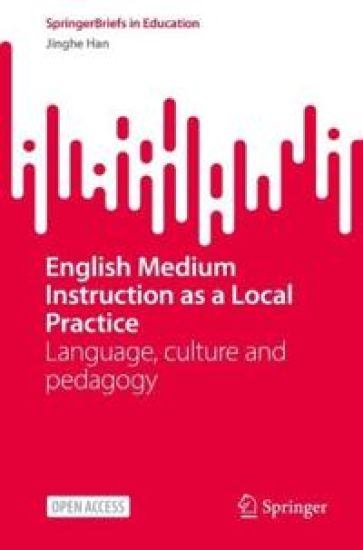
English Medium Instruction as a Local Practice

English Medium Instruction as a Local Practice

Jinghe Han

Springer International Publishing AG
2022
nidottu
From the perspective of translanguaging and instruction theories, this Open Access book examines Chinese English Medium Instruction (EMI) lecturers’ linguistic and pedagogical characteristics. This book demonstrate that ‘English’ in EMI is not a monolingual issue and EMI lecturers have applied their bilingual advantages to systematically and strategically advance their pedagogy practices through a translanguaging process. This book reflects upon EMI lecturers’ culture-imbedded teaching and learning philosophies and explores the implications of local classroom practices, such as topic-centered instruction and teacher presentation through demonstration. This book argues that EMI teaching is not an approach that can reach universal consent across linguistic, cultural and educational systems; it is an approach that is exclusively contextualised in the lecturers’ closely related cultural and educational system, and restricted by the available resources. This is an open access book.
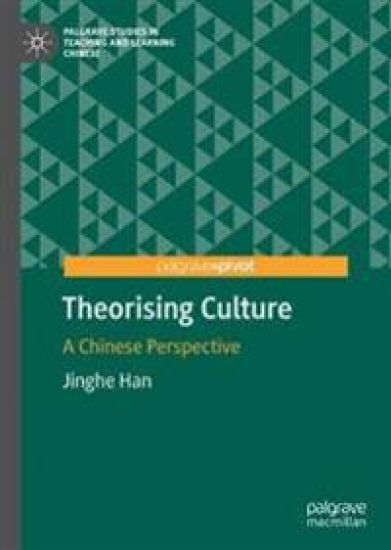
Theorising Culture

Theorising Culture

Jinghe Han

Springer Nature Switzerland AG
2019
sidottu
This book seeks for an alternative perspective in analysing cultural phenomena to supplement the norm of Western dominant theorising and conceptualisation. It engages notions and concepts of culture developed by Chinese cultural theorists when addressing Chinese teachers’ cross-cultural experiences in Australian school settings. This alternative approach acknowledges the fact that the generation and development of cultural theories is contextually based. Through the reciprocated theory-data examination, it enables the arguments: Chinese culture is rooted in its written language (hanzi) which makes culture inseparable from language teaching; the core of the culture is linked back to, streamlined with and continues from China’s elongated history; this core has been consistently influential on these teachers’ practices and the observable cultural shift in them could be non-genuine mimicry for survival. Document analysis witnesses the current political push for the culture’s stability and continuity through the national education system across sectors. This book provides background information for teachers with cultural backgrounds different from their students’, and draws on a bank of practice-based evidence to suggest ways to enhance teacher-student relationships in cross-cultural settings.
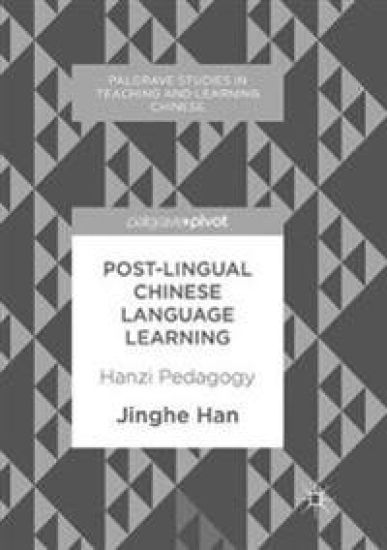
Post-Lingual Chinese Language Learning

Post-Lingual Chinese Language Learning

Jinghe Han

Palgrave Macmillan
2018
nidottu
This book presents a thought-provoking challenge to mainstream theories of second language learning. This intriguing book will interest students and scholars of language education, and offers practical advice for those involved in teaching and learning Chinese as a foreign language.
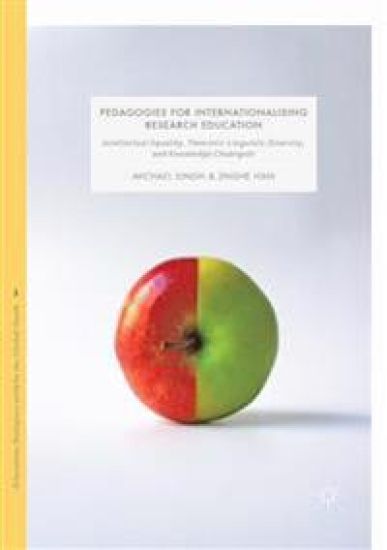
Pedagogies for Internationalising Research Education

Pedagogies for Internationalising Research Education

Michael Singh; Jinghe Han

Springer Verlag, Singapore
2018
nidottu
This book explores pedagogical concepts, metaphors and images of non-white, non-western researchers and research students on the inter/nationalization of education. Specifically, this book draws on the intellectual resources of China and India to explore the pedagogical dynamics and dimensions of the localization/globalization of education with non-Western characteristics. It introduces theoretic-linguistic non-Western concepts from the Tamil, Sanskrit and Chinese languages for use in Western, English-only education and redefines the intellectual basis for internationalising education. Debating whether ‘international education’ is Western-centric in terms of its privileging and promotion of Euro-American theoretical knowledge, this book contends that the internationalisation of Western-centric education can benefit from the intellectual power and powerfully relevant theorising performed by non-Western international students. It formulates a democratic vision for the internationalisation of education, with the potential to create transnational solidarity and constitute a forum for mobilising debates about global knowledge and power structures. It also provides key tools to use non-Western theoretic-linguistic tools and modes of critique in research undertaken in Anglophone Western universities.
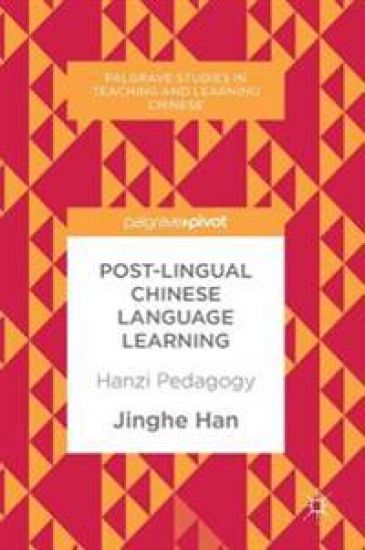
Post-Lingual Chinese Language Learning

Post-Lingual Chinese Language Learning

Jinghe Han

Palgrave Macmillan
2017
sidottu
This book presents a thought-provoking challenge to mainstream theories of second language learning. Focusing on Chinese Hanzi, a self-sufficient meaning-making system that operates via visual shape and the logic built into its formation, it analyses ‘post-lingual’ pedagogy. The author examines this ‘language beyond language’ or linguistic theories, demonstrating that Hanzi is not made up simply of arbitrary signs but is the result of a complete conceptualisation process. In doing so, she creates a conceptual framework that builds on Hanzi’s humanistic spirit of language learning. This intriguing book will interest students and scholars of language education, and offers practical advice for those involved in teaching and learning Chinese as a foreign language.
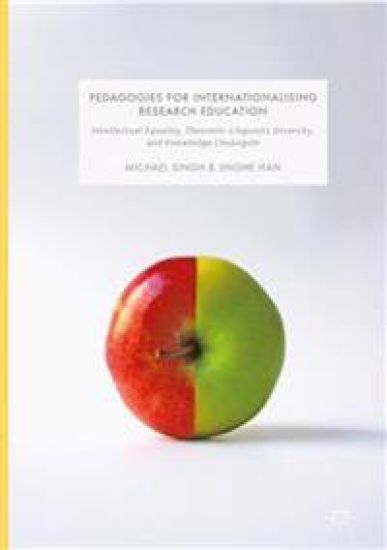
Pedagogies for Internationalising Research Education

Pedagogies for Internationalising Research Education

Michael Singh; Jinghe Han

Springer Verlag, Singapore
2017
sidottu
This book explores pedagogical concepts, metaphors and images of non-white, non-western researchers and research students on the inter/nationalization of education. Specifically, this book draws on the intellectual resources of China and India to explore the pedagogical dynamics and dimensions of the localization/globalization of education with non-Western characteristics. It introduces theoretic-linguistic non-Western concepts from the Tamil, Sanskrit and Chinese languages for use in Western, English-only education and redefines the intellectual basis for internationalising education. Debating whether ‘international education’ is Western-centric in terms of its privileging and promotion of Euro-American theoretical knowledge, this book contends that the internationalisation of Western-centric education can benefit from the intellectual power and powerfully relevant theorising performed by non-Western international students. It formulates a democratic vision for the internationalisation of education, with the potential to create transnational solidarity and constitute a forum for mobilising debates about global knowledge and power structures. It also provides key tools to use non-Western theoretic-linguistic tools and modes of critique in research undertaken in Anglophone Western universities.