Kirjojen hintavertailu – 12 859 828 kirjaa ja 27 kauppaa

Kirjailija

Jiqiang Wang

Kirjat ja teokset yhdessä paikassa: 4 kirjaa, julkaisuja vuosilta 2021–2023, suosituimpiin kuuluu Active Vibration & Noise Control: Design Towards Performance Limit. Vertaile teosten hintoja ja tarkista saatavuus suomalaisista kirjakaupoista.

4 kirjaa

Kirjojen julkaisuvuodet: 2021–2023.

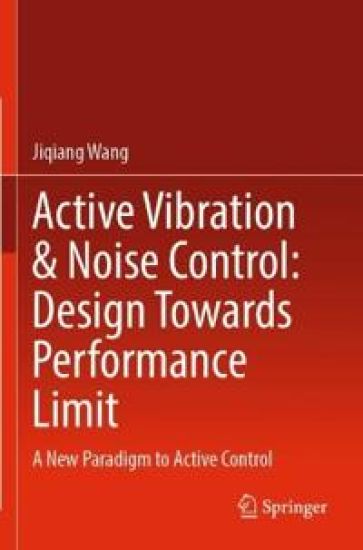
Active Vibration & Noise Control: Design Towards Performance Limit
The book is motivated by the pivotal issue: what is the performance limit of active control and energy harvesting? It aims to develop systematic design methodologies with a “visualization technique” where the performance limit can be readily determined solely based on visual inspections. Modern technological systems have evolved toward high speed, heavy load, lightweight, flexible operation and extreme conditions, as demonstrated in aerospace, marine, transportation and manufacturing industries. The associated vibration and noise issues have become such problematic that they may significantly confine the performance of the systems, to say the discomfort at least. Through the geometric representation of the performance specifications, fundamental issues such as (1) the existence of feasible controllers; (2) the optimality of controllers; (3) the performance limit of controllers; (4) compromisability among the performance specifications; (5) the synthesis of controllers; and(6) the influence of constraints on optimal solutions can all be resolved within the proposed framework. The state of the art is thus refined with a new approach complementary to those optimization-based routines, where extra effort would have to be exercised to disclose the compromisability of performance specifications. The proposed book will result in a new design methodology—performance limit-oriented active control. It was initiated by the author with the project “Active Control for Performance Limit” (ACPL). A series of fundamental results are obtained and will be disseminated in this book. The results are verified through extensive numerical demonstrations and are expected to provide useful guidance for practical engineering in the vibration and noise industry and research.
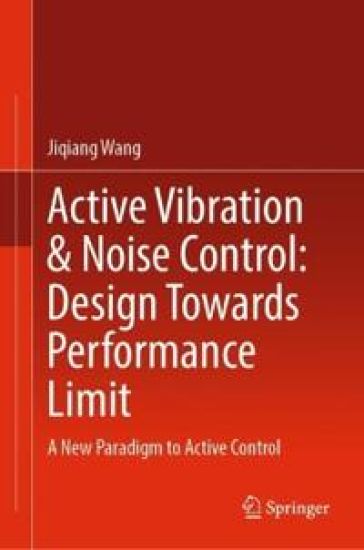
Active Vibration & Noise Control: Design Towards Performance Limit
The book is motivated by the pivotal issue: what is the performance limit of active control and energy harvesting? It aims to develop systematic design methodologies with a “visualization technique” where the performance limit can be readily determined solely based on visual inspections. Modern technological systems have evolved toward high speed, heavy load, lightweight, flexible operation and extreme conditions, as demonstrated in aerospace, marine, transportation and manufacturing industries. The associated vibration and noise issues have become such problematic that they may significantly confine the performance of the systems, to say the discomfort at least. Through the geometric representation of the performance specifications, fundamental issues such as (1) the existence of feasible controllers; (2) the optimality of controllers; (3) the performance limit of controllers; (4) compromisability among the performance specifications; (5) the synthesis of controllers; and(6) the influence of constraints on optimal solutions can all be resolved within the proposed framework. The state of the art is thus refined with a new approach complementary to those optimization-based routines, where extra effort would have to be exercised to disclose the compromisability of performance specifications. The proposed book will result in a new design methodology—performance limit-oriented active control. It was initiated by the author with the project “Active Control for Performance Limit” (ACPL). A series of fundamental results are obtained and will be disseminated in this book. The results are verified through extensive numerical demonstrations and are expected to provide useful guidance for practical engineering in the vibration and noise industry and research.
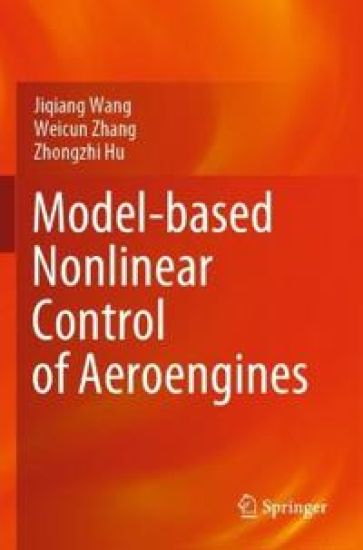
Model-based Nonlinear Control of Aeroengines

Model-based Nonlinear Control of Aeroengines

Jiqiang Wang; Weicun Zhang; Zhongzhi Hu

SPRINGER VERLAG, SINGAPORE
2022
nidottu
This book aims to develop systematic design methodologies to model-based nonlinear control of aeroengines, focusing on (1) modelling of aeroengine systems—both component-level and identification-based models will be extensively studied and compared; and (2) advanced nonlinear control designs—set-point control, transient control and limit-protection control approaches will all be investigated. The model-based design has been one of the pivotal technologies to advanced control and health management of propulsion systems. It can fulfil advanced designs such as fault-tolerant control, engine modes control and direct thrust control. As a consequence, model-based design has become an important research area in the field of aeroengines due to its theoretical interests and engineering significance. One of the central issues in model-based controls is the tackling of nonlinearities. There are publications concerning with either nonlinear modelling or nonlinear controls; yet, they are scattered throughout the literature. It is time to provide a comprehensive summary of model-based nonlinear controls. Consequently, a series of important results are obtained and a systematic design methodology is developed which provides consistently enhanced performance over a large flight/operational envelope, and it is thus expected to provide useful guidance to practical engineering in aeroengine industry and research.
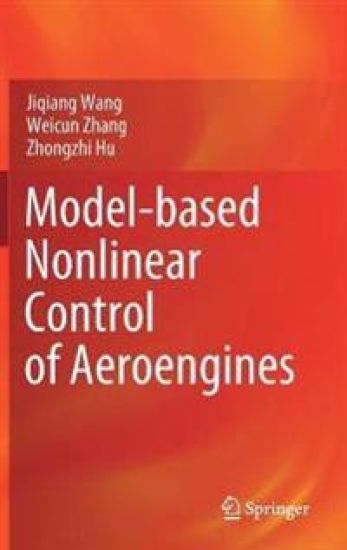
Model-based Nonlinear Control of Aeroengines

Model-based Nonlinear Control of Aeroengines

Jiqiang Wang; Weicun Zhang; Zhongzhi Hu

SPRINGER VERLAG, SINGAPORE
2021
sidottu
This book aims to develop systematic design methodologies to model-based nonlinear control of aeroengines, focusing on (1) modelling of aeroengine systems—both component-level and identification-based models will be extensively studied and compared; and (2) advanced nonlinear control designs—set-point control, transient control and limit-protection control approaches will all be investigated. The model-based design has been one of the pivotal technologies to advanced control and health management of propulsion systems. It can fulfil advanced designs such as fault-tolerant control, engine modes control and direct thrust control. As a consequence, model-based design has become an important research area in the field of aeroengines due to its theoretical interests and engineering significance. One of the central issues in model-based controls is the tackling of nonlinearities. There are publications concerning with either nonlinear modelling or nonlinear controls; yet, they are scattered throughout the literature. It is time to provide a comprehensive summary of model-based nonlinear controls. Consequently, a series of important results are obtained and a systematic design methodology is developed which provides consistently enhanced performance over a large flight/operational envelope, and it is thus expected to provide useful guidance to practical engineering in aeroengine industry and research.