Kirjojen hintavertailu – 12 903 724 kirjaa ja 27 kauppaa

Kirjailija

Jiyuan Yu

Kirjat ja teokset yhdessä paikassa: 6 kirjaa, julkaisuja vuosilta 2003–2012, suosituimpiin kuuluu The Structure of Being in Aristotle’s Metaphysics. Vertaile teosten hintoja ja tarkista saatavuus suomalaisista kirjakaupoista.

6 kirjaa

Kirjojen julkaisuvuodet: 2003–2012.

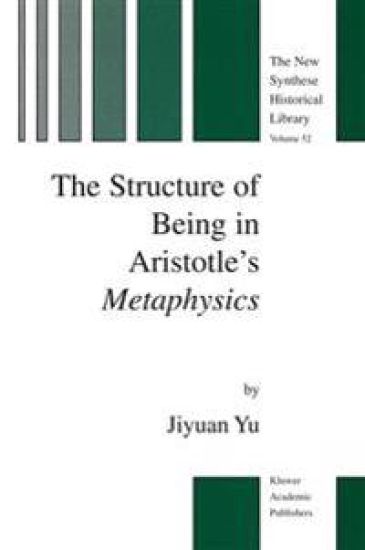
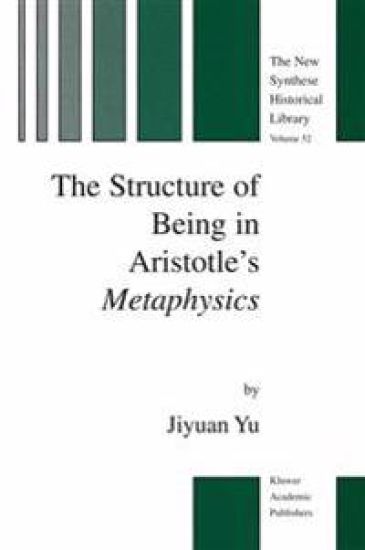
The Structure of Being in Aristotle’s Metaphysics
In his Metaphysics, Aristotle claims that he is seeking to establish a science of being. Being, at the most general level, is divided by Aristotle into the following four types: 1. Accidental being 2. Being as truth 3. Potential/actual being l 4. Per se being Per se (kath hauto) being can also be translated as "being in its own right" or "intrinsic being". This type of being has been referred to by Aristotle in different ways. The list of per se beings includes substance, quantity, quality, place, time, etc. , and this is also the list ofcategories. At Meta. ix. l, 1045b28 Aristotle calls this list the "categories of being" (hai kategoriai tou ontos). At Meta. vi. 2, 1026a36 and ix. 1O, 1051a33-b2 per se being is called "being with reference to the figures ofpredication" (ta schemata tes kategorias, or "figures ofcategories,,). 2 Of these four types of being, accidental being is briefly treated in Meta. vi. 2-3 and there Aristotle claims that the study of accidental being can be dismissed on the grounds that accidental being is indeterminate and cannot be 3 the object ofknowledge. He also does not pay much attention to being as truth and treats it briefly in two short texts: Meta. viA and ix. 1O.
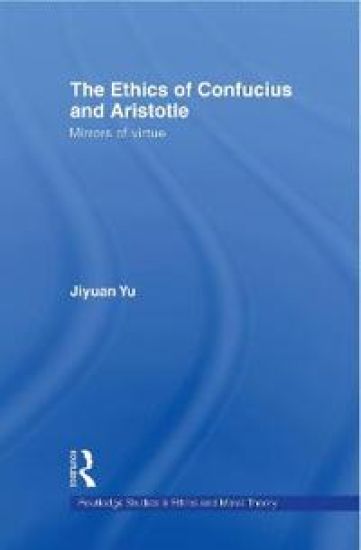
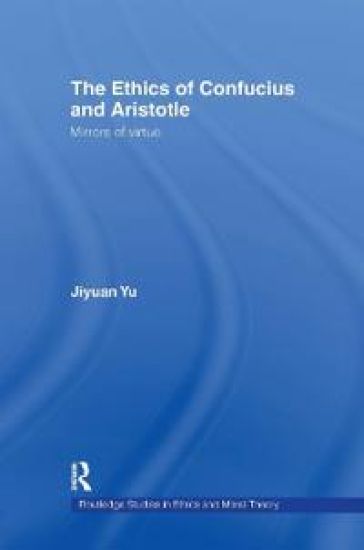
The Ethics of Confucius and Aristotle
As a comparative study of the virtue ethics of Aristotle and Confucius, this book explores how they each reflect upon human good and virtue out of their respective cultural assumptions, conceptual frameworks, and philosophical perspectives. It does not simply take one side as a framework to understand the other; rather, it takes them as mirrors for each other and seeks to develop new readings and perspectives of both ethics that would be unattainable if each were studied on its own.
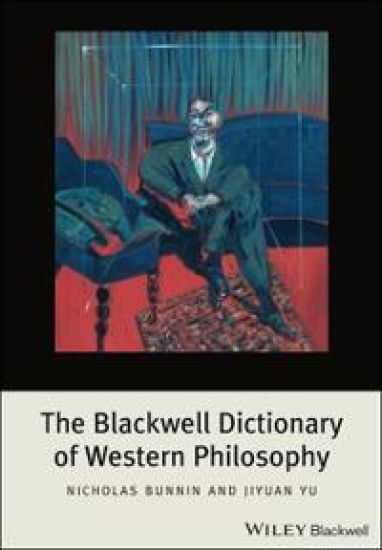
The Blackwell Dictionary of Western Philosophy

The Blackwell Dictionary of Western Philosophy

Nicholas Bunnin; Jiyuan Yu

Wiley-Blackwell (an imprint of John Wiley Sons Ltd)
2009
nidottu

Halvin toimitettuna 42,00 €

The Blackwell Dictionary of Western Philosophy The Blackwell Dictionary of Western Philosophy ??? The style is fresh and engaging, and it gives a broad and accurate picture of the western philosophical tradition. It is a pleasure to browse in, even if one is not looking for an answer to a particular question.??? David Pears ??? Its entries manage to avoid the obscurities of an exaggerated brevity without stretching themselves out, as if seeking to embody whole miniature essays. In short it presents itself as a model of clarity and clarification.??? Alan Montefiore
The Ethics of Confucius and Aristotle
As a comparative study of the virtue ethics of Aristotle and Confucius, this book explores how they each reflect upon human good and virtue out of their respective cultural assumptions, conceptual frameworks, and philosophical perspectives. It does not simply take one side as a framework to understand the other; rather, it takes them as mirrors for each other and seeks to develop new readings and perspectives of both ethics that would be unattainable if each were studied on its own.
The Blackwell Dictionary of Western Philosophy

The Blackwell Dictionary of Western Philosophy

Nicholas Bunnin; Jiyuan Yu

Wiley-Blackwell (an imprint of John Wiley Sons Ltd)
2004
sidottu
The Blackwell Dictionary of Western Philosophy The Blackwell Dictionary of Western Philosophy ??? The style is fresh and engaging, and it gives a broad and accurate picture of the western philosophical tradition. It is a pleasure to browse in, even if one is not looking for an answer to a particular question.??? David Pears ??? Its entries manage to avoid the obscurities of an exaggerated brevity without stretching themselves out, as if seeking to embody whole miniature essays. In short it presents itself as a model of clarity and clarification.??? Alan Montefiore
The Structure of Being in Aristotle’s Metaphysics

The Structure of Being in Aristotle’s Metaphysics

Jiyuan Yu

Springer-Verlag New York Inc.
2003
sidottu
In his Metaphysics, Aristotle claims that he is seeking to establish a science of being. Being, at the most general level, is divided by Aristotle into the following four types: 1. Accidental being 2. Being as truth 3. Potential/actual being l 4. Per se being Per se (kath hauto) being can also be translated as "being in its own right" or "intrinsic being". This type of being has been referred to by Aristotle in different ways. The list of per se beings includes substance, quantity, quality, place, time, etc. , and this is also the list ofcategories. At Meta. ix. l, 1045b28 Aristotle calls this list the "categories of being" (hai kategoriai tou ontos). At Meta. vi. 2, 1026a36 and ix. 1O, 1051a33-b2 per se being is called "being with reference to the figures ofpredication" (ta schemata tes kategorias, or "figures ofcategories,,). 2 Of these four types of being, accidental being is briefly treated in Meta. vi. 2-3 and there Aristotle claims that the study of accidental being can be dismissed on the grounds that accidental being is indeterminate and cannot be 3 the object ofknowledge. He also does not pay much attention to being as truth and treats it briefly in two short texts: Meta. viA and ix. 1O.