Kirjojen hintavertailu – 12 859 829 kirjaa ja 27 kauppaa

Kirjailija

Joachim C. Häberlen

Kirjat ja teokset yhdessä paikassa: 7 kirjaa, julkaisuja vuosilta 2014–2024, suosituimpiin kuuluu The Emotional Politics of the Alternative Left. Vertaile teosten hintoja ja tarkista saatavuus suomalaisista kirjakaupoista.

7 kirjaa

Kirjojen julkaisuvuodet: 2014–2024.

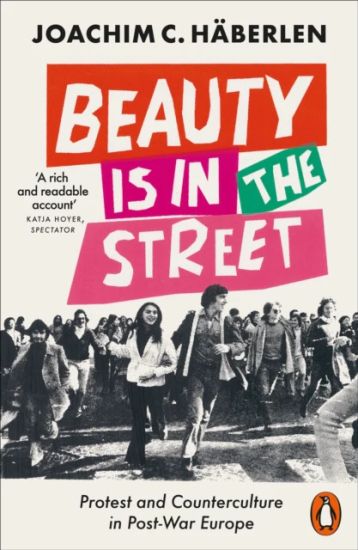
Beauty is in the Street

Beauty is in the Street

Joachim C. Häberlen

PENGUIN BOOKS LTD
2024
pokkari

Halvin toimitettuna 18,70 €

'A rich and readable account of left-wing activism in the West and opposition to Soviet-style communism in the East' Katja Hoyer, The Spectator'A dream, perhaps, but one that still sounds worth fighting for, even beautiful' Stuart Jeffries, The Observer'An ambitious and masterly account of utopian protest in Europe ... Fast-paced, with an eye for telling detail and written with a light touch' Robert GildeaIn post-war Europe, protest was everywhere. On both sides of the Iron Curtain, from Paris to Prague, Milan to Wroclaw, ordinary people took to the streets, fighting for a better world. Their efforts came to a head most dramatically in 1968 and 1989, when mass movements swept Europe and rewrote its history. In the decades between, Joachim C. Häberlen argues, new movements emerged that transformed the nature of protesting. Activism moved beyond traditional demonstrations, from squatting to staging 'happenings' and camping out at nuclear power plants. People protested in the way they dressed, the music they listened to, the lovers they slept with, the clubs where they danced all night. New movements were born, notably anti-racism, women's liberation, gay liberation, and environmentalism. And protest turned inward, as activists experimented with new ways of living and feeling, from communes to group therapy, in their efforts to live a better life in the here and now. Some of these struggles succeeded, others failed. But successful or not, their history provides a glimpse into roads not taken, into futures that did not happen. The stories in Häberlen's book invite us to imagine different futures; to struggle, to fail, and to try again. In a time when we are told that there are no alternatives, they show us that there could be another way.
Beauty is in the Street

Beauty is in the Street

Joachim C. Häberlen

PENGUIN BOOKS LTD
2023
sidottu
'A rich and readable account of left-wing activism in the West and opposition to Soviet-style communism in the East' Katja Hoyer, The Spectator'A dream, perhaps, but one that still sounds worth fighting for, even beautiful' Stuart Jeffries, The Observer'An ambitious and masterly account of utopian protest in Europe ... Fast-paced, with an eye for telling detail and written with a light touch' Robert GildeaIn post-war Europe, protest was everywhere. On both sides of the Iron Curtain, from Paris to Prague, Milan to Wroclaw, ordinary people took to the streets, fighting for a better world. Their efforts came to a head most dramatically in 1968 and 1989, when mass movements swept Europe and rewrote its history. In the decades between, Joachim C. Häberlen argues, new movements emerged that transformed the nature of protesting. Activism moved beyond traditional demonstrations, from squatting to staging 'happenings' and camping out at nuclear power plants. People protested in the way they dressed, the music they listened to, the lovers they slept with, the clubs where they danced all night. New movements were born, notably anti-racism, women's liberation, gay liberation, and environmentalism. And protest turned inward, as activists experimented with new ways of living and feeling, from communes to group therapy, in their efforts to live a better life in the here and now. Some of these struggles succeeded, others failed. But successful or not, their history provides a glimpse into roads not taken, into futures that did not happen. The stories in Häberlen's book invite us to imagine different futures; to struggle, to fail, and to try again. In a time when we are told that there are no alternatives, they show us that there could be another way.
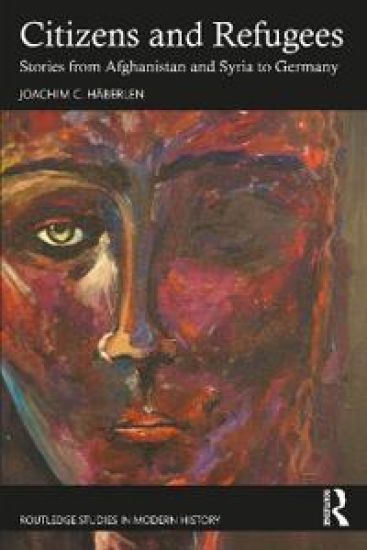
Citizens and Refugees

Citizens and Refugees

Joachim C. Häberlen

TAYLOR FRANCIS LTD
2022
sidottu
Following the stories of two dozen refugees from Syria and Afghanistan in 2015, Citizens and Refugees argues that we need to include the histories of these countries, notably the Syrian Revolution, into narratives of the refugee crisis. The book thus challenges a framing of the crisis that usually begins only with the moment of people fleeing. The stories it tells show refugees as citizens with a political voice engaged in struggles for participation and democracy, rather than as people in need of rescuing and integrating into new societies. It equally examines the much-celebrated German welcoming culture of 2015, arguing that it silenced political voices of those fleeing to Germany. Based on personal stories and the author’s intimate knowledge of the German welcoming culture, Citizens and Refugees intervenes into political debates about the viability of democracy. Overall, the importance of this volume stems from its suggestion that we would do well to listen to the voice of those coming to Europe as refugees. Based on both personal stories and historical analysis, Citizens and Refugees is the ideal resource for upper-level undergraduates, postgraduates, and scholars interested in migration studies and the history of Europe and the Middle East.
Citizens and Refugees

Citizens and Refugees

Joachim C. Häberlen

TAYLOR FRANCIS LTD
2022
nidottu
Following the stories of two dozen refugees from Syria and Afghanistan in 2015, Citizens and Refugees argues that we need to include the histories of these countries, notably the Syrian Revolution, into narratives of the refugee crisis. The book thus challenges a framing of the crisis that usually begins only with the moment of people fleeing. The stories it tells show refugees as citizens with a political voice engaged in struggles for participation and democracy, rather than as people in need of rescuing and integrating into new societies. It equally examines the much-celebrated German welcoming culture of 2015, arguing that it silenced political voices of those fleeing to Germany. Based on personal stories and the author’s intimate knowledge of the German welcoming culture, Citizens and Refugees intervenes into political debates about the viability of democracy. Overall, the importance of this volume stems from its suggestion that we would do well to listen to the voice of those coming to Europe as refugees. Based on both personal stories and historical analysis, Citizens and Refugees is the ideal resource for upper-level undergraduates, postgraduates, and scholars interested in migration studies and the history of Europe and the Middle East.
The Emotional Politics of the Alternative Left

The Emotional Politics of the Alternative Left

Joachim C. Häberlen

Cambridge University Press
2020
pokkari
In the 1970s, a multifaceted alternative scene developed in West Germany. At the core of this leftist scene was a struggle for feelings in a capitalist world that seemed to be devoid of any emotions. Joachim C. Häberlen offers here a vivid account of these emotional politics. The book discusses critiques of rationality and celebrations of insanity as an alternative. It explores why capitalism made people feel afraid and modern cities made people feel lonely. Readers are taken to consciousness raising groups, nude swimming at alternative vacation camps, and into the squatted houses of the early 1980s. Häberlen draws on a kaleidoscope of different voices to explore how West Germans became more concerned with their selves, their feelings, and their bodies. By investigating how leftists tried to transform themselves through emotional practices, Häberlen gives us a fresh perspective on a fascinating aspect of West German history.
The Emotional Politics of the Alternative Left

The Emotional Politics of the Alternative Left

Joachim C. Häberlen

Cambridge University Press
2018
sidottu
In the 1970s, a multifaceted alternative scene developed in West Germany. At the core of this leftist scene was a struggle for feelings in a capitalist world that seemed to be devoid of any emotions. Joachim C. Häberlen offers here a vivid account of these emotional politics. The book discusses critiques of rationality and celebrations of insanity as an alternative. It explores why capitalism made people feel afraid and modern cities made people feel lonely. Readers are taken to consciousness raising groups, nude swimming at alternative vacation camps, and into the squatted houses of the early 1980s. Häberlen draws on a kaleidoscope of different voices to explore how West Germans became more concerned with their selves, their feelings, and their bodies. By investigating how leftists tried to transform themselves through emotional practices, Häberlen gives us a fresh perspective on a fascinating aspect of West German history.
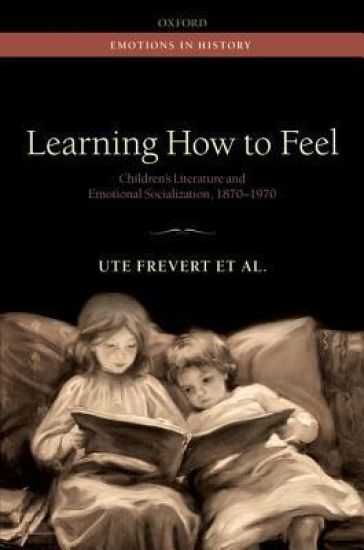
Learning How to Feel

Learning How to Feel

Ute Frevert; Pascal Eitler; Stephanie Olsen; Uffa Jensen; Margrit Pernau; Daniel Brückenhaus; Magdalena Beljan; Benno Gammerl; Anja Laukötter; Bettina Hitzer; Jan Plamper; Juliane Brauer; Joachim C. Häberlen

Oxford University Press
2014
sidottu
Learning How to Feel explores the ways in which children and adolescents learn not just how to express emotions that are thought to be pre-existing, but actually how to feel. The volume assumes that the embryonic ability to feel unfolds through a complex dialogue with the social and cultural environment and specifically through reading material. The fundamental formation takes place in childhood and youth. A multi-authored historical monograph, Learning How to Feel uses children's literature and advice manuals to access the training practices and learning processes for a wide range of emotions in the modern age, circa 1870-1970. The study takes an international approach, covering a broad array of social, cultural, and political milieus in Britain, Germany, India, Russia, France, Canada, and the United States. Learning How to Feel places multidirectional learning processes at the centre of the discussion, through the concept of practical knowledge. The book innovatively draws a framework for broad historical change during the course of the period. Emotional interaction between adult and child gave way to a focus on emotional interactions among children, while gender categories became less distinct. Children were increasingly taught to take responsibility for their own emotional development, to find 'authenticity' for themselves. In the context of changing social, political, cultural, and gender agendas, the building of nations, subjects and citizens, and the forging of moral and religious values, Learning How to Feel demonstrates how children were provided with emotional learning tools through their reading matter to navigate their emotional lives.