Kirjojen hintavertailu – 12 903 724 kirjaa ja 27 kauppaa
Kirjailija
Joachim Müller
Kirjat ja teokset yhdessä paikassa: 26 kirjaa, julkaisuja vuosilta 1962–2027, suosituimpiin kuuluu Die Gestalt Des Kindes Und Des Jugendlichen in Der Deutschen Literatur Von Goethe Bis Thomas Mann. Vertaile teosten hintoja ja tarkista saatavuus suomalaisista kirjakaupoista.
Der Titel Workflow-based Integration sagt aus, dass der Ansatz fur die Integration die fachliche Anforderung ist, also der Geschaftsprozess, der durch eine zu - stimmende Technologie unterstutzt werden soll. Diese Unterstutzung umfasst nicht nur einen begrenzten Bereich des Geschaftsprozesses, sondern den kompl- ten Ablauf, z. B. von der Anfrage fur ein Darlehen uber seine Auszahlung bis zur abgeschlossenen Tilgung. Wahrend dieses Ablaufes werden unterschiedliche R- sourcen in Form von Mitarbeitern und Geraten (Hardware und Werkzeuge) be- tigt und mussen fur den reibungslosen Ablauf zur Verfugung gestellt werden. Die Entwicklung von prozessunterstutzenden Anwendungen wird immer komp- xer und aufwandiger. Hinzu kommt, dass die Projektbeteiligten oft schon beim Projektstart unterschiedlicher Auffassung uber Begriffe und deren Bedeutung sind. Dieses Buch soll dabei helfen, die Kommunikation zwischen den Projekt- teiligten zu verbessern, um gemeinsam die Ziele eines Projektes bestimmen zu koennen und diese zu erreichen. Zu Beginn des Buches erhalt der Leser Grundlagen uber die Themen, die fur eine erfolgreiche Durchfuhrung prozessorientierter Projekte notwendig sind. Diese Grundlagen umfassen einen Einblick in die Begriffsklarung, die Modellierung, die Dokumentation und die Technologie, mit der solche Prozesse beschrieben und umgesetzt werden koennen. Weiterhin wird ein Ausblick gewagt, welche zukunf- gen Technologien in Zusammenhang mit Workflow zu berucksichtigen sind. Ein Vorgehensmodell, welches im Anschluss vorgestellt wird, soll mit seinen T- plates einen Leitfaden fur die effektive Durchfuhrung von Workflow-Projekten darstellen.
Grain Drying, Cooling and Storage: Theory, Technology, and Applications is an authoritative and comprehensive handbook addressing the critical postharvest processes of grain drying, handling, storage, and cooling. With global food security increasingly challenged by climate change, energy scarcity, and geopolitical conflicts, efficient and sustainable grain preservation technologies have never been more essential. This book responds to the urgent need for updated, practical knowledge that supports reducing postharvest losses, maintaining grain quality, and optimizing energy use across diverse agricultural systems worldwide. The handbook covers both theoretical foundations and practical applications, integrating the latest research and innovations in drying kinetics, energy-efficient technologies, and quality preservation. It uniquely includes detailed models for single grain and bulk drying, novel optimization strategies, and extensive evaluations of equipment such as conveyors, cleaning machines, burners, furnaces, and various dryer types. Special attention is given to emerging renewable energy solutions and technologies suited for developing countries and smallholder farms, bridging the gap between scientific advances and real-world implementation. The inclusion of grain cooling and comprehensive storage methods further enhances its value as a complete postharvest resource. Grain Drying, Cooling and Storage: Theory, Technology, and Applications empowers engineers, researchers, and industry professionals in the food industry with practical guidelines, technical data, and quality-focused strategies to improve grain handling processes. By combining scientific rigor with hands-on insights, the book aids in maximizing drying efficiency, reducing energy consumption, preserving grain quality, and ensuring food safety. Its global perspective and extensive coverage make it an indispensable reference for anyone involved in grain production, processing, and storage, supporting sustainable agriculture and food security worldwide.
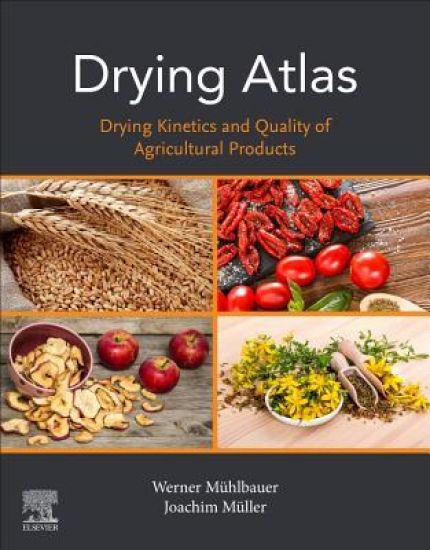
Drying Atlas: Drying Kinetics and Quality of Agricultural Products provides, in a condensed and systematic way, specific insights on the drying-relevant properties and coefficients of over 40 agricultural products. It also presents information about the production methods that influence the drying process, the quality of the dried product, the official quality standards of the products, and the design principles and operating characteristics of drying systems that are widely used in the postharvest processing and food industry. Available books on drying technology mainly focus on drying theory and simulation of drying processes. This book offers systematic information on the impact of other important parameters, such as relative humidity, air flow rate, mechanical, thermal and chemical pre-treatment, and drying mode for specific products. It is a unique and valuable reference for scientists and engineers who want to focus on industrial drying applications and dryers, as well as graduate and post-graduate students in postharvest technology and drying.
What are the limits of UN system reform? Recent efforts in governance and institutional reform demonstrate that the hurdles are tremendous. The never-ending Security Council reform resulted in disappointment for hopeful governments. The system-wide coherence initiatives covering environment, gender, and 'Delivering as One' at country level provide a sobering picture. Inter-agency coordination on climate change, food security, and the global financial crisis did not result in joint programmes. Instead, new entities have diminished the role of the UN which operates on the OECD principles of 'aid effectiveness.' Consolidation and merging of UN mandates and structures appear to be a precondition for coherent and efficient action: A conclusion which dominates this edition of the publication series on 'Reforming the United Nations'.
Keine ausf hrliche Beschreibung f r "Die dramatische Funktion von Mephistos Monolog in Goethes "Faust" I: "Verachte nur Vernunft und Wissenschaft ..." (V. 1851-1867)" verf gbar.