Kirjojen hintavertailu – 12 859 818 kirjaa ja 27 kauppaa

Kirjailija

Joad Raymond

Kirjat ja teokset yhdessä paikassa: 7 kirjaa, julkaisuja vuosilta 1996–2023, suosituimpiin kuuluu Communicating the News in Early Modern Europe. Vertaile teosten hintoja ja tarkista saatavuus suomalaisista kirjakaupoista.

7 kirjaa

Kirjojen julkaisuvuodet: 1996–2023.

Communicating the News in Early Modern Europe

Communicating the News in Early Modern Europe

Jenni Hyde; Massimo Rospocher; Joad Raymond; Yann Ryan; Hannu Salmi; Alexandra Schäfer-Griebel

Cambridge University Press
2023
pokkari
This history of early modern news focuses on news itself rather than specific material forms. Centering on movement through different media, time, and place, it makes the case for a truly comparative, pan-European history of news. After the Introduction, the second section, News Moves, explores how we think about and research news culture and news communication, demonstrating movement is more important than static forms. The third, News Sings, focuses on news ballads, comparing actors, publics, music, and soundscapes of ballad singing in several European cities, highlighting the central role of immaterial elements, such as sound, music and voice. The fourth, News Counts, argues that seeing news the way a machine might read it—through its metadata—is one way of moving beyond form, allowing us to find surprising commonalities in news cultures which differ greatly in both time and place.
Milton's Angels

Milton's Angels

Joad Raymond

Oxford University Press
2013
nidottu
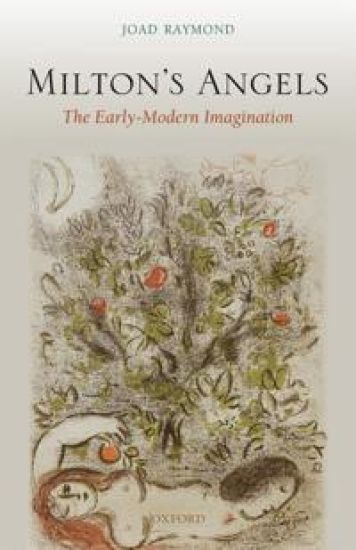
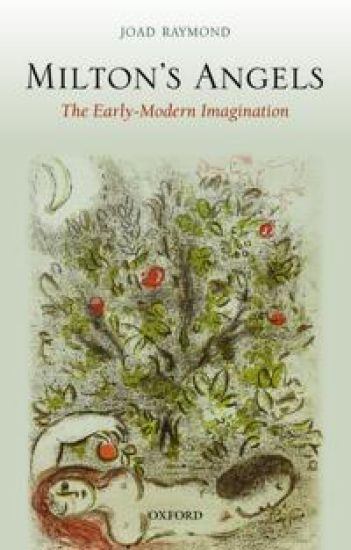
Milton's Paradise Lost, the most eloquent, most intellectually daring, most learned, and most sublime poem in the English language, is a poem about angels. It is told by and of angels; it relies upon their conflicts, communications, and miscommunications. They are the creatures of Milton's narrative, through which he sets the Fall of humankind against a cosmic background. Milton's angels are real beings, and the stories he tells about them rely on his understanding of what they were and how they acted. While he was unique in the sublimity of his imaginative rendering of angels, he was not alone in writing about them. Several early-modern English poets wrote epics that explore the actions of and grounds of knowledge about angels. Angels were intimately linked to theories of representation, and theology could be a creative force. Natural philosophers and theologians too found it interesting or necessary to explore angel doctrine. Angels did not disappear in Reformation theology: though centuries of Catholic traditions were stripped away, Protestants used them in inventive ways, adapting tradition to new doctrines and to shifting perceptions of the world. Angels continued to inhabit all kinds of writing, and shape the experience and understanding of the world. Milton's Angels: The Early-Modern Imagination explores the fate of angels in Reformation Britain, and shows how and why Paradise Lost is a poem about angels that is both shockingly literal and sublimely imaginative.
Milton's Angels

Milton's Angels

Joad Raymond

Oxford University Press
2010
sidottu
Milton's Paradise Lost, the most eloquent, most intellectually daring, most learned, and most sublime poem in the English language, is a poem about angels. It is told by and of angels; it relies upon their conflicts, communications, and miscommunications. They are the creatures of Milton's narrative, through which he sets the Fall of humankind against a cosmic background. Milton's angels are real beings, and the stories he tells about them rely on his understanding of what they were and how they acted. While he was unique in the sublimity of his imaginative rendering of angels, he was not alone in writing about them. Several early-modern English poets wrote epics that explore the actions of and grounds of knowledge about angels. Angels were intimately linked to theories of representation, and theology could be a creative force. Natural philosophers and theologians too found it interesting or necessary to explore angel doctrine. Angels did not disappear in Reformation theology: though centuries of Catholic traditions were stripped away, Protestants used them in inventive ways, adapting tradition to new doctrines and to shifting perceptions of the world. Angels continued to inhabit all kinds of writing, and shape the experience and understanding of the world. Milton's Angels: The Early-Modern Imagination explores the fate of angels in Reformation Britain, and shows how and why Paradise Lost is a poem about angels that is both shockingly literal and sublimely imaginative.
Pamphlets and Pamphleteering in Early Modern Britain

Pamphlets and Pamphleteering in Early Modern Britain

Joad Raymond

Cambridge University Press
2006
pokkari
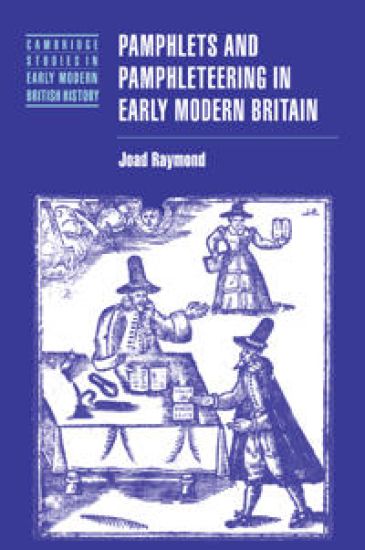
By the end of the seventeenth century the most effective means of persuasion and communication was the pamphlet, which created influential moral and political communities of readers, and thus formed a 'public sphere' of popular, political opinion. This book is a unique history of the printed pamphlet in sixteenth- and seventeenth-century Britain and traces its rise as an imaginative and often eloquent literary form. Using a long-term perspective and a broad range of historical, bibliographical and textual evidence, the book sketches a complex definition of a 'pamphlet', showing the coherence of the literary form, the diversity of genres and imaginative devices employed by pamphleteers; and it explores readers' relationship with pamphlets and how both influenced politics. Individual chapters examine topics such as Elizabethan religious controversy, the book trade, the distribution of books and pamphlets, pamphleteering in the English Civil War, women and gender, and print in the Restoration.
The Invention of the Newspaper

The Invention of the Newspaper

Joad Raymond

Oxford University Press
2005
nidottu
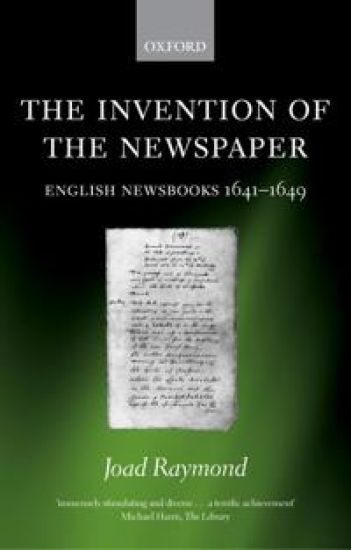
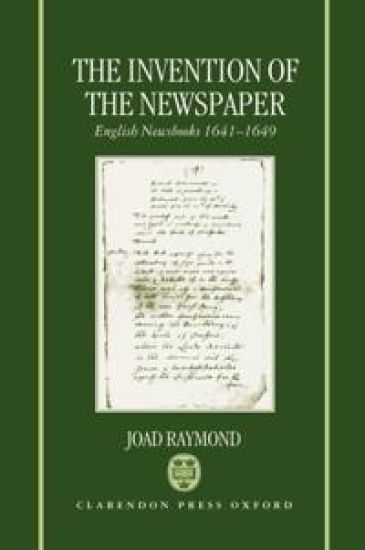
The first weekly English newsbooks appeared in November 1641, on the eve of the civil war. Though they provoked animosity and fanned the flames of civil war, they have survived almost without interruption to the present day, transformed into the modern newspaper. The Invention of the Newspaper is the first detailed account of the origins and early development of the English newspaper, using a wealth of new evidence to show the causes of the first newsbooks, and their many and complex roles in the turbulent society in which they participated. Newsbooks were widely read and exerted considerable influence not only over immediate perceptions of news, but also over subsequent histories of the seventeenth-century, extending even to the present day. Using and synthesising approaches from literary criticism, history, and the 'socoiology of texts', The Invention of the Newspaper shows how newsbooks transformed print culture, fed the public hunger for news, and in turn created a market for news periodical. Charting the newsbook's development as a form and a commercial enterprise, its literary qualities, and its relationship to other means of communication, The Invention of the Newspaper shows the newsbook's gradual and irresistible dominance of the market for information.
Pamphlets and Pamphleteering in Early Modern Britain

Pamphlets and Pamphleteering in Early Modern Britain

Joad Raymond

Cambridge University Press
2003
sidottu
By the end of the seventeenth century the most effective means of persuasion and communication was the pamphlet, which created influential moral and political communities of readers, and thus formed a 'public sphere' of popular, political opinion. This book is a unique history of the printed pamphlet in sixteenth- and seventeenth-century Britain and traces its rise as an imaginative and often eloquent literary form. Using a long-term perspective and a broad range of historical, bibliographical and textual evidence, the book sketches a complex definition of a 'pamphlet', showing the coherence of the literary form, the diversity of genres and imaginative devices employed by pamphleteers; and it explores readers' relationship with pamphlets and how both influenced politics. Individual chapters examine topics such as Elizabethan religious controversy, the book trade, the distribution of books and pamphlets, pamphleteering in the English Civil War, women and gender, and print in the Restoration.
The Invention of the Newspaper

The Invention of the Newspaper

Joad Raymond

Clarendon Press
1996
sidottu
The first newspapers, or `newsbooks', appeared in 1641, although the reasons for their appearance have never been fully understood. The Invention of the Newspaper is the first interdisciplinary account of the origins and early development of the English newspaper, using both manuscript and printed evidence to account for the precise moment of the newsbook's appearance - a moment just a few months before the outbreak of civil war. Raymond explores the newspaper's unique place in the flourishing political print culture of the 1640s, showing how newsbooks drew from and then reformed elements of literary culture, being both produced by a public hunger for news and, in turn, creating a market for it. The Inverntion of the Newspaper presents previously unexplored evidence concerning the distribution and readership of seventeenth-century news publications, which suggests that the early newsbooks were widely read and highly influential, and that - even today - they exert a considerable influence over the way in which seventeenth-century history is perceived. Charting the newsbook's development as a genre, its narrative forms, literary merits and influences, and its relationship to other vehicles of communication, printed and spoken, such as sermons, alamanacs, and play-pamphlets, Raymond presents a detailed exploration of the newsbook's gradual dominance of the market for information.