Kirjojen hintavertailu – 12 859 818 kirjaa ja 27 kauppaa

Kirjailija

Joakim Berndtsson

Kirjat ja teokset yhdessä paikassa: 3 kirjaa, julkaisuja vuosilta 2016–2018, suosituimpiin kuuluu Informationssäkerhet och organisationskultur. Vertaile teosten hintoja ja tarkista saatavuus suomalaisista kirjakaupoista.

3 kirjaa

Kirjojen julkaisuvuodet: 2016–2018.

Informationssäkerhet och organisationskultur

Informationssäkerhet och organisationskultur

Jonas Hallberg; Peter Johansson; Fredrik Karlsson; Frida Lundberg; Björn Lundgren; Marianne Törner; Annika Andersson; Joakim Berndtsson; Magnus Frostenson; Karin Hellström; Sven Helin; Sofie Hellberg; Martin Karlsson; Henrik Karlzén; Ella Kolkowska; Jonas Landgren; Anders Pousette; Frans Prenkert; Maria Skyvell Nilsson; Teodor Sommestad; Joachim Åström

Studentlitteratur AB
2017
nidottu
Behovet av att skydda och hantera data på ett säkert sätt växer i takt med krav på ökad tillgänglighet till information i samhället. Den tekniska säkerheten har blivit allt bättre och försöken från obehöriga att komma åt information förflyttas – från luckor i systemens teknik till dess sociala svagheter. Därför utgör mänskligt beteende en allt vanligare grund för säkerhetsriskerna i vår tids informationssamhälle. Med utgångspunkt i samhälle, organisation och verksamhet ger boken förståelse för varför tekniska lösningar inte löser alla problem kring informationssäkerhet. Ett brett grepp tas om frågan – från strukturell nivå i det breda samhälls­perspektivet via den enskilda verksamheten och ända ner på individnivå. Boken beskriver arbetssätt, metoder och verktyg som hjälper verksamheter att möta nutida utmaningar inom informationssäkerhet. Informationssäkerhet och organisationskultur vänder sig till studenter och forskare som vill få insyn i området, och till yrkesverksamma som dagligen arbetar med informationssäkerhet i organisationer: beslutsfattare, stabsfunktionärer, ledningsansvariga, informations­säkerhetsansvariga, utvecklingsansvariga, upphandlare, verksamhets­samordnare och specialister.
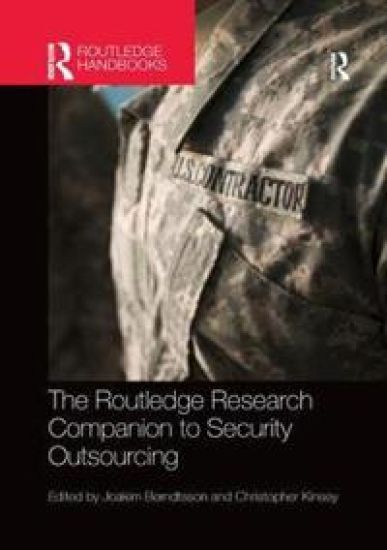
The Routledge Research Companion to Security Outsourcing

The Routledge Research Companion to Security Outsourcing

Joakim Berndtsson; Christopher Kinsey

Routledge
2018
nidottu
Conveniently structured into five sections, The Routledge Research Companion to Outsourcing Security offers an overview of the different ways in which states have come to rely on private contractors to support interventions. Part One puts into context the evolution of outsourcing in Western states that are actively involved in expeditionary operations as well as the rise of the commercial security sector in Afghanistan. To explain the various theoretical frameworks that students can use to study security/military outsourcing, Part Two outlines the theories behind security outsourcing. Part Three examines the law and ethics surrounding the outsourcing of security by focusing on how states might monitor contractor behaviour, hold them to account and prosecute them where their behaviour warrants such action. The drivers, politics and consequences of outsourcing foreign policy are covered in Part Four, which is divided into two sections: section one is concerned with armed contractors (providing the provision of private security with the main driver being a capability gap on the part of the military/law enforcement agencies), and section two looks at military contractors (supporting military operations right back to antiquity, less controversial politically and often technologically driven). The final Part takes into consideration emerging perspectives, exploring areas such as gender, feminist methodology, maritime security and the impact of private security on the military profession. This book will be of much interest to students of military and security studies, foreign policy and International Relations.
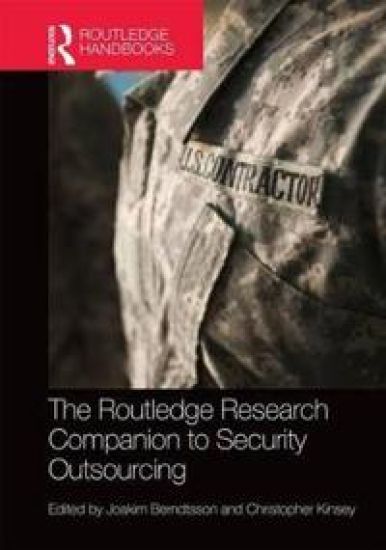
The Routledge Research Companion to Security Outsourcing

The Routledge Research Companion to Security Outsourcing

Joakim Berndtsson; Christopher Kinsey

Routledge
2016
sidottu
Conveniently structured into five sections, The Routledge Research Companion to Outsourcing Security offers an overview of the different ways in which states have come to rely on private contractors to support interventions. Part One puts into context the evolution of outsourcing in Western states that are actively involved in expeditionary operations as well as the rise of the commercial security sector in Afghanistan. To explain the various theoretical frameworks that students can use to study security/military outsourcing, Part Two outlines the theories behind security outsourcing. Part Three examines the law and ethics surrounding the outsourcing of security by focusing on how states might monitor contractor behaviour, hold them to account and prosecute them where their behaviour warrants such action. The drivers, politics and consequences of outsourcing foreign policy are covered in Part Four, which is divided into two sections: section one is concerned with armed contractors (providing the provision of private security with the main driver being a capability gap on the part of the military/law enforcement agencies), and section two looks at military contractors (supporting military operations right back to antiquity, less controversial politically and often technologically driven). The final Part takes into consideration emerging perspectives, exploring areas such as gender, feminist methodology, maritime security and the impact of private security on the military profession. This book will be of much interest to students of military and security studies, foreign policy and International Relations.