Kirjojen hintavertailu – 12 859 828 kirjaa ja 27 kauppaa

Kirjailija

Joakim Öjendal

Kirjat ja teokset yhdessä paikassa: 3 kirjaa, julkaisuja vuosilta 2015–2017, suosituimpiin kuuluu Om krig och fred : en introduktion till freds- och konfliktstudier. Vertaile teosten hintoja ja tarkista saatavuus suomalaisista kirjakaupoista.

3 kirjaa

Kirjojen julkaisuvuodet: 2015–2017.

Om krig och fred : en introduktion till freds- och konfliktstudier

Om krig och fred : en introduktion till freds- och konfliktstudier

Karin Aggestam; Kristine Höglund; Wilhelm Agrell; Olof Beckman; Annika Björkdahl; Robert Egnell; Hanna Fjelde; Sara Gehlin; Patrik Johansson; Roland Kostic; Louise Olsson; Anders Persson; Michael Schulz; Maria Småberg; Maria Stern; Lina Sturfelt; Isak Svensson; Fredrik Söderbaum; Anders Themnér; Jan Ångström; Joakim Öjendal

Studentlitteratur AB
2017
nidottu
Hur kan vi förstå uppkomsten och konsekvenserna av dagens konflikter? Vad kan göras för att förhindra att de bryter ut? Och hur kan pågående konflikter lösas på ett sätt som skapar varaktig fred? I denna breda grundbok presenteras centrala frågeställningar och analytiska perspektiv på krig, terrorism, konflikthantering och konfliktlösning, samt fredsbyggande och utveckling. Boken innehåller också illustrativa fallanalyser – allt ifrån första världskriget, kriget i Afghanistan, konflikthantering i Afrika, svensk säkerhetspolitik och försoningsprocesser i Bosnien-Hercegovina till fredsbyggande insatser i Palestina. I denna andra upplaga har samtliga kapitel uppdaterats och tre nyskrivna kapitel, som behandlar terrorism, religionens betydelse för konfliktlösning och fred samt fred och säkerhet ur ett jämställdhetsperspektiv, har tillkommit. Freds- och konfliktstudier har en flervetenskaplig karaktär, vilket i boken återspeglas i de olika kapitelbidragen och författarnas akademiska bakgrund. Boken vänder sig till de som är intresserade av frågor om krig och fred samt studenter vid universitet och högskolor som möter ämnet freds- och konfliktstudier för första gången.
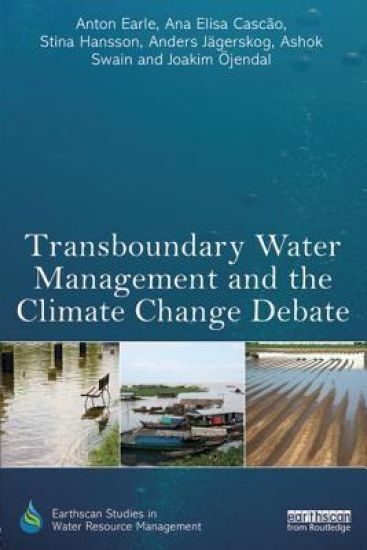
Transboundary Water Management and the Climate Change Debate

Transboundary Water Management and the Climate Change Debate

Anton Earle; Ana Elisa Cascao; Stina Hansson; Anders Jägerskog; Ashok Swain; Joakim Öjendal

Routledge
2015
sidottu
Climate change has an impact on the ability of transboundary water management institutions to deliver on their respective mandates. The starting point for this book is that actors within transboundary water management institutions develop responses to the climate change debate, as distinct from the physical phenomenon of climate change. Actors respond to this debate broadly in three distinct ways – adapt, resist (as in avoiding the issue) and subvert (as in using the debate to fulfil their own agenda). The book charts approaches which have been taken over the past two decades to promote more effective water management institutions, covering issues of conflict, cooperation, power and law. A new framework for a better understanding of the interaction between transboundary water management institutional resilience and global change is developed through analysis of the way these institutions respond to the climate change debate. This framework is applied to six river case studies from Africa, Asia and the Middle East (Ganges-Brahmaputra, Jordan, Mekong, Niger, Nile, Orange-Senqu) from which learning conclusions and policy recommendations are developed.
Transboundary Water Management and the Climate Change Debate

Transboundary Water Management and the Climate Change Debate

Anton Earle; Ana Elisa Cascao; Stina Hansson; Anders Jägerskog; Ashok Swain; Joakim Öjendal

Routledge
2015
nidottu
Climate change has an impact on the ability of transboundary water management institutions to deliver on their respective mandates. The starting point for this book is that actors within transboundary water management institutions develop responses to the climate change debate, as distinct from the physical phenomenon of climate change. Actors respond to this debate broadly in three distinct ways – adapt, resist (as in avoiding the issue) and subvert (as in using the debate to fulfil their own agenda). The book charts approaches which have been taken over the past two decades to promote more effective water management institutions, covering issues of conflict, cooperation, power and law. A new framework for a better understanding of the interaction between transboundary water management institutional resilience and global change is developed through analysis of the way these institutions respond to the climate change debate. This framework is applied to six river case studies from Africa, Asia and the Middle East (Ganges-Brahmaputra, Jordan, Mekong, Niger, Nile, Orange-Senqu) from which learning conclusions and policy recommendations are developed.