Kirjojen hintavertailu – 12 859 818 kirjaa ja 27 kauppaa

Kirjailija

Joan Bakewell

Kirjat ja teokset yhdessä paikassa: 9 kirjaa, julkaisuja vuosilta 2004–2022, suosituimpiin kuuluu She's Leaving Home. Vertaile teosten hintoja ja tarkista saatavuus suomalaisista kirjakaupoista.

9 kirjaa

Kirjojen julkaisuvuodet: 2004–2022.

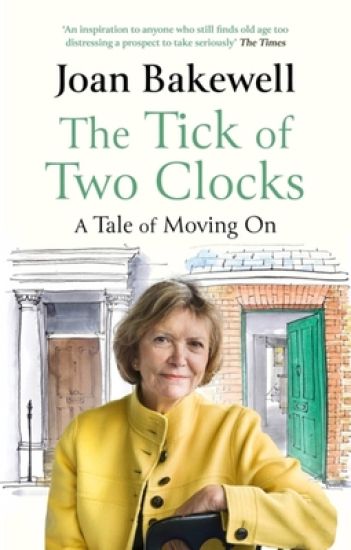
The Tick of Two Clocks

The Tick of Two Clocks

Joan Bakewell

Little, Brown Book Group
2022
pokkari
'An inspiration to anyone who still finds old age too distressing a prospect to take seriously' The TimesOld age is no longer a blip in the calendar, just a few declining years before the end. Old age is now a major and important part of life: It should command as much thought - even anxiety - as teenagers give to exam results and young marrieds how many children to have . . . I am in my 80s and moving towards the end of my life. But in a more actual sense, I have moved from my dear home of 50 odd years into another . . . the home where I will be until the end. Writing here of how it has happened is in a sense a reconciliation with what cannot be avoided, but which can be confrontedWhen Joan Bakewell, Labour Peer, author and famous champion of the older people's right to a good and fruitful life, decided that she could no longer remain in her old home, she had to confront what she calls 'the next segment of life.'Disposing of things accumulated during a long life, saying goodbye to her home and the memories of more than fifty years, thinking about what is needed for downsizing - all suddenly became urgent and emotional tasks. And then there was managing family expectations. Some new projects such as planning the colours and layout of a new, smaller flat, were exciting and some things - the ridding herself of books, paintings, memento - took courage. So much of the world is on the move- voluntarily or not - and so many people are living to a great old age. In using the tale of her own life , Joan Bakewell tells us a story of our times and how she is learning to live to the sound and tune of The Tick of Two Clocks: the old and the new.
The Tick of Two Clocks

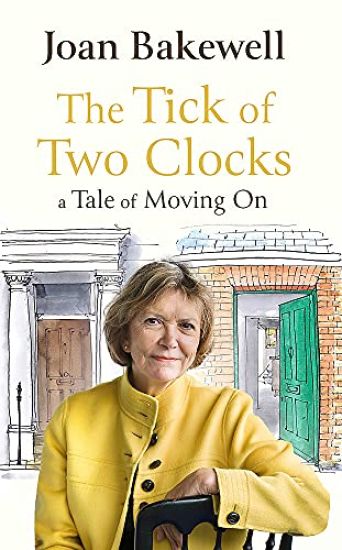
The Tick of Two Clocks

Joan Bakewell

Virago Press Ltd
2021
sidottu
'An inspiration to anyone who still finds old age too distressing a prospect to take seriously' The TimesOld age is no longer a blip in the calendar, just a few declining years before the end. Old age is now a major and important part of life: It should command as much thought - even anxiety - as teenagers give to exam results and young marrieds how many children to have . . . I am in my 80s and moving towards the end of my life. But in a more actual sense, I have moved from my dear home of 50 odd years into another . . . the home where I will be until the end. Writing here of how it has happened is in a sense a reconciliation with what cannot be avoided, but which can be confrontedWhen Joan Bakewell, Labour Peer, author and famous champion of the older people's right to a good and fruitful life, decided that she could no longer remain in her old home, she had to confront what she calls 'the next segment of life.' Disposing of things accumulated during a long life, saying goodbye to her home and the memories of more than fifty years, thinking about what is needed for downsizing - all suddenly became urgent and emotional tasks. And then there was managing family expectations. Some new projects such as planning the colours and layout of a new, smaller flat, were exciting and some things - the ridding herself of books, paintings, memento - took courage. So much of the world is on the move- voluntarily or not - and so many people are living to a great old age. In using the tale of her own life , Joan Bakewell tells us a story of our times and how she is learning to live to the sound and tune of The Tick of Two Clocks: the old and the new.
Writing Home

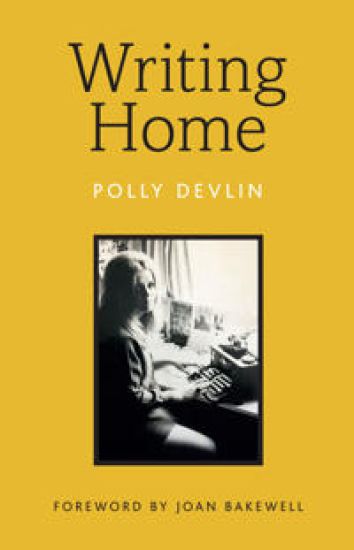
Writing Home

Polly Devlin; Joan Bakewell

Pimpernel Press Ltd
2019
nidottu
In the pieces brought together in Writing Home, Polly Devlin OBE, most bewitching of writers, covers subjects that range over her whole life and thought. She writes about places: about her childhood deep in the countryside of Northern Ireland (where, in the late 1950s, the first electricity poles looked 'literally out of place'); her sudden transition, at the age of twenty-one, to Swinging Sixties London, where she worked for Vogue and became very much part of the scene (although - 'it's like being a provincial at Versailles'), on to New York, back to London, then to the English countryside, and to Paris, Venice, the world over - and always back to Ireland, London and New York. She writes about the people she has known, among them Bob Dylan, John Lennon, Yoko Ono, Mick Jagger, Peggy Guggenheim, Diana Vreeland ('as fantastical as a unicorn'), Jean Shrimpton ('she looks as though she sleeps in cathedral pews and sucks artichoke hearts for sustenance'), Princess Margaret (who came to dinner and did the washing up, 'which I gabbled she didn't need to - she looked at me frostily and the royal hands went back into the Fairy Liquid'). And she writes about the issues that have preoccupied her: about emigration, feminism ('I grew up in a society where men were fundamental and women were secondary'), reading, writing, collecting, shopping, houses, dogs, rooks, hares, dreams, friendship and the kindness of strangers; about daughters and mothers; and about wishes . . .
Don't Bring Me No Rocking Chair

Don't Bring Me No Rocking Chair

Joan Bakewell

Bloodaxe Books Ltd
2013
nidottu
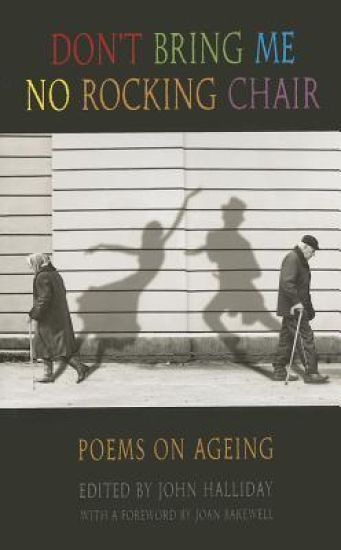
Gathering poems from Shakespeare to the present, Don't Bring Me No Rocking Chair addresses ageing through the several ages of poetry. Now more than ever, as more of us live for longer, the idea of what it means to age or to grow old engages and concerns people of all ages. One of the problems of ageing is the language we use to define it and the list of pejoratives associated with it, with attitudes to ageing ranging from 'fatalism, denial, negative stereotyping and tunnel vision to fantasy' (Professor Tom Kirkwood, Newcastle University). Poetry can help to give us a fresh language to think about ageing and these poems are chosen to fortify, celebrate, lament, grieve, rage and ridicule. There is not one way to age but neither can any of us truly stop our bodies from ageing. Ageing is not a single phenomenon but complex, multiple, perplexing: experienced historically as well as individually. This anthology may not console but it can widen our perspectives, helping us to change what we can change: our attitudes. This anthology was prepared for the Newcastle Centre for the Literary Arts as part of the Societal Challenge Theme on Ageing at Newcastle University with support from the Institute of Ageing and Health, Newcastle University, and has a foreword by Joan Bakewell.
She's Leaving Home

She's Leaving Home

Joan Bakewell

Virago Press Ltd
2012
nidottu
Liverpool late 1950s. This is a story of three people: a suppressed mother; a father, projectionist at the local cinema which has seen better days; and their daughter Martha. It is a time of many escapes: Nureyev defects in London; Gagarin escapes the earth's atmosphere to be the first man in space; the Beatles escape the dreariness of Liverpool to seek their fortune in Hamburg. In Britain the drab 50s are giving way to the lively 60s and the young sense it. With shades of Billy Liar, and Absolute Beginners, this novel brilliantly captures that longing for freedom. Sixteen year old Martha is leaving home.
The Contented Life

The Contented Life

Robert Atwell; Joan Bakewell

Canterbury Press Norwich
2011
nidottu
As a new bishop, Robert Atwell responded to a direct challenge from older church members, who usually make up the biggest majority in any congregation. Why, they asked, was there always so much for the young; what was there for them? This book grew out of his response. A series of talks he gave on the spirituality of growing older and the gifts that wait to be discovered generated an unprecedented response, not only throughout the diocese, but on blogs and websites around the world. 60 really is the new 40 for increasing numbers of people. The retired are a huge consumer category, increasingly recognised by marketing gurus. They may have disposable income, time on their hands, and the leisure of choice - but wisdom, humour and honesty are essential for these transitional decades too and this short book offers all three in plenty. The author's background in Benedictine life, with its profound understanding of what makes for a balanced and rich life, flavours a book of timeless value
All The Nice Girls

All The Nice Girls

Joan Bakewell

Little, Brown Book Group
2010
nidottu
It is 1942 and the war is not going well. As part of the war effort the Ashworth Grammar School for Girls signs up for the Merchant Navy's Ship Adoption Scheme. The headmistress, the lovely, essentially serious Cynthia Maitland, who lost her lover in the First World War, believes the idea will broaden the horizons of her girls, especially Polly and Jen, bright sixth formers eager to live and love despite it all. All is as it should be in the line of duty until Captain Josh Percival and his officers of the SS Treverran visit Ashworth . . . The choices that follow will disrupt all their lives, reverberating even to the next generation, when, decades later, life and love are on the line again.
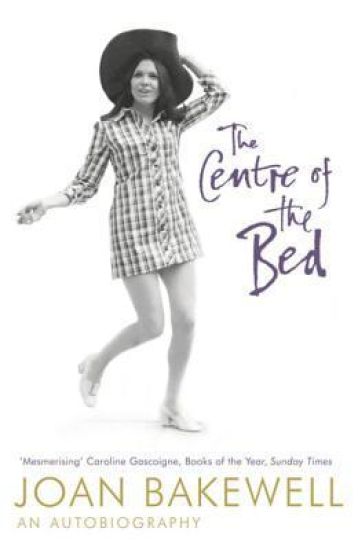
The Centre of the Bed: An Autobiography
'Honest and intriguing ... beautifully written.' Observer'Joan Bakewell was everywhere at every stage: reporting on the Cuban missile crisis, interviewing Allen Ginsberg and Vaclav Havel, taking chunks out of the Berlin Wall when it fell...draped in the kaftan of Sixties sophistication.' Independent on SundayJoan Bakewell's life and times spans the Blitz in Manchester, Cambridge during the glittering era of Michael Frayn, Peter Hall, Jonathan Miller et al, London at its most exciting in the swinging sixties and the world of the media and the arts from the 60s to the present. As she reflects on the choices she has made and the influences that shaped her, she confronts painful childhood memories of her mother's behaviour and describes both her affair with Harold Pinter and her two marriages with remarkable honesty. Throughout she uses her own experience to explore the extraordinary change in women's roles during her lifetime. This is no ordinary celebrity autobiography but a memoir that is beautifully written, frank and absorbing, which draws a thought-provoking portrait of Britain in the last 70 years. Dame Joan Bakewell was awarded the BAFTA Fellowship in 2019.