Kirjojen hintavertailu – 12 859 829 kirjaa ja 27 kauppaa

Kirjailija

Joan C. Williams

Kirjat ja teokset yhdessä paikassa: 25 kirjaa, julkaisuja vuosilta 2005–2026, suosituimpiin kuuluu Racial Justice: The Insights You Need from Harvard Business Review. Vertaile teosten hintoja ja tarkista saatavuus suomalaisista kirjakaupoista.

25 kirjaa

Kirjojen julkaisuvuodet: 2005–2026.

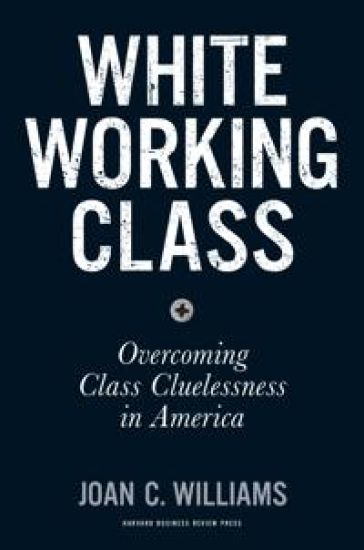
White Working Class

White Working Class

Joan C. Williams

Harvard Business Review Press
2017
sidottu
Around the world, populist movements are gaining traction among the white working class. Meanwhile, the professional elite--journalists, managers, and establishment politicians--is on the outside looking in, and left to argue over the reasons why. In White Working Class, Joan C. Williams, described as "something approaching rock star status" in her field by the New York Times, explains why so much of the elite's analysis of the white working class is misguided, rooted in assumptions by what she has controversially coined "class cluelessness." Williams explains how most analysts, and the corresponding media coverage, have conflated "working class" with "poor." All too often, white working class motivations have been dismissed as simply racism or xenophobia. Williams explains how the term "working class" has been misapplied--it is, in fact, the elusive, purportedly disappearing middle class. This demographic often resents both the poor and the professionals. They don't, however, tend to resent the truly rich, nor are they particularly bothered by income inequality. Their dream is not to join the upper middle class, with its different culture, but to stay true to their own values in their own communities--just with more money. White Working Class is a blunt, bracing narrative that sketches a nuanced portrait of millions of people throughout the world who have proven to be a potent political force. For anyone stunned by the rise in populist, nationalist movements, wondering why so many would seemingly vote against their own economic interests or simply feeling like a stranger in their own country, White Working Class will be a convincing primer on how to connect with a crucial set of workers--and voters.
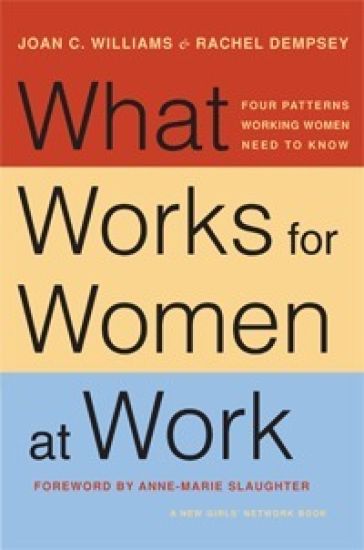
What Works for Women at Work

What Works for Women at Work

Joan C. Williams; Rachel Dempsey; Anne-Marie Slaughter

New York University Press
2014
sidottu
Up-beat, pragmatic, and chock full of advice, What Works for Women at Work is an indispensable guide for working women. An essential resource for any working woman, What Works for Women at Work is a comprehensive and insightful guide for mastering office politics as a woman. Authored by Joan C. Williams, one of the nation's most-cited experts on women and work, and her daughter, writer Rachel Dempsey, this unique book offers a multi-generational perspective into the realities of today's workplace. Often women receive messages that they have only themselves to blame for failing to get ahead—Negotiate more! Stop being such a wimp! Stop being such a witch! What Works for Women at Work tells women it's not their fault. The simple fact is that office politics often benefits men over women. Based on interviews with 127 successful working women, over half of them women of color, What Works for Women at Work presents a toolkit for getting ahead in today's workplace. Distilling over 35 years of research, Williams and Dempsey offer four crisp patterns that affect working women: Prove-It-Again!, the Tightrope, the Maternal Wall, and the Tug of War. Each represents different challenges and requires different strategies—which is why women need to be savvier than men to survive and thrive in high-powered careers. Williams and Dempsey's analysis of working women is nuanced and in-depth, going far beyond the traditional cookie-cutter, one-size-fits-all approaches of most career guides for women. Throughout the book, they weave real-life anecdotes from the women they interviewed, along with quick kernels of advice like a "New Girl Action Plan," ways to "Take Care of Yourself", and even "Comeback Lines" for dealing with sexual harassment and other difficult situations.
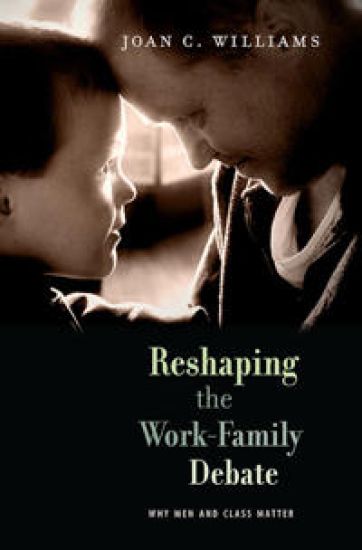
Reshaping the Work-Family Debate

Reshaping the Work-Family Debate

Joan C. Williams

Harvard University Press
2012
nidottu
The United States has the most family-hostile public policy in the developed world. Despite what is often reported, new mothers don’t “opt out” of work. They are pushed out by discriminating and inflexible workplaces. Today’s workplaces continue to idealize the worker who has someone other than parents caring for their children. Conventional wisdom attributes women’s decision to leave work to their maternal traits and desires. In this thought-provoking book, Joan Williams shows why that view is misguided and how workplace practice disadvantages men—both those who seek to avoid the breadwinner role and those who embrace it—as well as women. Faced with masculine norms that define the workplace, women must play the tomboy or the femme. Both paths result in a gender bias that is exacerbated when the two groups end up pitted against each other. And although work-family issues long have been seen strictly through a gender lens, we ignore class at our peril. The dysfunctional relationship between the professional-managerial class and the white working class must be addressed before real reform can take root. Contesting the idea that women need to negotiate better within the family, and redefining the notion of success in the workplace, Williams reinvigorates the work-family debate and offers the first steps to making life manageable for all American families.
Rethinking Commodification

Rethinking Commodification

Martha Ertman; Joan C. Williams

New York University Press
2005
sidottu
What is the price of a limb? A child? Ethnicity? Love? In a world that is often ruled by buyers and sellers, those things that are often considered priceless become objects to be marketed and from which to earn a profit. Ranging from black market babies to exploitative sex trade operations to the marketing of race and culture, Rethinking Commodification presents an interdisciplinary collection of writings, including legal theory, case law, and original essays to reexamine the traditional legal question: ? To commodify or not to commodify?" In this pathbreaking course reader, Martha M. Ertman and Joan C. Williams present the legal cases and theories that laid the groundwork for traditional critiques of commodification, which tend to view the process as dehumanizing because it reduces all human interactions to economic transactions. This "canonical" section is followed by a selection of original essays that present alternative views of commodification based on the concept that commodification can have diverse meanings in a variety of social contexts. When viewed in this way, the commodification debate moves beyond whether or not commodification is good or bad, and is assessed instead on the quality of the social relationships and wider context that is involved in the transaction. Rethinking Commodification contains an excellent array of contemporary issues, including intellectual property, reparations for slavery, organ transplants, and sex work; and an equally stellar array of contributors, including Richard Posner, Margaret Jane Radin, Regina Austin, and many others.
Rethinking Commodification

Rethinking Commodification

Martha Ertman; Joan C. Williams

New York University Press
2005
pokkari
What is the price of a limb? A child? Ethnicity? Love? In a world that is often ruled by buyers and sellers, those things that are often considered priceless become objects to be marketed and from which to earn a profit. Ranging from black market babies to exploitative sex trade operations to the marketing of race and culture, Rethinking Commodification presents an interdisciplinary collection of writings, including legal theory, case law, and original essays to reexamine the traditional legal question: ? To commodify or not to commodify?" In this pathbreaking course reader, Martha M. Ertman and Joan C. Williams present the legal cases and theories that laid the groundwork for traditional critiques of commodification, which tend to view the process as dehumanizing because it reduces all human interactions to economic transactions. This "canonical" section is followed by a selection of original essays that present alternative views of commodification based on the concept that commodification can have diverse meanings in a variety of social contexts. When viewed in this way, the commodification debate moves beyond whether or not commodification is good or bad, and is assessed instead on the quality of the social relationships and wider context that is involved in the transaction. Rethinking Commodification contains an excellent array of contemporary issues, including intellectual property, reparations for slavery, organ transplants, and sex work; and an equally stellar array of contributors, including Richard Posner, Margaret Jane Radin, Regina Austin, and many others.