Kirjojen hintavertailu – 12 859 819 kirjaa ja 27 kauppaa

Kirjailija

Joan Chodorow

Kirjat ja teokset yhdessä paikassa: 4 kirjaa, julkaisuja vuosilta 1991–2015, suosituimpiin kuuluu Dance Therapy and Depth Psychology. Vertaile teosten hintoja ja tarkista saatavuus suomalaisista kirjakaupoista.

4 kirjaa

Kirjojen julkaisuvuodet: 1991–2015.

Dance Therapy and Depth Psychology

Dance Therapy and Depth Psychology

Joan Chodorow

Routledge
2015
sidottu
Dance/movement as active imagination was originated by Jung in 1916. Developed in the 1960s by dance therapy pioneer Mary Whitehouse, it is today both an approach to dance therapy as well as a form of active imagination in analysis. In her delightful book Joan Chodorow provides an introduction to the origins, theory and practice of dance/movement as active imagination. Beginning with her own story the author shows how dance/ movement is of value to psychotherapy. An historical overview of Jung's basic concepts is given as well as the most recent depth psychological synthesis of affect theory based on the work of Sylvan Tomkins, Louis Stewart, and others. Finally in discussing the use of dance/movement as active imagination in practice, the movement themes that emerge and the non-verbal expressive aspects of the therapaeutic relationship are described.
The Transcendent Function

The Transcendent Function

Jeffrey C. Miller; Joan Chodorow

State University of New York Press
2004
pokkari
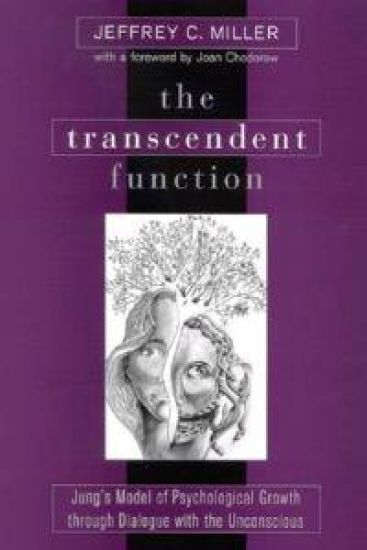
A close examination of the heart of Jung's theory of psychological growth and individuation. The transcendent function is the core of Carl Jung's theory of psychological growth and the heart of what he called individuation, the process by which one is guided in a teleological way toward the person one is meant to be. This book thoroughly reviews the transcendent function, analyzing both the 1958 version of the seminal essay that bears its name and the original version written in 1916. It also provides a word-by-word comparison of the two, along with every reference Jung made to the transcendent function in his written works, his letters, and his public seminars.
Jung on Active Imagination

Jung on Active Imagination

C. G. Jung; Joan Chodorow

Princeton University Press
1997
pokkari

Halvin toimitettuna 24,50 €

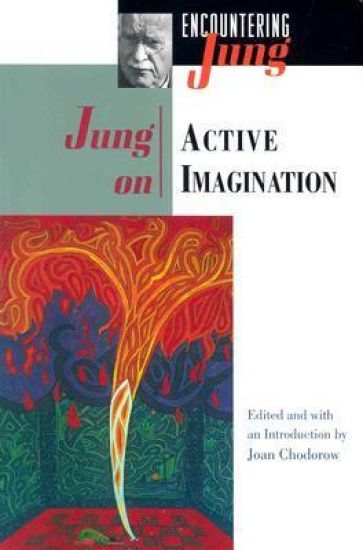
All the creative art psychotherapies (art, dance, music, drama, poetry) can trace their roots to C. G. Jung's early work on active imagination. Joan Chodorow here offers a collection of Jung's writings on active imagination, gathered together for the first time. Jung developed this concept between the years 1913 and 1916, following his break with Freud. During this time, he was disoriented and experienced intense inner turmoil --he suffered from lethargy and fears, and his moods threatened to overwhelm him. Jung searched for a method to heal himself from within, and finally decided to engage with the impulses and images of his unconscious. It was through the rediscovery of the symbolic play of his childhood that Jung was able to reconnect with his creative spirit. In a 1925 seminar and again in his memoirs, he tells the remarkable story of his experiments during this time that led to his self-healing. Jung learned to develop an ongoing relationship with his lively creative spirit through the power of imagination and fantasies. He termed this therapeutic method "active imagination." This method is based on the natural healing function of the imagination, and its many expressions. Chodorow clearly presents the texts, and sets them in the proper context. She also interweaves her discussion of Jung's writings and ideas with contributions from Jungian authors and artists.
Dance Therapy and Depth Psychology

Dance Therapy and Depth Psychology

Joan Chodorow

Routledge
1991
nidottu
Dance/movement as active imagination was originated by Jung in 1916. Developed in the 1960s by dance therapy pioneer Mary Whitehouse, it is today both an approach to dance therapy as well as a form of active imagination in analysis. In her delightful book Joan Chodorow provides an introduction to the origins, theory and practice of dance/movement as active imagination. Beginning with her own story the author shows how dance/ movement is of value to psychotherapy. An historical overview of Jung's basic concepts is given as well as the most recent depth psychological synthesis of affect theory based on the work of Sylvan Tomkins, Louis Stewart, and others. Finally in discussing the use of dance/movement as active imagination in practice, the movement themes that emerge and the non-verbal expressive aspects of the therapaeutic relationship are described.