Kirjojen hintavertailu – 12 859 828 kirjaa ja 27 kauppaa

Kirjailija

Joanna Everitt

Kirjat ja teokset yhdessä paikassa: 3 kirjaa, julkaisuja vuosilta 2004–2012, suosituimpiin kuuluu Dominance and Decline. Vertaile teosten hintoja ja tarkista saatavuus suomalaisista kirjakaupoista.

3 kirjaa

Kirjojen julkaisuvuodet: 2004–2012.

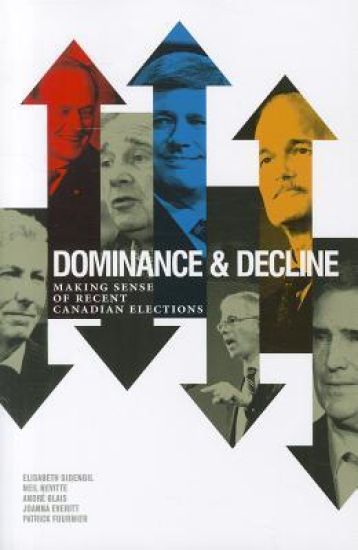
Dominance and Decline

Dominance and Decline

Elisabeth Gidengil; Neil Nevitte; Andre Blais; Joanna Everitt; Patrick Fournier

University of Toronto Press
2012
pokkari
Coming out of the 2000 Canadian federal election, the dominance of the Liberal Party seemed assured. By 2011 the situation had completely reversed: the Liberals suffered a crushing defeat, failing even to become the official opposition and recording their lowest ever share of the vote. Dominance and Decline provides a comprehensive, comparative account of Canadian election outcomes from 2000 through to 2008. The book explores the meaning of those outcomes within the context of the larger changes that have marked Canada's party system since 1988. It also shows how these trends were consistent with the outcome of the 2011 federal election. Throughout the book a variety of voting theories are revisited and reassessed in light of this analysis.

Advocacy Groups

Advocacy Groups

Lisa Young; Joanna Everitt

University of British Columbia Press
2005
pokkari
Seventy percent of Canadians think that 'advocacy groups' are a better vehicle for change than political parties; however, people involved in these groups are actually more involved in traditional political circles and party politics. This volume looks at who participates in these groups, which kinds of groups dominate the political agenda, what influence lobbying has on the government, and how, exactly, to make advocacy groups a more vibrant and accountable part of political life in this country. Advocacy Groups uses the Audit standards of responsiveness, inclusiveness, and participation to examine advocacy groups in Canada and assess the ways that they contribute to, or detract from, Canadian democracy. It argues that group activity represents an important form of political participation. Though some interests face greater organizational challenges than others, advocacy groups can play critical compensatory roles for interests that are often unrepresented in traditional political institutions. It also finds that while Canadian advocacy groups employ a wide range of strategies to draw attention to their concerns, those with greater financial resources generally have greater access to government decision-makers. This has been accentuated by recent trends in the reduction of government funding to advocacy groups. The book concludes with several recommendations for 'best practices' that groups can follow in their internal organization and efforts to influence public policy, as well as for actions that governments can take to engage in constructive consultation with groups.
Advocacy Groups

Advocacy Groups

Lisa Young; Joanna Everitt

University of British Columbia Press
2004
sidottu
Seventy percent of Canadians think that 'advocacy groups' are a better vehicle for change than political parties; however, people involved in these groups are actually more involved in traditional political circles and party politics. This volume looks at who participates in these groups, which kinds of groups dominate the political agenda, what influence lobbying has on the government, and how, exactly, to make advocacy groups a more vibrant and accountable part of political life in this country. Advocacy Groups uses the Audit standards of responsiveness, inclusiveness, and participation to examine advocacy groups in Canada and assess the ways that they contribute to, or detract from, Canadian democracy. It argues that group activity represents an important form of political participation. Though some interests face greater organizational challenges than others, advocacy groups can play critical compensatory roles for interests that are often unrepresented in traditional political institutions. It also finds that while Canadian advocacy groups employ a wide range of strategies to draw attention to their concerns, those with greater financial resources generally have greater access to government decision-makers. This has been accentuated by recent trends in the reduction of government funding to advocacy groups. The book concludes with several recommendations for 'best practices' that groups can follow in their internal organization and efforts to influence public policy, as well as for actions that governments can take to engage in constructive consultation with groups.