Kirjojen hintavertailu – 12 859 827 kirjaa ja 27 kauppaa

Kirjailija

Joanna Mytkowska

Kirjat ja teokset yhdessä paikassa: 3 kirjaa, julkaisuja vuosilta 2011–2018, suosituimpiin kuuluu Alina Szapocznikow. Vertaile teosten hintoja ja tarkista saatavuus suomalaisista kirjakaupoista.

3 kirjaa

Kirjojen julkaisuvuodet: 2011–2018.

Edi Hila

Edi Hila

Eric de Chassey; Edi Hila; Joanna Mytkowska; Kathrin Rhomberg; Erzen Shkololli

Museum of Modern Art in Warsaw
2018
pokkari

Halvin toimitettuna 33,30 €

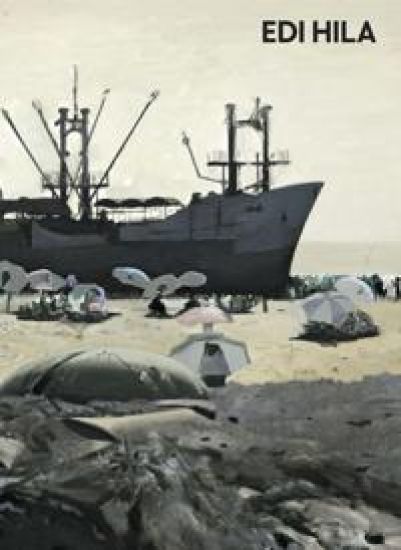
This catalog accompanies Edi Hila: Painter of Transformation, the first retrospective exhibition devoted to the Albanian painter Edi Hila, considered one of the last masters from Eastern Europe. Through Hila’s eyes, the Eastern European experience is stripped of accident or adventure and instead gives weight to distilled general truths. The catalog traces key moments from his formative artistic experience, including a firsthand account of his infamous 1972 painting, Planting of Trees, which because of its unusual use of color and form that ran contrary to approved socialist realist doctrine, led to his being forced to labor in a poultry processing plant. In the evenings, however, he secretly created a series of drawings documenting the life of the workers, which became the Poultry series, harrowing in its raw realism. The publication continues to track Hila’s practice through the 1990s, when we find the artist carefully observing life after the fall of Enver Hoxha’s regime and his attempts at depicting the realities of the Albanian transformation on the precipice of the new millennium, before concluding with a review of Hila’s contemporaneous practice, which discloses more the limitations and traps of transformation than its promises. Richly illustrated with reproductions of Hila’s work in full color, many of them never before published, this is a groundbreaking catalog, one that will help establish Hila’s international reputation as a master painter of the region and Europe at large.
Alina Szapocznikow

Alina Szapocznikow

Elena Filipovic; Joanna Mytkowska

Museum of Modern Art
2011
nidottu
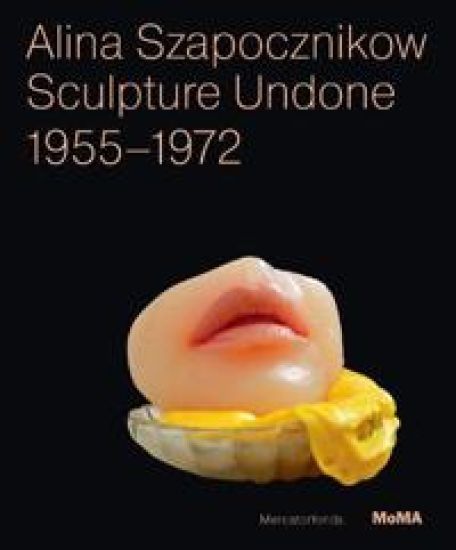
A sculptor who began working during the postwar period in a classical figurative style, Alina Szapocznikow radically reconceptualized sculpture as an imprint not only of memory but of her own body. Though her career effectively spanned less than two decades (cut short by the artist's premature death in 1973 at age 47), Szapocznikow left behind a legacy of provocative objects that evoke Surrealism, Nouveau Realisme and Pop art. Her tinted polyester casts of body parts, often transformed into everyday objects like lamps or ashtrays; her poured polyurethane forms; and her elaborately constructed sculptures, which at times incorporated photographs, clothing or car parts, all remain as wonderfully idiosyncratic and culturally resonant today as when they were first made. Well-known in Poland, where her work has been highly influential since early in her career, Szapocznikow's compelling oeuvre is ripe for art-historical reexamination. Alina Szapocznikow: Sculpture Undone, 1955-1972 offers a comprehensive overview of this important artist's work at a moment when international interest is blossoming. Richly illustrated with over 150 color plates, the catalogue features essays that touch on key aspects of her practice and historical reception, as well as an extensive annotated chronology that provides an in-depth exploration of the intersection of her life and art. Working in one of the most rich and complex periods of the twentieth century, Szapocznikow responded to many of the ideological and artistic developments of her time through artwork that is at once fragmented and transformative, sensual and reflective, playfully realized and politically charged. Alina Szapocznikow was born in Poland in 1926, and gained critical attention there for her early sculpture of the 1950s. She re-settled permanently in France in 1963, where her continued exploration of new materials such as polyester and polyurethane brought her into dialogue with the contemporary art scene of her time. She continued to push the boundaries of sculptural form and subject matter up until her premature death in 1973.