Kirjojen hintavertailu – 12 903 725 kirjaa ja 27 kauppaa

Kirjailija

Joanna Page

Kirjat ja teokset yhdessä paikassa: 14 kirjaa, julkaisuja vuosilta 2009–2026, suosituimpiin kuuluu 30 Days of Therapeutic Writing. Vertaile teosten hintoja ja tarkista saatavuus suomalaisista kirjakaupoista.

14 kirjaa

Kirjojen julkaisuvuodet: 2009–2026.

Lush!

Lush!

Joanna Page

Little, Brown Book Group
2026
nidottu
AUDITIONS. GAVIN AND STACEY. HOLLYWOOD STARS. LOVE ACTUALLY. SEX SCENES. CELEB KISSES. WARDROBE DILEMMAS. MOTHERHOOD. BODILY FUNCTIONS. CHRISTMAS. TRUE LOVE. Life for Joanna Page has been anything but dull, in fact it's been absolutely lush... In this funny, candid and surprising memoir, Joanna looks back on growing up on the Welsh coastline, the warmth of family and neighbours, and the shock of moving to London alone at 18 to train at RADA. She takes readers behind the scenes of her most iconic roles, sharing stories of early auditions, hard-won breakthroughs and life on set alongside the likes of Ruth Jones, James Corden, Richard E. Grant, Johnny Depp, Liam Neeson and Emma Thompson. Whether navigating the chaos of filming, falling in love or discovering the magic and mayhem of motherhood, Joanna writes with honesty and heart about what it really takes to build a career while staying true to yourself. An unforgettable read that makes you laugh and cry, Lush! celebrates finding your voice, standing your ground and embracing life in all its messy, beautiful glory.

Lush!

Lush!

Joanna Page

Little, Brown Book Group
2025
sidottu

Halvin toimitettuna 28,00 €

From a small village on the outskirts of Swansea to the sets of some of the all-time greatest movies and TV shows - like Love Actually and Gavin & Stacey - Joanna Page's journey to stardom has been extraordinary. In this funny, candid and endlessly surprising memoir, Joanna shares her story in full for the first time. Inside, she takes readers behind the scenes of her most iconic roles and introduces them to a colourful cast including Ruth Jones, James Corden, Richard E. Grant, Johnny Depp, Liam Neeson and Emma Thompson. Joanna also details her early life growing up on the glorious Welsh coastline - a life (not unlike Stacey Shipman's) filled with family and friendly neighbours - to the sudden shock of moving to London at 18 (totally alone) to take her place at RADA, one of the most prestigious performing arts schools in the world. Whether she's navigating early awkward auditions and other uncomfortable incidents, chasing her big break, riding success (sometimes literally), falling in love, or discovering the magic and madness of life as a mum-of-four, Joanna speaks openly about what it really takes to make it in the acting world while staying true to yourself. An unforgettable read that makes you laugh and cry, Lush! is a celebration of finding your voice, holding your ground and learning to laugh at the messiest, most beautiful moments life has to offer.
Decolonial Ecologies

Decolonial Ecologies

Joanna Page

Open Book Publishers
2023
sidottu
In Decolonial Ecologies: The Reinvention of Natural History in Latin American Art, Joanna Page illuminates the ways in which contemporary artists in Latin America are reinventing historical methods of collecting, organizing, and displaying nature in order to develop new aesthetic and political perspectives on the past and the present. Page brings together an entirely new corpus of artistic projects from Argentina, Brazil, Chile, Colombia, Ecuador, Mexico, and Peru that engage critically and creatively with forms as diverse as the medieval bestiary, baroque cabinets of curiosities, atlases created by European travellers to the New World, the floras and herbaria composed by eighteenth- and nineteenth-century naturalists, and the dioramas designed for natural history museums. She explores how artists develop decolonial and post-anthropocentric perspectives on the collections and expeditions that were central to the evolution of European natural history. Their works forge a critique of the rationalizing approach to nature taken by modern Western science, reconnecting it with forms of popular, indigenous and spiritual knowledge and experience that it has systematically excluded since the Enlightenment. Drawing on photography, video, illustration, sculpture, and installation, this vividly illustrated and lucidly written book explores how these artworks might also deconstruct the apocalyptic visions of environmental change that often dominate Western thought, developing a renewed understanding of alternative ways in which humans might co-inhabit the natural world. It is valuable reading for scholars, students and anyone interested in Latin American art, transdisciplinary studies in art and science, or the environmental humanities.
Decolonial Ecologies

Decolonial Ecologies

Joanna Page

Open Book Publishers
2023
pokkari
In Decolonial Ecologies: The Reinvention of Natural History in Latin American Art, Joanna Page illuminates the ways in which contemporary artists in Latin America are reinventing historical methods of collecting, organizing, and displaying nature in order to develop new aesthetic and political perspectives on the past and the present. Page brings together an entirely new corpus of artistic projects from Argentina, Brazil, Chile, Colombia, Ecuador, Mexico, and Peru that engage critically and creatively with forms as diverse as the medieval bestiary, baroque cabinets of curiosities, atlases created by European travellers to the New World, the floras and herbaria composed by eighteenth- and nineteenth-century naturalists, and the dioramas designed for natural history museums. She explores how artists develop decolonial and post-anthropocentric perspectives on the collections and expeditions that were central to the evolution of European natural history. Their works forge a critique of the rationalizing approach to nature taken by modern Western science, reconnecting it with forms of popular, indigenous and spiritual knowledge and experience that it has systematically excluded since the Enlightenment. Drawing on photography, video, illustration, sculpture, and installation, this vividly illustrated and lucidly written book explores how these artworks might also deconstruct the apocalyptic visions of environmental change that often dominate Western thought, developing a renewed understanding of alternative ways in which humans might co-inhabit the natural world. It is valuable reading for scholars, students and anyone interested in Latin American art, transdisciplinary studies in art and science, or the environmental humanities.
Science Fiction in Argentina

Science Fiction in Argentina

Joanna Page

The University of Michigan Press
2016
sidottu
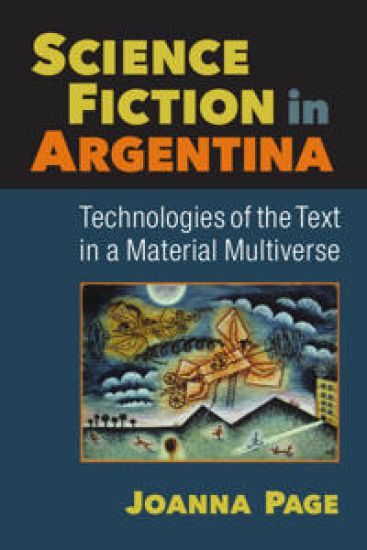
It has become something of a critical commonplace to claim that science fiction does not actually exist in Argentina. This book puts that claim to rest by identifying and analyzing a rich body of work that fits squarely in the genre. Joanna Page explores a range of texts stretching from 1875 to the present day and across a variety of media-literature, cinema, theatre, and comics-and studies the particular inflection many common discourses of science fiction (e.g., abuse of technology by authoritarian regimes, apocalyptic visions of environmental catastrophe) receive in the Argentine context. A central aim is to historicize these texts, showing how they register and rework the contexts of their production, particularly the hallmarks of modernity as a social and cultural force in Argentina. Another aim, held in tension with the first, is to respond to an important critique of historicism that unfolds in these texts. They frequently unpick the chronology of modernity, challenging the linear, universalizing models of development that underpin historicist accounts. They therefore demand a more nuanced set of readings that work to supplement, revise, and enrich the historicist perspective.
Science Fiction in Argentina

Science Fiction in Argentina

Joanna Page

The University of Michigan Press
2016
nidottu
It has become something of a critical commonplace to claim that science fiction does not actually exist in Argentina. This book puts that claim to rest by identifying and analyzing a rich body of work that fits squarely in the genre. Joanna Page explores a range of texts stretching from 1875 to the present day and across a variety of media-literature, cinema, theatre, and comics-and studies the particular inflection many common discourses of science fiction (e.g., abuse of technology by authoritarian regimes, apocalyptic visions of environmental catastrophe) receive in the Argentine context. A central aim is to historicize these texts, showing how they register and rework the contexts of their production, particularly the hallmarks of modernity as a social and cultural force in Argentina. Another aim, held in tension with the first, is to respond to an important critique of historicism that unfolds in these texts. They frequently unpick the chronology of modernity, challenging the linear, universalizing models of development that underpin historicist accounts. They therefore demand a more nuanced set of readings that work to supplement, revise, and enrich the historicist perspective.
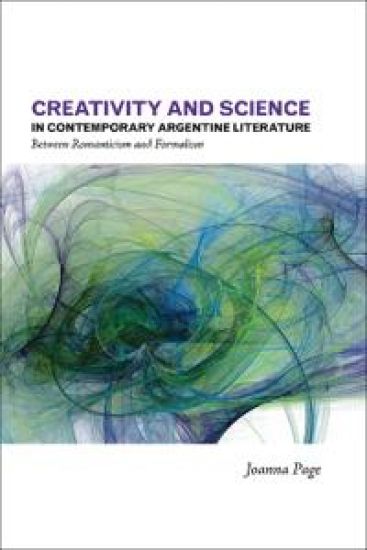
Creativity and Science in Contemporary Argentine Literature
With a burgeoning academic interest in Latin American science fiction and cyberfiction and in representations of science and technology in Latin American literature and cinema, this book adds new understanding to the growing body of interdisciplinary work on the relationship between literature and science in postmodern culture. Joanna Page examines how contemporary fiction and literary theory in Argentina consistently employ theories and models from mathematics and science to probe the nature of innovation and evolution in literature. Theories of incompleteness, uncertainty, and chaos are often mobilized in European and North American literary and philosophical texts as metaphors for the inadequacy of our epistemological tools to probe the world's complexity. However, in recent Argentine fiction, these generalizations are put to very different uses: to map out the potential for artistic creativity and regeneration in times of crisis. Page focuses on texts by contemporary Argentine writers Ricardo Piglia, Guillermo Martinez and Marcelo Cohen, which draw on theories of formal systems, chaos, emergence, and complexity to counter proclamations of the end of philosophy or the exhaustion of literature in the postmodern era. This book makes a significant contribution to our understanding of how newness and creativity have been theorized, tracing often unexpected relationships between thinkers such as Nietzsche, Deleuze, and the Russian Formalists. It is also the first time that a major study in English has been published on the work of Martinez, Piglia, or Cohen.
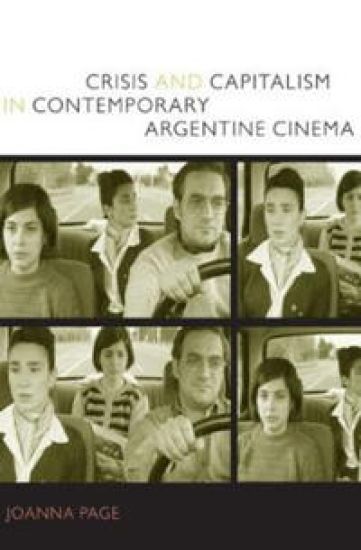
Crisis and Capitalism in Contemporary Argentine Cinema
There has been a significant surge in recent Argentine cinema, with an explosion in the number of films made in the country since the mid-1990s. Many of these productions have been highly acclaimed by critics in Argentina and elsewhere. What makes this boom all the more extraordinary is its coinciding with a period of severe economic crisis and civil unrest in the nation. Offering the first in-depth English-language study of Argentine fiction films of the late twentieth century and early twenty-first, Joanna Page explains how these productions have registered Argentina’s experience of capitalism, neoliberalism, and economic crisis. In different ways, the films selected for discussion testify to the social consequences of growing unemployment, rising crime, marginalization, and the expansion of the informal economy. Page focuses particularly on films associated with New Argentine Cinema, but she also discusses highly experimental films and genre movies that borrow from the conventions of crime thrillers, Westerns, and film noir. She analyzes films that have received wide international recognition alongside others that have rarely been shown outside Argentina. What unites all the films she examines is their attention to shifts in subjectivity provoked by political or economic conditions and events. Page emphasizes the paradoxes arising from the circulation of Argentine films within the same global economy they so often critique, and she argues that while Argentine cinema has been intent on narrating the collapse of the nation-state, it has also contributed to the nation’s reconstruction. She brings the films into dialogue with a broader range of issues in contemporary film criticism, including the role of national and transnational film studies, theories of subjectivity and spectatorship, and the relationship between private and public spheres.
Crisis and Capitalism in Contemporary Argentine Cinema
There has been a significant surge in recent Argentine cinema, with an explosion in the number of films made in the country since the mid-1990s. Many of these productions have been highly acclaimed by critics in Argentina and elsewhere. What makes this boom all the more extraordinary is its coinciding with a period of severe economic crisis and civil unrest in the nation. Offering the first in-depth English-language study of Argentine fiction films of the late twentieth century and early twenty-first, Joanna Page explains how these productions have registered Argentina’s experience of capitalism, neoliberalism, and economic crisis. In different ways, the films selected for discussion testify to the social consequences of growing unemployment, rising crime, marginalization, and the expansion of the informal economy. Page focuses particularly on films associated with New Argentine Cinema, but she also discusses highly experimental films and genre movies that borrow from the conventions of crime thrillers, Westerns, and film noir. She analyzes films that have received wide international recognition alongside others that have rarely been shown outside Argentina. What unites all the films she examines is their attention to shifts in subjectivity provoked by political or economic conditions and events. Page emphasizes the paradoxes arising from the circulation of Argentine films within the same global economy they so often critique, and she argues that while Argentine cinema has been intent on narrating the collapse of the nation-state, it has also contributed to the nation’s reconstruction. She brings the films into dialogue with a broader range of issues in contemporary film criticism, including the role of national and transnational film studies, theories of subjectivity and spectatorship, and the relationship between private and public spheres.