Kirjojen hintavertailu – 12 903 724 kirjaa ja 27 kauppaa

Kirjailija

Joanna Shapland

Kirjat ja teokset yhdessä paikassa: 5 kirjaa, julkaisuja vuosilta 2011–2025, suosituimpiin kuuluu Restorative Justice in Practice. Vertaile teosten hintoja ja tarkista saatavuus suomalaisista kirjakaupoista.

5 kirjaa

Kirjojen julkaisuvuodet: 2011–2025.

Policing by the Public

Policing by the Public

Joanna Shapland; Jon Vagg

TAYLOR FRANCIS LTD
2025
nidottu
Originally published in 1988, Policing by the Public opened up an entirely new field within criminology and the sociology of deviance. The authors focus on the nature of informal social control in both villages and urban centres to show the kinds of policing people do for themselves, within their communities, in an endeavour to curb crime and deviance. Taking as the basis for their study both a rural and an urban community, Joanna Shapland and Jon Vagg are able to counter many of the existing myths about these areas. Beginning with a description of the kinds of problems people experience in their own neighbourhoods, they explore who watches what, who intervenes, and the stereotypes of ‘troublesome’ people and situations that emerge. This study sheds important light on the nature of concern and fear about crime and disorder, the use people want to make of the police and, significantly, the kind of policing they get. Policing by the Public made a major contribution to contemporary international debate about informal mechanisms of social control at the time. It offered a new approach to thinking about policing that will still be of interest not only to criminologists, sociologists, police and policymakers, but also to anyone who is curious about how his or her area actually worked.
Policing by the Public

Policing by the Public

Joanna Shapland; Jon Vagg

TAYLOR FRANCIS LTD
2023
sidottu
Originally published in 1988, Policing by the Public opened up an entirely new field within criminology and the sociology of deviance. The authors focus on the nature of informal social control in both villages and urban centres to show the kinds of policing people do for themselves, within their communities, in an endeavour to curb crime and deviance. Taking as the basis for their study both a rural and an urban community, Joanna Shapland and Jon Vagg are able to counter many of the existing myths about these areas. Beginning with a description of the kinds of problems people experience in their own neighbourhoods, they explore who watches what, who intervenes, and the stereotypes of ‘troublesome’ people and situations that emerge. This study sheds important light on the nature of concern and fear about crime and disorder, the use people want to make of the police and, significantly, the kind of policing they get. Policing by the Public made a major contribution to contemporary international debate about informal mechanisms of social control at the time. It offered a new approach to thinking about policing that will still be of interest not only to criminologists, sociologists, police and policymakers, but also to anyone who is curious about how his or her area actually worked.
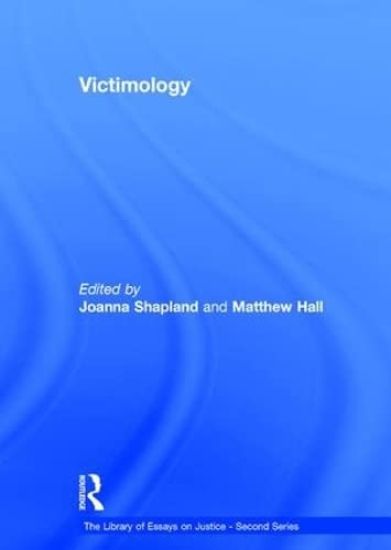
Victimology

Victimology

Joanna Shapland; Matthew Hall

Routledge
2015
sidottu
Interest in victims of crime - victimology - has always spanned both the scholarly and practical realms. This volume combines a collection of essays covering the diversity of approaches towards victimology, from the conceptual to the practical, including evaluation and scrutiny of the basis on which we do justice. The volume is divided into four sections; the first part discusses the nature of victimisation and concepts of the nature of victimhood; the second part looks at the effects of victimisation and some of the ways in which victim support and assistance have developed, and the views of victims on these. The third part considers the role that victims play in criminal justice and their reactions to those roles. Finally, the book looks at responses to victimisation - including attempts to provide acknowledgement, reparation and compensation - within the framework of criminal justice. Much of the research literature on victimology has previously stemmed from Europe and North America, and has been influenced by an Anglo-American common law legal system and views of criminal justice whereas this collection incorporates different legal systems’ perspectives, particularly those of mainland Europe. This book will serve as an important predicate to wider research in victimology and further development of this dynamic field.
Restorative Justice in Practice

Restorative Justice in Practice

Joanna Shapland; Gwen Robinson; Angela Sorsby

Willan Publishing
2011
nidottu
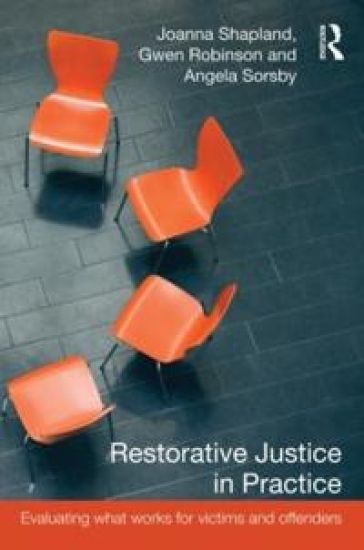
Restorative justice has made significant progress in recent years and now plays an increasingly important role in and alongside the criminal justice systems of a number of countries in different parts of the world. In many cases, however, successes and failures, strengths and weaknesses have not been evaluated sufficiently systematically and comprehensively, and it has been difficult to gain an accurate picture of its implementation and the lessons to be drawn from this. Restorative Justice in Practice addresses this need, analyzing the results of the implementation of three restorative justice schemes in England and Wales in the largest and most complete trial of restorative justice with adult offenders worldwide. It aims to bring out the practicalities of setting up and running restorative justice schemes in connection with criminal justice, the costs of doing so and the key professional and ethical issues involved. At the same time the book situates these findings within the growing international academic and policy debates about restorative justice, addressing a number of key issues for criminal justice and penology, including: how far victim expectations of justice are and can be met by restorative justice aligned with criminal justicewhether ‘community’ is involved in restorative justice for adult offenders and how this relates to social capitalhow far restorative justice events relate to processes of desistance (giving up crime), promote reductions in reoffending and link to resettlementwhat stages of criminal justice may be most suitable for restorative justice and how this relates to victim and offender needsthe usefulness of conferencing and mediation as forms of restorative justice with adults. Restorative Justice in Practice will be essential reading for both students and practitioners, and a key contribution to the restorative justice debate.
Restorative Justice in Practice

Restorative Justice in Practice

Joanna Shapland; Gwen Robinson; Angela Sorsby

Willan Publishing
2011
sidottu
Restorative justice has made significant progress in recent years and now plays an increasingly important role in and alongside the criminal justice systems of a number of countries in different parts of the world. In many cases, however, successes and failures, strengths and weaknesses have not been evaluated sufficiently systematically and comprehensively, and it has been difficult to gain an accurate picture of its implementation and the lessons to be drawn from this. Restorative Justice in Practice addresses this need, analyzing the results of the implementation of three restorative justice schemes in England and Wales in the largest and most complete trial of restorative justice with adult offenders worldwide. It aims to bring out the practicalities of setting up and running restorative justice schemes in connection with criminal justice, the costs of doing so and the key professional and ethical issues involved. At the same time the book situates these findings within the growing international academic and policy debates about restorative justice, addressing a number of key issues for criminal justice and penology, including: how far victim expectations of justice are and can be met by restorative justice aligned with criminal justicewhether ‘community’ is involved in restorative justice for adult offenders and how this relates to social capitalhow far restorative justice events relate to processes of desistance (giving up crime), promote reductions in reoffending and link to resettlementwhat stages of criminal justice may be most suitable for restorative justice and how this relates to victim and offender needsthe usefulness of conferencing and mediation as forms of restorative justice with adults. Restorative Justice in Practice will be essential reading for both students and practitioners, and a key contribution to the restorative justice debate.