Kirjojen hintavertailu – 12 903 725 kirjaa ja 27 kauppaa

Kirjailija

Joanna Zylinska

Kirjat ja teokset yhdessä paikassa: 11 kirjaa, julkaisuja vuosilta 2005–2025, suosituimpiin kuuluu The Perception Machine. Vertaile teosten hintoja ja tarkista saatavuus suomalaisista kirjakaupoista.

11 kirjaa

Kirjojen julkaisuvuodet: 2005–2025.

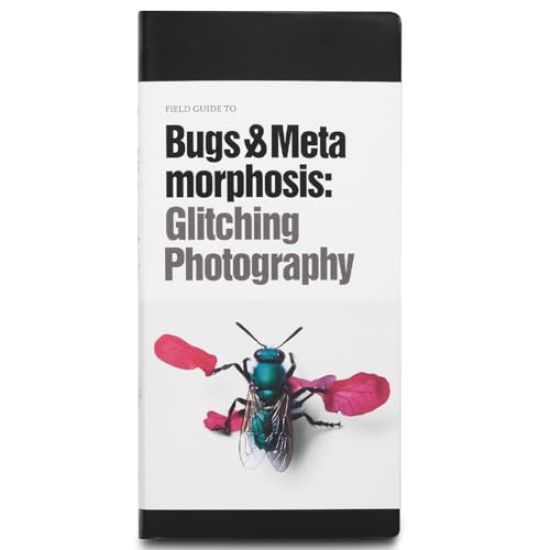
Field guide to bugs & metamorphosis : glitching photography

Field guide to bugs & metamorphosis : glitching photography

Joanna Zylinska; Tintin Wulia; Louise Wolthers; Peter Ole Pedersen; Majken Overgaard; Peter Nielsen; Nina Mangalanayagam; Cathryn Klasto

Art Theory Publishing
2025
nidottu

Halvin toimitettuna 29,10 €

Boken undersöker "buggar" ur en dubbeltydig betydelse: dels som tekniska glitchar, dvs processer och estetik som bygger på visuella störningar, skapade av digital teknik, dels som insekter, med övergripande teman såsom svärmar, nätverk, symbios och rubbade ekosystem. Field Guide to Bugs & Metamorphosis: Glitching Photography utforskar fotografi genom att lyfta fram samspelet och brytpunkterna mellan människa, natur och maskin, utifrån dagens nätverksbaserade och maskinella teknologier. The book explores "bugs" in two ways: as technical glitches, processes and aesthetics stemming from visual errors in digital technologies, and as insects, with themes like swarming, webbing, symbiosis, and extinction. Field Guide to Bugs & Metamorphosis: Glitching Photography provides critical insights into contemporary networked and machine-based photography. Using the locus of photography, the book and exhibition both examine how what might initially be perceived as an error can act as a creative and critical agent, simultaneously.
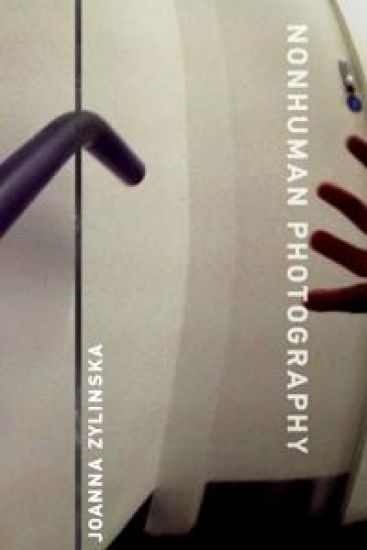
Nonhuman Photography

Nonhuman Photography

Joanna Zylinska

MIT PRESS LTD
2024
pokkari
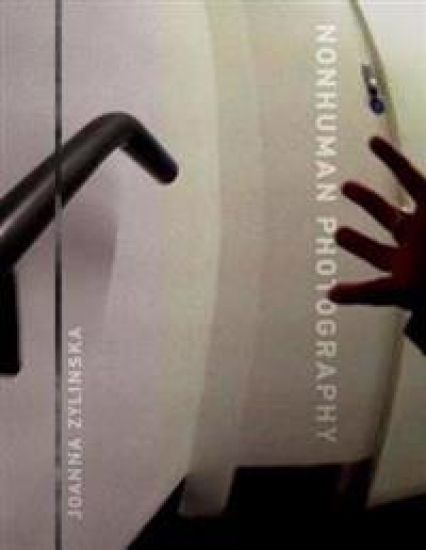
A new philosophy of photography that goes beyond humanist concepts to consider imaging practices from which the human is absent, as both subject and agent. Today, in the age of CCTV, drones, medical body scans, and satellite images, photography is increasingly decoupled from human agency and human vision. In Nonhuman Photography, Joanna Zylinska offers a new philosophy of photography, going beyond the human-centric view to consider imaging practices from which the human is absent. Zylinska argues further that even those images produced by humans, whether artists or amateurs, entail a nonhuman, mechanical element--that is, they involve the execution of technical and cultural algorithms that shape our image-making devices as well as our viewing practices. At the same time, she notes, photography is increasingly mobilized to document the precariousness of the human habitat and tasked with helping us imagine a better tomorrow. With its conjoined human-nonhuman agency and vision, Zylinska claims, photography functions as both a form of control and a life-shaping force. Zylinska explores the potential of photography for developing new modes of seeing and imagining, and presents images from her own photographic project, Active Perceptual Systems. She also examines the challenges posed by digitization to established notions of art, culture, and the media. In connecting biological extinction and technical obsolescence, and discussing the parallels between photography and fossilization, she proposes to understand photography as a light-induced process of fossilization across media and across time scales.
The Perception Machine

The Perception Machine

Joanna Zylinska

MIT PRESS LTD
2023
nidottu
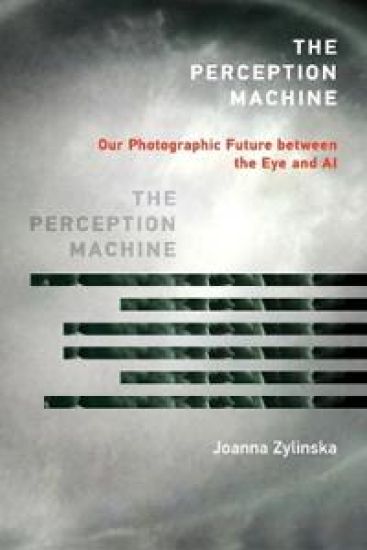
A provocative investigation of the future of photography and human perception in the age of AI. We are constantly photographing and being photographed while feeding machine learning databases with our data, which in turn is used to generate new images. Analyzing the transformation of photography by computation--and the transformation of human perception by algorithmically driven images, from CGI to AI--The Perception Machine investigates what it means for us to live surrounded by image flows and machine eyes. In an astute and engaging argument, Joanna Zylinska brings together media theory and neuroscience in a Vil m Flusser-Paul Virilio remix. Her "perception machine" names a technical universe of images and their infrastructures. But it also refers to a sociopolitical condition resulting from today's automation of vision, imaging--and imagination. Written by a theorist-practitioner, the book incorporates Zylinska's own art projects, some of which have been co-created with AI. The photographs, collages, films, and installations available as part of the book (and its companion website) provide a different mode of thinking about our technological futures, at a local as well as a planetary level. Offering provocative concepts such as eco-eco-punk, AUTO-FOTO-KINO, planetary micro-vision, loser images, and sensography, the book outlines an existential philosophy of messy media for a time when our practices of imaging and self-imaging are being radically redesigned. Importantly, it also offers a new vision of our future.
The Future of Media

The Future of Media

Joanna Zylinska; Goldsmiths Media

GOLDSMITHS, UNIVERSITY OF LONDON
2022
nidottu
An investigation of the future of various media industries and technologies that considers how media shape our future. How do we combat post-truth in the news? Are social media influencers the journalists of today? What jobs will there be left in the media once AI takes over? This volume investigates the future of various media industries and technologies (journalism, TV, film, photography, radio, publishing, and social media) while exploring how media shape our future. Issues of truth, diversity, media reform, activism, and art take the discussion into a wider social context. The book celebrates the importance and vitality of media in the modern world--and of the academic discipline of media studies, which offers a rigorous study of media. The Future of Media is an experiment in collaborative modes of thinking and working. Coauthored by theorists and practitioners from one of the world's most established media departments, it offers a radical, creative, and critical "Goldsmiths take" on media industries and on world affairs. Through their timely, diverse, and often passionate analyses, along with the practice works featured on the companion website, the authors demonstrate both how to think about the media and how to produce relevant and challenging media. The book serves as an invitation to all media scholars, students, and industry practitioners to work together on trying to shape a better media future and a better world for us all.
AI Art

AI Art

Joanna Zylinska

Open Humanities Press CIC
2020
pokkari

Halvin toimitettuna 31,40 €

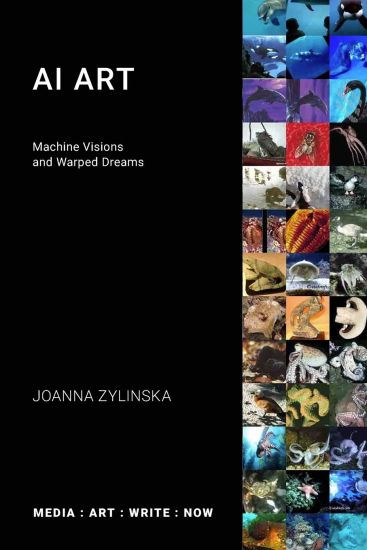
Can computers be creative? Is algorithmic art just a form of Candy Crush? Cutting through the smoke and mirrors surrounding computation, robotics and artificial intelligence, Joanna Zylinska argues that, to understand the promise of AI for the creative fields, we must not confine ourselves solely to the realm of aesthetics. Instead, we need to address the role and position of the human in the current technical setup - including the associated issues of labour, robotisation and, last but not least, extinction. Offering a critique of the socio-political underpinnings of AI, AI Art: Machine Visions and Warped Dreams raises poignant questions about the conditions of art making and creativity today. The book critically examines artworks that use AI, be it in the form of visual style transfer, algorithmic experiment or critical commentary. It also engages with their predecessors, including robotic art and net art. AI Art includes a project from Zylinska's own art practice titled 'View from the Window', which explores human and nonhuman forms of intelligence, perception and action. The book closes with speculation on future art - and on art's future.
The End of Man

The End of Man

Joanna Zylinska

University of Minnesota Press
2018
pokkari

Halvin toimitettuna 21,10 €

Debugging the Anthropocene’s insistence on apocalyptic tropes Where the Anthropocene has become linked to an apocalyptic narrative, and where this narrative carries a widespread escapist belief that salvation will come from a supernatural elsewhere, Joanna Zylinska has a different take. The End of Man rethinks the prophecy of the end of humans, interrogating the rise in populism around the world and offering an ethical vision of a “feminist counterapocalypse,” which challenges many of the masculinist and technicist solutions to our planetary crises. The book is accompanied by a short photo-film, Exit Man, which ultimately asks: If unbridled progress is no longer an option, what kinds of coexistences and collaborations do we create in its aftermath? Forerunners: Ideas First is a thought-in-process series of breakthrough digital publications. Written between fresh ideas and finished books, Forerunners draws on scholarly work initiated in notable blogs, social media, conference plenaries, journal articles, and the synergy of academic exchange. This is gray literature publishing: where intense thinking, change, and speculation take place in scholarship.
Nonhuman Photography

Nonhuman Photography

Joanna Zylinska

MIT Press
2017
sidottu
A new philosophy of photography that goes beyond humanist concepts to consider imaging practices from which the human is absent, as both subject and agent. Today, in the age of CCTV, drones, medical body scans, and satellite images, photography is increasingly decoupled from human agency and human vision. In Nonhuman Photography, Joanna Zylinska offers a new philosophy of photography, going beyond the human-centric view to consider imaging practices from which the human is absent. Zylinska argues further that even those images produced by humans, whether artists or amateurs, entail a nonhuman, mechanical element-that is, they involve the execution of technical and cultural algorithms that shape our image-making devices as well as our viewing practices. At the same time, she notes, photography is increasingly mobilized to document the precariousness of the human habitat and tasked with helping us imagine a better tomorrow. With its conjoined human-nonhuman agency and vision, Zylinska claims, photography functions as both a form of control and a life-shaping force. Zylinska explores the potential of photography for developing new modes of seeing and imagining, and presents images from her own photographic project, Active Perceptual Systems. She also examines the challenges posed by digitization to established notions of art, culture, and the media. In connecting biological extinction and technical obsolescence, and discussing the parallels between photography and fossilization, she proposes to understand photography as a light-induced process of fossilization across media and across time scales.
Life after New Media

Life after New Media

Sarah Kember; Joanna Zylinska

MIT Press
2014
pokkari
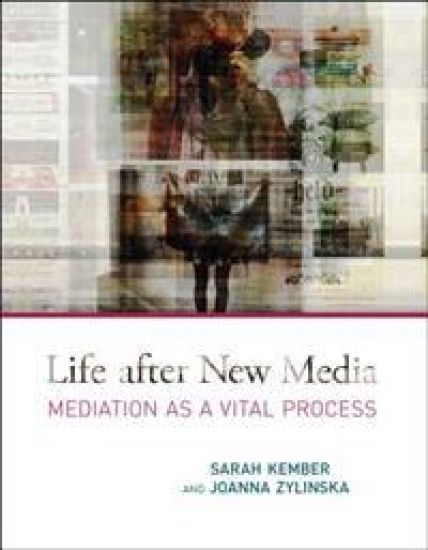
An argument for a shift in understanding new media-from a fascination with devices to an examination of the complex processes of mediation. In Life after New Media, Sarah Kember and Joanna Zylinska make a case for a significant shift in our understanding of new media. They argue that we should move beyond our fascination with objects-computers, smart phones, iPods, Kindles-to an examination of the interlocking technical, social, and biological processes of mediation. Doing so, they say, reveals that life itself can be understood as mediated-subject to the same processes of reproduction, transformation, flattening, and patenting undergone by other media forms. By Kember and Zylinska's account, the dispersal of media and technology into our biological and social lives intensifies our entanglement with nonhuman entities. Mediation-all-encompassing and indivisible-becomes for them a key trope for understanding our being in the technological world. Drawing on the work of Bergson and Derrida while displaying a rigorous playfulness toward philosophy, Kember and Zylinska examine the multiple flows of mediation. Importantly, they also consider the ethical necessity of making a "cut" to any media processes in order to contain them. Considering topics that range from media-enacted cosmic events to the intelligent home, they propose a new way of "doing" media studies that is simultaneously critical and creative, and that performs an encounter between theory and practice.
Minimal Ethics for the Anthropocene

Minimal Ethics for the Anthropocene

Joanna Zylinska

Michigan Publishing Services
2014
nidottu
Minimal Ethics for the Anthropocene considers our human responsibility for the world, at a time when life finds itself under a unique threat. Its goal is to rethink “life” and what we can do with it, in whatever time we have left—as individuals and as a species. This speculative, poetic book also includes a photographic project by the author.
The Ethics of Cultural Studies

The Ethics of Cultural Studies

Joanna Zylinska

BLOOMSBURY PUBLISHING PLC
2005
sidottu
Ethical questions feature prominently on today's cultural and political agendas. The Ethics of Cultural Studies presents an ethical manifesto for Cultural Studies, an exploration of its current ethical and political concerns, and of its future challenges. The book focuses on a number of key issues: National, racial and sexual identity; Representation; Violence and the media; The relationship between body and technology; The science-culture 'wars'; The text engages with the writings of the important theorists of ethics and culture: Giorgio Agamben; Judith Butler; Jacques Derrida; Stuart Hall; Donna Haraway; N. Katherine Hayles; Ernesto Laclau; Emmanuel Levinas; Jean-Francois Lyotard; Samuel Weber; The book is concerned with ethics in the material world, and draws on examples as diverse as cloning and genetics, asylum and immigration, experiments in plastic surgery and in electronic and digital art, memories of the Holocaust, September 11th and media representations of violence and crime. The Ethics of Cultural Studies is a groundbreaking intervention that sets the debate on ethics in cultural study, and offers an invaluable source of ideas for students of contemporary culture.
The Ethics of Cultural Studies

The Ethics of Cultural Studies

Joanna Zylinska

Continuum International Publishing Group Ltd.
2005
nidottu
Ethical questions feature prominently on todays cultural and political agendas. The Ethics of Cultural Studies presents an ethical manifesto for Cultural Studies, an exploration of its current ethical and political concerns, and of its future challenges. The book is concerned with ethics in the material world, and draws on examples as diverse as cloning and genetics, asylum and immigration, experiments in plastic surgery and in electronic and digital art, memories of the Holocaust, September 11th, and media representations of violence and crime. The Ethics of Cultural Studies is a groundbreaking intervention that sets the debate on ethics in cultural study, and offers an invaluable source of ideas for students of contemporary culture.