
Kirjailija
Joanne Kelly
Kirjat ja teokset yhdessä paikassa: 5 kirjaa, julkaisuja vuosilta 1992–2023, suosituimpiin kuuluu Managing Public Expenditure in Australia. Vertaile teosten hintoja ja tarkista saatavuus suomalaisista kirjakaupoista.
5 kirjaa
Kirjojen julkaisuvuodet: 1992–2023.
Managing Public Expenditure in Australia
John Wanna; Joanne Kelly; John Forster
Routledge
2021
sidottu
How do Australian governments budget? How well do they spend and manage our money? Governments seem to be locked in a constant struggle with the problems of budgeting. Cabinet never has enough resources to go around, and while some agencies 'guard' public expenditure, others find endless ways to make new claims on budgets. Managing Public Expenditure in Australia provides the first systematic analysis of government budgeting and the politics of the budgetary process. Drawing on extensive original sources, the authors examine debates and reforms in public finance from Whitlam and Fraser to Hawke, Keating and Howard, and assess their impacts on policy development. In tracking the way governments actually spend money, Managing Public Expenditure in Australia provides an alternate and complementary political history of federal government over the past forty years. This book also includes accessible discussions on topics such as budget theory, financial management in government, and debt and deficit reduction. An explanation of new resource management techniques and initiatives help to illuminate the ongoing changes to budget and expenditure management practices. This is an essential purchase for students, teachers and practitioners of public finance, and for anyone involved in the continuing debate over the nature and role of the public sector.
Introduction to Community Nursing Practice
Jane Arnott; Siobhan Atherley; Joanne Kelly; Sarah Pye
Open University Press
2012
nidottu
“On every page the work of the community nurse shines through. Exercises, a reflective commentary and case studies provide an integral link between the ‘real world’ of practice and the underpinning knowledge and critical thinking necessary to become an effective and evidence-based community nurse. This is an excellent, practical and informative book that is already poised to become the leading resource in its field.” John Keady, Professor of Older People’s Mental Health Nursing, The University of Manchester/Greater Manchester West Mental Health NHS Foundation Trust, UKThis new textbook is perfect for understanding how community nursing works, and how to work effectively in community settings. The skills required to work with the challenges of community nurse activities are clearly introduced, from working in people’s homes, working with carers, developing assessment skills to working with other professionals. By drawing on vivid case studies set in the fictional town of Chettlesbridge, the authors skilfully bring to life the world of community nursing practice enabling you to apply new learning to real situations. Key features:Includes patient case studies, practical tips, bullet lists, sample worksheets, examples and simple visual aidsProvides chapters with a series of guided exercises to stimulate a deeper level of reflection and discussionCovers areas such as working with vulnerable groups and working with carers and their familiesIntroduction to Community Nursing Practice is key reading for pre-registration nurses undertaking modules that cover community nursing, community care, and undertaking community based placements. It will also help student nurses from the mental health, child and learning disabilities pathways where health care in the community setting is part of the curriculum.
Managing Public Expenditure in Australia
John Wanna; Joanne Kelly; John Forster
Allen Unwin
2001
nidottu
How do Australian governments budget? How well do they spend and manage our money? Governments seem to be locked in a constant struggle with the problems of budgeting. Cabinet never has enough resources to go around, and while some agencies 'guard' public expenditure, others find endless ways to make new claims on budgets. Managing Public Expenditure in Australia provides the first systematic analysis of government budgeting and the politics of the budgetary process. Drawing on extensive original sources, the authors examine debates and reforms in public finance from Whitlam and Fraser to Hawke, Keating and Howard, and assess their impacts on policy development. In tracking the way governments actually spend money, Managing Public Expenditure in Australia provides an alternate and complementary political history of federal government over the past forty years. This book also includes accessible discussions on topics such as budget theory, financial management in government, and debt and deficit reduction. An explanation of new resource management techniques and initiatives help to illuminate the ongoing changes to budget and expenditure management practices. This is an essential purchase for students, teachers and practitioners of public finance, and for anyone involved in the continuing debate over the nature and role of the public sector.
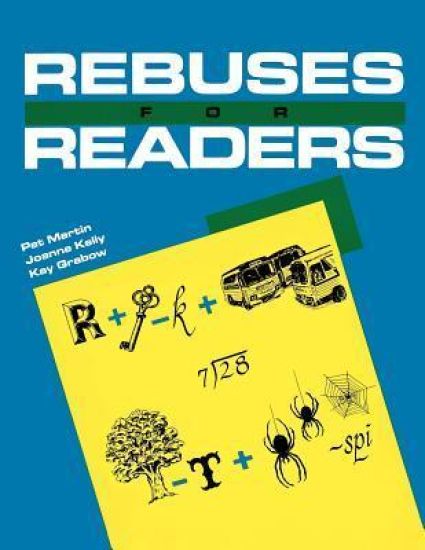
A rebus is a hieroglyphic of sorts - it combines pictures with letter sounds (adding or subtracting them) to make a word or phrase. Rebuses fascinate children of all ages, and "Rebuses for Readers" presents more than 100 rebuses of these intriguing brain teasers for elementary students. 50 of the rebuses are based on books, with selections for primary, intermediate and upper grades. An additional 15 are "Authors in Rebus Form", 15 are "Characters in Rebus Form" and 10 are "Settings in Rebus Form". The authors have also included some "Make Your Own" rebuses (with some sample solutions). The final chapter, "Challenges", provides students with some basic pictures and a list of book titles for which to create rebuses. Each chapter includes an annotated bibliography of the books on which the rebuses are based; annotations include a brief description, grade level and general subject.