

Kirjojen hintavertailu – 12 859 818 kirjaa ja 27 kauppaa

Kirjailija

Joaze Bernardino-Costa

Kirjat ja teokset yhdessä paikassa: 3 kirjaa, julkaisuja vuosilta 2013–2024, suosituimpiin kuuluu Futures of Anti-Racism. Vertaile teosten hintoja ja tarkista saatavuus suomalaisista kirjakaupoista.

3 kirjaa

Kirjojen julkaisuvuodet: 2013–2024.

Futures of Anti-Racism

Futures of Anti-Racism

Nikolay Zakharov; Shirley Anne Tate; Ian Law; Joaze Bernardino-Costa

Springer International Publishing AG
2024
nidottu
? This book assesses the nature and extent of the project of deracialisation required to counter the contemporary dynamics of racialisation across four varieties of modernity: Sweden, South Africa, Brazil and the UK, based on original research on each of the four country contexts. Since racism began to be recognised or identified as a problem, an assemblage of supra-national initiatives have been devised in the name of combatting, dismantling or reducing it. There has been a recent shift whereby such supra-national bodies move toward embedding strategies against racism within the framework of human rights and devolving such responsibility to other bodies at a national level. The authors bring together a team of international experts in this field, in order to compare the priorities and effectiveness of current strategic approaches in each national context, examining their relationalities and connecting these cases within a joint theoretical and methodological framework. Thus, this book contributes to theoretical knowledge on racialisation and deracialisation, produce a new data set on contemporary interventions and institutions and establish new principles and practice for national projects of deracialisation and anti-racism, building on cross-national learning.

Futures of Anti-Racism

Futures of Anti-Racism

Nikolay Zakharov; Shirley Anne Tate; Ian Law; Joaze Bernardino-Costa

Springer International Publishing AG
2023
sidottu
? This book assesses the nature and extent of the project of deracialisation required to counter the contemporary dynamics of racialisation across four varieties of modernity: Sweden, South Africa, Brazil and the UK, based on original research on each of the four country contexts. Since racism began to be recognised or identified as a problem, an assemblage of supra-national initiatives have been devised in the name of combatting, dismantling or reducing it. There has been a recent shift whereby such supra-national bodies move toward embedding strategies against racism within the framework of human rights and devolving such responsibility to other bodies at a national level. The authors bring together a team of international experts in this field, in order to compare the priorities and effectiveness of current strategic approaches in each national context, examining their relationalities and connecting these cases within a joint theoretical and methodological framework. Thus, this book contributes to theoretical knowledge on racialisation and deracialisation, produce a new data set on contemporary interventions and institutions and establish new principles and practice for national projects of deracialisation and anti-racism, building on cross-national learning.
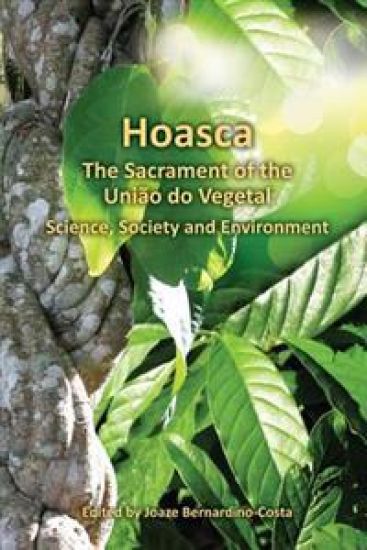
Hoasca The Sacrament of the Uniao do Vegetal, Science, Society and Environment
In 1961, a rubber tapper at the heart of the Amazon forest founded a religion known as the Uni o do Vegetal (UDV). Essential to the practice of this religion is the ritual, sacramental, use of a psychoactive tea called Hoasca (also known as Ayahuasca). Today, the UDV has followers throughout Brazil as well as in the US, Spain, Portugal, England, Switzerland and Australia. In 2005 the United States Supreme Court, in a historic unanimous decision, affirmed the right of the UDV to use its sacrament. This decision was recognized as having "changed the landscape of the law" relating to religious liberty in the United States. This book, originally published in Brazil, documents the structure, practices, and community life of this religious society. It will appeal to academics and researchers as well as to those interested in the UDV's relationship with religion, society, ecology and spirituality.