Kirjojen hintavertailu – 12 859 828 kirjaa ja 27 kauppaa

Kirjailija

Jocelyn Wogan-Browne

Kirjat ja teokset yhdessä paikassa: 5 kirjaa, julkaisuja vuosilta 1999–2021, suosituimpiin kuuluu The Idea of the Vernacular. Vertaile teosten hintoja ja tarkista saatavuus suomalaisista kirjakaupoista.

Nimi esiintyy myös muodoissa: Jocelyn Wogan–browne

5 kirjaa

Kirjojen julkaisuvuodet: 1999–2021.

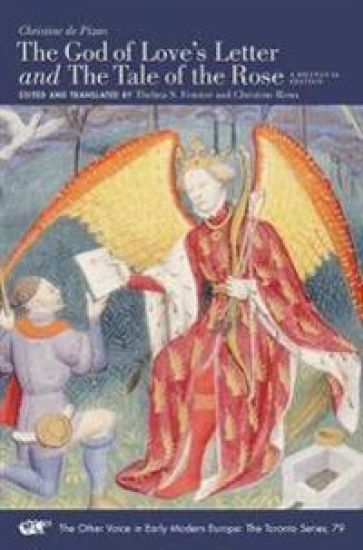
"The God of Love's Letter" and "The Tale of the Rose" – A Bilingual Edition. With Jean Gerson, "A Poem on Man and Woman," Translated from the Latin
Christine de Pizan was born in Italy and moved to the French court of Charles V when she was four years old. She led a life of learning, stimulated by her reading and by her drive to engage with the cultural and political issues of her day. As a young widow she sought to support her family through writing, and she broke new ground by pursuing a life as an author and self-publisher, producing an astonishingly large and varied body of work. Her books, owned and read by some of the most important figures of her day, addressed politics, philosophy, government, ethics, the conduct of war, autobiography and biography, and religious subjects. The God of Love’s Letter (1399), Christine de Pizan’s first defense of women, is arguably her most succinct statement about gender. It also rebukes the thirteenth-century Romance of the Rose and anticipates Christine’s City of Ladies. The Tale of the Rose (1402) responds to the growth in chivalric orders for the defense of women by arguing that women, not men, should choose members of the “Order of the Rose.” Both poems are freshly edited here from their earliest manuscripts and each is newly translated into English.
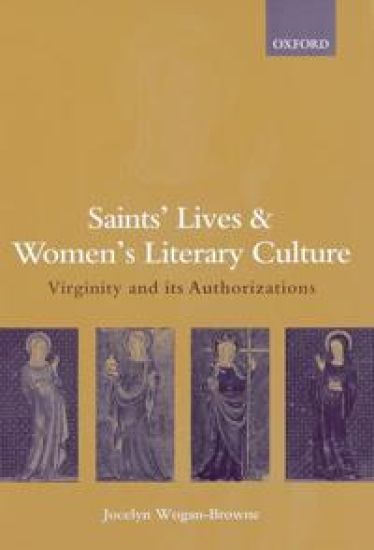
Saints' Lives and Women's Literary Culture, 1150-1300

Saints' Lives and Women's Literary Culture, 1150-1300

Jocelyn Wogan-Browne

Oxford University Press
2001
sidottu
Writing by and for women in the twelfth and thirteenth century in England is less well known than that of the later medieval period of Julian of Norwich and Margery Kempe. This is the first book-length exploration of a rich literary culture embracing several vernaculars as well as Latin. It focuses particularly on women's uses and adaptations of the powerful ideal of virgin sanctity. Saints' lives were used by lay and religious women in a range of ways, whether as exemplary of vocational biography, as historiography, as texts in the politics of court and convent, or as vernacular theology. As a sampling of this earlier literary culture, saints' lives suggest that there is a wealth of texts and manuscripts which need further study before we can map the literary and linguistic history of women in medieval England.
The Idea of the Vernacular

The Idea of the Vernacular

Jocelyn Wogan-Browne

Pennsylvania State University Press
1999
nidottu
This pioneering anthology of Middle English prologues and other excerpts from texts written between 1280 and 1520 is one of the largest collections of vernacular literary theory from the Middle Ages yet published and the first to focus attention on English literary theory before the sixteenth century. It edits, introduces, and glosses some sixty excerpts, all of which reflect on the problems and opportunities associated with writing in the "mother tongue" during a period of revolutionary change for the English language. The excerpts fall into three groups, illustrating the strategies used by medieval writers to establish their cultural authority, the ways they constructed audiences and readerships, and the models they offered for the process of reading. Taken together, the excerpts show how vernacular texts reflected and contributed to the formation of class, gender, professional, and national identity. They open windows onto late medieval debates on women's and popular literacy, on the use of the vernacular for religious instruction or Bible translation, on the complex metaphorical associations contained within the idea of the vernacular, and on the cultural and political role of the "courtly" writing associated with Chaucer and his successors. Besides the excerpts, the book contains five essays that propose new definitions of medieval literary theory, discuss the politics of Middle English writing, the relation of medieval book production to notions of authorship, and the status of the prologue as a genre, and compare the role of the medieval vernacular to that of postcolonial literatures. The book includes a substantial glossary that constitutes the first mapping of the language and terms of Middle English literary theory. The Idea of the Vernacular will be an invaluable asset not only to Middle English survey courses but to courses in English literary and cultural history and courses on the history of literary theory.
The Idea of the Vernacular: An Anthology of Middle English Literary Theory, 1280-1520

The Idea of the Vernacular: An Anthology of Middle English Literary Theory, 1280-1520

Jocelyn Wogan-Browne; Nicholas Watson; Andrew Taylor

Pennsylvania State University Press
1999
sidottu
This pioneering anthology of Middle English prologues and other excerpts from texts written between 1280 and 1520 is one of the largest collections of vernacular literary theory from the Middle Ages yet published and the first to focus attention on English literary theory before the sixteenth century. It edits, introduces, and glosses some sixty excerpts, all of which reflect on the problems and opportunities associated with writing in the "mother tongue" during a period of revolutionary change for the English language. The excerpts fall into three groups, illustrating the strategies used by medieval writers to establish their cultural authority, the ways they constructed audiences and readerships, and the models they offered for the process of reading. Taken together, the excerpts show how vernacular texts reflected and contributed to the formation of class, gender, professional, and national identity. They open windows onto late medieval debates on women's and popular literacy, on the use of the vernacular for religious instruction or Bible translation, on the complex metaphorical associations contained within the idea of the vernacular, and on the cultural and political role of the "courtly" writing associated with Chaucer and his successors. Besides the excerpts, the book contains five essays that propose new definitions of medieval literary theory, discuss the politics of Middle English writing, the relation of medieval book production to notions of authorship, and the status of the prologue as a genre, and compare the role of the medieval vernacular to that of postcolonial literatures. The book includes a substantial glossary that constitutes the first mapping of the language and terms of Middle English literary theory. The Idea of the Vernacular will be an invaluable asset not only to Middle English survey courses but to courses in English literary and cultural history and courses on the history of literary theory.