
Kirjojen hintavertailu – 12 859 829 kirjaa ja 27 kauppaa

Kirjailija

Jochen Burgtorf

Kirjat ja teokset yhdessä paikassa: 3 kirjaa, julkaisuja vuosilta 2008–2024, suosituimpiin kuuluu The Debate on the Trial of the Templars (1307–1314). Vertaile teosten hintoja ja tarkista saatavuus suomalaisista kirjakaupoista.

3 kirjaa

Kirjojen julkaisuvuodet: 2008–2024.

The Debate on the Trial of the Templars (1307–1314)

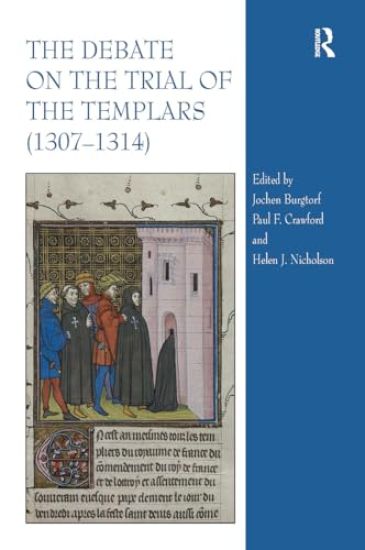
The Debate on the Trial of the Templars (1307–1314)

Helen Nicholson; Paul F. Crawford; Jochen Burgtorf

TAYLOR FRANCIS LTD
2024
nidottu
Seven hundred years after the dissolution of the order, the trial of the Templars still arouses enormous controversy and speculation. In October 1307, all the brothers of the military-religious order of the Temple in France were arrested on the instructions of King Philip IV and charged with heresy and other crimes. In 1312, Pope Clement V, at the Council of Vienne, dissolved the order. Since the 1970s, there has been increasing scholarly interest in the trial, and a series of books and articles have widened scholars' understanding of causes of this notorious affair, its course and its aftermath. However, many gaps in knowledge and understanding remain. What were the Templars doing in the months and years before the trial? Why did the king of France attack the Order? What evidence is there for the Templars' guilt? What became of the Templars and their property after the end of the Order? This book collects together the research of both junior and senior scholars from around the world in order to establish the current state of scholarship and identify areas for new research. Individual chapters examine various aspects of the background to the trial, the financial, political and religious context of the trial in France, the value of the Templars' testimonies, and consider the trial across the whole of Europe, from Poland and Cyprus to Ireland and Portugal. Rather than trying to close the discussion on the trial of the Templars, this book opens a new chapter in the ongoing scholarly debate.

The Debate on the Trial of the Templars (1307–1314)

The Debate on the Trial of the Templars (1307–1314)

Helen Nicholson; Paul F. Crawford; Jochen Burgtorf

Ashgate Publishing Limited
2010
sidottu
Seven hundred years after the dissolution of the order, the trial of the Templars still arouses enormous controversy and speculation. In October 1307, all the brothers of the military-religious order of the Temple in France were arrested on the instructions of King Philip IV and charged with heresy and other crimes. In 1312, Pope Clement V, at the Council of Vienne, dissolved the order. Since the 1970s, there has been increasing scholarly interest in the trial, and a series of books and articles have widened scholars' understanding of causes of this notorious affair, its course and its aftermath. However, many gaps in knowledge and understanding remain. What were the Templars doing in the months and years before the trial? Why did the king of France attack the Order? What evidence is there for the Templars' guilt? What became of the Templars and their property after the end of the Order? This book collects together the research of both junior and senior scholars from around the world in order to establish the current state of scholarship and identify areas for new research. Individual chapters examine various aspects of the background to the trial, the financial, political and religious context of the trial in France, the value of the Templars' testimonies, and consider the trial across the whole of Europe, from Poland and Cyprus to Ireland and Portugal. Rather than trying to close the discussion on the trial of the Templars, this book opens a new chapter in the ongoing scholarly debate.

The Central Convent of Hospitallers and Templars
From their humble beginnings in Jerusalem as a late eleventh-century hospital and an early twelfth-century pilgrim escort, Hospitallers and Templars evolved into international military religious orders, engaged in numerous charitable, economic, and military pursuits. At the heart of each of these communities, and in many ways a mirror of their growth and adaptability, was a central convent led by several high officials and headquartered first in Jerusalem (to 1187), then in Acre (1191-1291), and then on Cyprus (since 1291), from where the Hospitallers conquered Rhodes (1306-1310), and where fate in the form of a heresy trial caught up with the Templars. The history, organization, and personnel of these two central convents to 1310 are the subject of this comparative study.