Kirjojen hintavertailu – 12 903 724 kirjaa ja 27 kauppaa

Kirjailija

Joe Bamford

Kirjat ja teokset yhdessä paikassa: 6 kirjaa, julkaisuja vuosilta 2012–2020, suosituimpiin kuuluu Tales from the Control Tower. Vertaile teosten hintoja ja tarkista saatavuus suomalaisista kirjakaupoista.

6 kirjaa

Kirjojen julkaisuvuodet: 2012–2020.

A Detailed History of RAF Manston 1945-1999

A Detailed History of RAF Manston 1945-1999

Joe Bamford; John Williams; Peter Gallagher

Fonthill Media
2020
nidottu
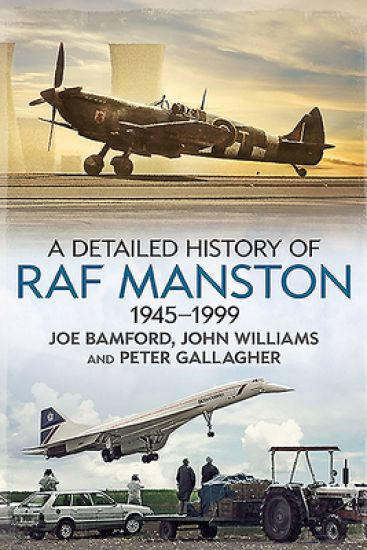
Having been classified by the Air Ministry as a ‘Master Diversion’ airfield, RAF Manston was for many years open twenty-four hours a day and available to both civil and military aircraft 365 days a year. It was also later equipped with the Pyrene foam system, which both civil and military aircraft could use when they had problems with their undercarriage: there is no doubt that the foam carpet saved many lives. The most spectacular occasion that it was used was on 20 April 1967 when a British Eagle Britannia made a complete wheels-up landing. It is claimed that Manston was the only station to serve in every command of the RAF and until its closure in 1999; it probably dealt with more diverse types of aircraft than any other station. During its eighty-three years as a Royal Naval/ RAF airfield, it played host to the Sopwith Camel, Spitfire, Bf 109, He 111, B-29, B-47, Tu-104, F-84 and Concorde, plus many other types that are too numerous to mention.

A Detailed History of RAF Manston 1941-1945
A Detailed History of RAF Manston 1941-1945 covers the station's history during the period that the RAF was on the offensive against the Luftwaffe. Having been badly damaged during the Battle of Britain and the only airfield to have been put out of action, Manston rose from the ashes to become a base for numerous fighter units that attacked Hitler's 'Fortress Europe'. From 1941 onwards, Manston was used by damaged aircraft returning from operations, especially those from Bomber Command. Consequently, a large runway was built and was one of three in the country that was equipped to deal with emergencies. In 1944, 501 Squadron was formed with the Hawker Tempest to destroy enemy armour, aircraft and the feared V1; Squadron Leader Joe Berry was credited to destroying sixty-one V1s. Another first was the arrival of the Meteor jet fighter in August 1944. After the war, Manston became a base for a number of civil airlines, but continued in its role as a major diversion airfield and an emergency landing ground.
Flying Blind

Flying Blind

Joe Bamford

Fonthill Media
2013
sidottu
Bryan Wild joined the RAF in 1940, a raw recruit not long out of school. Over the next five years, he flew fourteen different types of aircraft and saw action over Britain, North Africa, the Mediterranean and Germany. His memoirs capture the daily life of this everyman of RAF pilots: the thrill of flying and experiencing a new aircraft for the first time; the frisson of night flying in the early days when planes were not equipped with inboard radar; the tedium of hanging around with nothing to do contrasting with the intensity and urgency of action; and deep comradeships and the devastating loss of friends in combat. Wild started the war with nine lives and ended up with just the one. He had close shaves with death in action, but also freak accidents such as radio breakdown in fog over the Welsh mountains, an undercarriage stick that broke off in his hand and a runway collision with an errant cook wagon. Flying Blind: The Story of a Second World War Night-Fighter Pilot portrays the flavour of wartime RAF life as much as one pilot's journey from boyhood to manhood.
A Detailed History of RAF Manston 1916-1930

A Detailed History of RAF Manston 1916-1930

Joe Bamford; John Williams

Fonthill Media
2013
nidottu
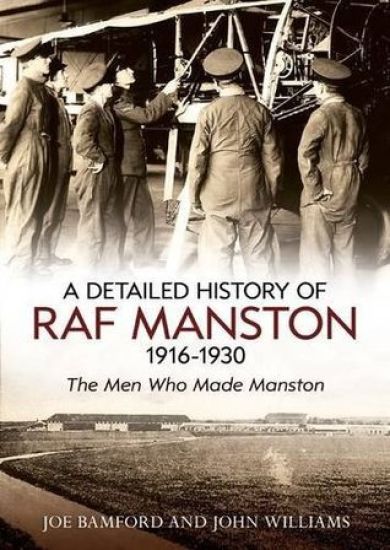
A Detailed History of RAF Manston 1916-1930: The Men Who Made Manston covers the development of aviation in Thanet up to and including the period of the First World War. Manston had its origins in the Royal Naval Seaplane Station at Westgate that was later expanded for landplane operations. The fact that the landing ground at Westgate was both dangerous and unsuitable lead to the development at Manston. Lieutenant Spenser Grey was the first airman to land in Thanet and he began a popular trend with various aviators being attracted to the area. In August 1913, The Daily Mail organised the Round Britain Aeroplane Race that both began and ended at Ramsgate giving a great boost to the town. The first unit to be based at Manston was 3 Wing RNAS that moved from Detling in April 1916 and the first CO was appointed in May. During the war, aeroplanes based at Manston and particularly its 'War Flight' played an important role in defending the Thames and Medway estuaries. Together with RNAS Eastchurch, Manston's War Flight of Triplanes, Camels and Pups patrolled the coast and amongst its most famous moments was when on 22 August 1917, a German Gotha bomber was shot down near Vincent's Farm. The authors give a detailed history of the units that were based at Manston during this period, their operations and the commanding officers. Manston was unique in many ways, but particularly as it was the only airfield to have built an underground hangar for the protection of its aeroplanes. After the First World War, Manston expanded and it took on the role of a training station. This first book in a three-book series will finish approximately at the end of the war period and continue with the growth of the station during the inter-war years.
Tales from the Control Tower

Tales from the Control Tower

Joe Bamford

Fonthill Media
2012
nidottu
Tales From The Control Tower is based on the author's personal experiences of the Royal Air Force. It starts in 1968 with anecdotes about Basic Training at Swinderby where recruits learned drill, marching and given an introduction to service life. From there the Tales move on to Gaydon, a 'V' Bomber station where Joe experienced the RAF at its best and its worst, being billeted in a hut with twenty rough necks from the RAF Regiment. At the Air Traffic School at Shawbury Joe was trained in air traffic procedures. During his time there both the piston-engine Provost and the D. H. Vampire were in the final months of service with the RAF. The station was also a storage facility and give details of the many different types of aircraft that were being housed there, awaiting scraping or repair. Having passed out of Shawbury the story moves on to Manston, where there are various anecdotes about working in the control tower, the foam landings, diversions and one particular incident involving the Red Arrows, that could have lead them to being disbanded. There are anecdotes about the life style of airmen, the drinking, the women and the strange humour! This period was interesting because it was the 'Twilight Years' of the veterans of WWII and of also of piston-engine type aircraft such as the such as the Beverley, Hastings and the DC4. Joe Bamford has produced an amusing 'easy read' about air force life that is very different to the usual 'Gung Ho' type story.
Surviving the Skies

Surviving the Skies

Joe Bamford

The History Press Ltd
2012
nidottu
Captain Stephen Wynn Vickers joined the Cheshire Regiment in August 1914, but after being badly wounded he remustered to the RFC (Royal Flying Corps). While other young pilots were killed or injured almost as soon as they got their wings, Captain Vickers survived numerous crash and forced landings. He joined 101 Squadron in 1917 and completed seventy-three sorties over enemy territory before being repatriated in May 1918 and awarded the newly inaugurated DFC, as well as the MC. With the war drawing to a close, he became a flying instructor at an RAF station in Lincolnshire, but he did not live long enough to receive either his medals or the distinction that he deserved. Making use of an array of unpublished material, including original images and information collected directly from Vickers' family, former RAF air traffic controller Joe Bamford recounts on of the final original stories of the First World War night bombers.