
Kirjojen hintavertailu – 12 903 724 kirjaa ja 27 kauppaa

Kirjailija

Joe F. Khalil

Kirjat ja teokset yhdessä paikassa: 3 kirjaa, julkaisuja vuosilta 2009–2024, suosituimpiin kuuluu Arab Television Industries. Vertaile teosten hintoja ja tarkista saatavuus suomalaisista kirjakaupoista.

3 kirjaa

Kirjojen julkaisuvuodet: 2009–2024.

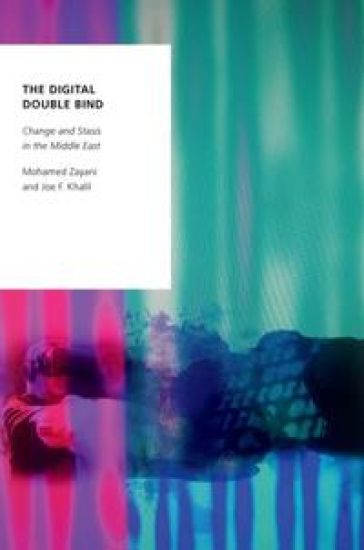
The Digital Double Bind

The Digital Double Bind

Mohamed Zayani; Joe F. Khalil

OXFORD UNIVERSITY PRESS INC
2024
sidottu
The digital has emerged as a driving force of change that is reshaping everyday life and affecting nearly every sphere of vital activity. Yet, its impact has been far from uniform. The multifaceted implications of these ongoing shifts differ markedly across the world, demanding a nuanced understanding of specific manifestations and local experiences of the digital. In The Digital Double Bind, Mohamed Zayani and Joe F. Khalil explore how the Middle East's digital turn intersects with complex political, economic, and socio-cultural dynamics. Drawing on local research and rich case studies, they show how the same forces that brought promises of change through digital transformation have also engendered tensions and contradictions. The authors contend that the ensuing disjunctures have ensnared the region in a double bind, which represents the salient feature of an unfolding digital turn. The same conditions that drive the state, market, and public immersion in the digital also inhibit the region's drive to change. The Digital Double Bind reconsiders the question of technology and change, moving beyond binary formulations and familiar trajectories of the network society. It offers a path-breaking analysis of change and stasis in the Middle East and provides a roadmap for a critical engagement with digitality in the Global South.
The Digital Double Bind

The Digital Double Bind

Mohamed Zayani; Joe F. Khalil

OXFORD UNIVERSITY PRESS INC
2024
nidottu
The digital has emerged as a driving force of change that is reshaping everyday life and affecting nearly every sphere of vital activity. Yet, its impact has been far from uniform. The multifaceted implications of these ongoing shifts differ markedly across the world, demanding a nuanced understanding of specific manifestations and local experiences of the digital. In The Digital Double Bind, Mohamed Zayani and Joe F. Khalil explore how the Middle East's digital turn intersects with complex political, economic, and socio-cultural dynamics. Drawing on local research and rich case studies, they show how the same forces that brought promises of change through digital transformation have also engendered tensions and contradictions. The authors contend that the ensuing disjunctures have ensnared the region in a double bind, which represents the salient feature of an unfolding digital turn. The same conditions that drive the state, market, and public immersion in the digital also inhibit the region's drive to change. The Digital Double Bind reconsiders the question of technology and change, moving beyond binary formulations and familiar trajectories of the network society. It offers a path-breaking analysis of change and stasis in the Middle East and provides a roadmap for a critical engagement with digitality in the Global South.
Arab Television Industries

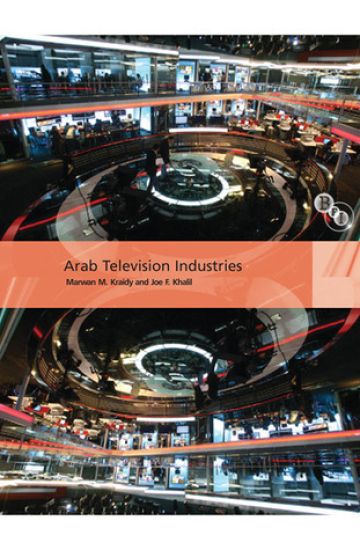
Arab Television Industries

Joe F. Khalil; Marwan M. Kraidy

BFI Publishing
2009
sidottu
In recent years, Arab television has undergone a dramatic and profound transformation from terrestrial, government-owned, national channels to satellite, privately owned, transnational networks. The latter is the Arab television that matters today, economically, socially and politically. The resulting pan-Arab industry is vibrant, diverse, and fluid - very different, the authors of this major new study argue, from the prevailing view in the West, which focuses only on the al-Jazeera network. Based on a wealth of primary Arabic language sources, interviews with Arab television executives, and the authors' personal and professional experience with the industry, Arab Television Industries tells the story of that transformation, featuring compelling portraits of major players and institutions, and captures dominant trends in the industry. Readers learn how the transformation of Arab television came to be, the different kinds of channels, how programs are made and promoted, and how they are regulated. Throughout, the analysis focuses on the interaction of the television industry with Arab politics, business, societies and cultures.