Kirjojen hintavertailu – 12 859 818 kirjaa ja 27 kauppaa

Kirjailija

Joe Kelly

Kirjat ja teokset yhdessä paikassa: 69 kirjaa, julkaisuja vuosilta 1993–2026, suosituimpiin kuuluu Deadpool Vs. Wolverine. Vertaile teosten hintoja ja tarkista saatavuus suomalaisista kirjakaupoista.

69 kirjaa

Kirjojen julkaisuvuodet: 1993–2026.

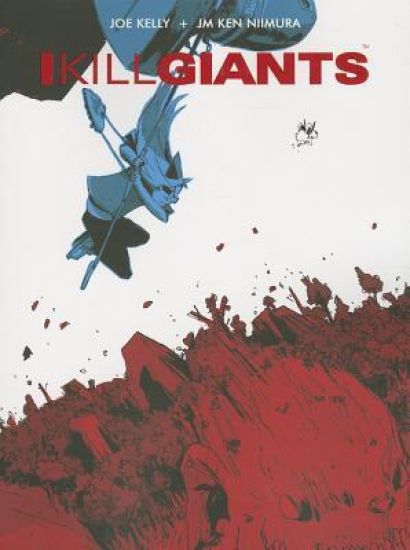
I Kill Giants Fifth Anniversary Edition
I Kill Giants tells the story of Barbara Thorson, an acerbic fifth-grader so consumed with fantasy that she doesn't just tell people that she kills giants with an ancient Norse warhammer — she starts to believe it herself. The reasons for Barbara's troubled behavior are revealed through the course of the book, as she learns to reconcile her fantasy life with the real world. In 2012, I Kill Giants writer Joe Kelley and artist J. M. Ken Niimura received the International Manga Award, an honor given by the Japanese Foreign Ministry to an outstanding comic book or graphic novel.
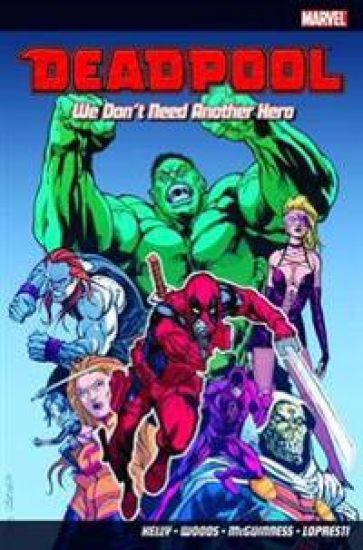
Deadpool Vol.2

Deadpool Vol.2

Joe Kelly

PANINI PUBLISHING LTD
2009
pokkari
The Merc With a Mouth returns and finds himself up to his neck in trouble and a world of pain as he battles Saquatch, the Taskmaster and his academy of ninjas, as well finding a cure for the fatal disease that's ravaging his body! However, the key to his cure just so happens to be everyone's favourite Jade Giant - the Hulk! Guest starring Siryn of the X-Men! Collects Deadpool Vol 1 Nos 1-11.
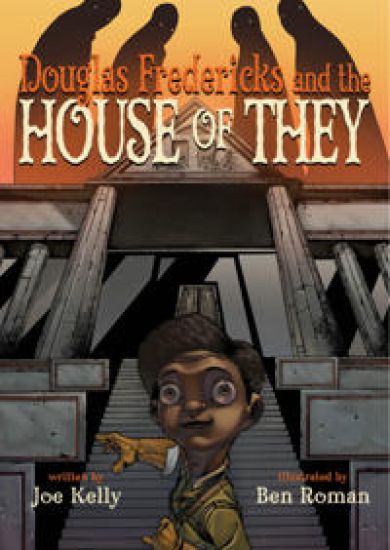
Douglas Fredericks And The House Of They
Douglas Fredericks is a kid on a mission. His parents' 15th wedding anniversary is just around the corner and he wants to create an extra-special present for them. However, his wild attempts at unique gifts are all shut down by his friends and neighbors, concerned that Douglas' wild ideas go against what THEY say. But who are THEY? Why do THEY make the rules? And why does everyone listen to THEY?
The Dads & Daughters Togetherness Guide: 54 Fun Activities to Help Build a Great Relationship
Fathers know that doing things with their daughters is important. Shared activities build trust and self-esteem, show how much dads care, and allow everyone to cut loose and have fun. But even fathers who can beat the generation and gender gaps that make them feel awkward can't always dream up cool places to go or mutually enjoyable things to do. Like the coach of their favorite team, dads need a game plan, and that's exactly what Joe Kelly provides in Dads & Daughters Togetherness Guide. Appropriate for girls of any age, the guide enables dads to grab their daughters by the hand and say "Let's go..." See how things are made: Take a made-in-America tour and see how everything from jumbo jets (Boeing) to chocolate kisses (Hershey's) is produced. Bake a funny cake: She'll laugh herself silly in the kitchen making Kitty Litter Cake, a German chocolate sheet cake covered with "cat litter" (dyed, crumbled cookies) and topped with miniature Tootsie Rolls. Take a drive to nowhere: Let the copilot navigate, and leave time for fun stops to poke around in flea markets or join a game of pickup softball for a few innings. With dozens of other engaging activities--such as creating a daddy-daughter journal, devising secret codes, and exchanging poems--this is the ultimate rain-or-shine resource for developing wonderful parent-child rapport.
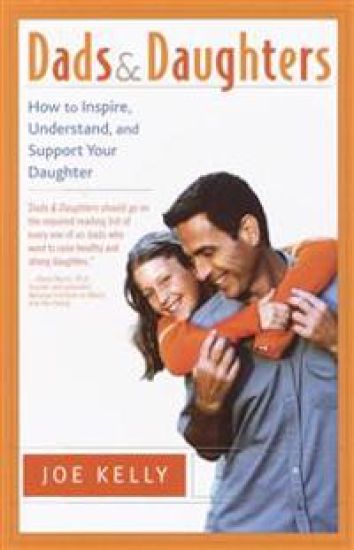
Dads and Daughters: How to Inspire, Understand, and Support Your Daughter When She's Growing Up So Fast
Every father can make a huge difference in his daughter's life. As the primary male role model in a girl's life, fathers influence their daughters in profound ways, from how they see themselves to what they come to expect from men and the world at large. But men often don't realize the importance of their interactions or may shy away from too close involvement because of their inexperience, or conditioning. Especially as girls move into adolescence, fathers may find themselves feeling distant from their daughters or awkward with the changing dynamic. Communication becomes difficult and parenting issues more complicated. But this is also the time when daughters most need their fathers to be an even greater presence in their lives. Dads and Daughters is a tool to bridge that gap and build a rewarding and joyful father-daughter relationship. From father to father and with insights from many other dads, Joe Kelly shows men how they can strengthen their relationships with their daughters and explores the tremendous rewards this relationship can bring. Starting with a self-assessment quiz titled "How Am I Doing as My Daughter's Father?" dads can immediately see what kind of role they play in their daughter's life. To educate fathers and offer solutions when problems arise, Dads and Daughters then offers thoughtful coverage of the most pivotal issues today's girls face, such as sex and dating, body image, alcohol and drugs, media culture and violence, money and responsibility, and the future. In doing so he both illuminates the culture our daughters live in and shows fathers how to guide their daughters toward rewarding, healthy lives.
An Existential-Systems Approach to Managing Organizations

An Existential-Systems Approach to Managing Organizations

Joe Kelly; Louise Kelly

Praeger Publishers Inc
1998
sidottu
At a time of corporate downsizing and bone-crushing international competition, how can executives reconcile their individual personalities and human needs with the equally compelling needs of the hard-driving organization? It is an existential dilemma, say Joe and Louise Kelly, and one with critical implications, not only for executives but for their organizations as well. The Kellys, by no means blithe theorists, take a hard look at this hard-edged problem by positing a three-pronged model for analysis based upon structure, process, and values. They synthesize these elements under an overarching concept of existentialism, in which the emphasis is on a search for meaning. And with that, they provide a clear-headed look at organizational behavior—its contributions to our understanding of how organizations work but, also its failures and, indeed, its frequent self-deceptions. A well-written, vigorous, far-ranging examination, not only for executives who need the kind of help the Kellys offer in their daily combats on the job, but also for their colleagues in the academic community who have their own organizational problems to deal with. The Kellys make clear that their book reflects a movement away from the academic-purist position, where the sole concern is with theoretically significant research, to a position which recognizes that organizational behavior is a crossroads subject where traffic [that comes] mainly from behavioral science, computer technology, and economics coalesces with the ideas streaming out of organizational practice. Aimed at professional managers and students, both undergraduates as well as those on the M. B. A. level, this book assumes little prior knowledge of behavioral science or organizational theory. Readers will get what they need of those subjects here, enough to follow Kelly's argument. They will see how behavioral and organizational research has helped (but sometimes hindered) executives as they attempt to deal with critical happenings in their jobs. With case study material woven into the text and with observations from his own experiences with business as well as academic organizations, the Kellys' book is a readable, engrossing argument for and against the orthodoxies of organizational behavior studies—and the assurance that whatever else it may or not be, organizational behavior is certainly not static.

Facts Against Fictions of Executive Behavior

Facts Against Fictions of Executive Behavior

Joe Kelly

Praeger Publishers Inc
1993
sidottu
Executive behavior is simply what managers do. But what do they do? To answer this question, Kelly reviews the observational studies of managerial behavior made in the 1950s and 1960s by H. Mintzberg and S. Carlson, among others, and updates the record by including research of the 1980s and 1990s. This hard data of scientific observation is compared to and contrasted with the soft data of top manager interviews and CEO biographies, which includes material on Lee Iacocca, John Akers, Steven Jobs, John Sculley, and Jack Welch. To get these facts and fictions of executive life together in a meaningful and understandable way, this book develops a new view of executive behavior, which focuses on two paradigms: the classical and existential models of the manager. In the classical approach, the manager plans, organizes, leads, and evaluates (POLEs). Both observational studies and the soft data of interviews and biographies shows the executive to be a much more intuitive person who engages in fleeting, superficial, and often distracting interactions with his or her peers and subordinates. Inevitably, such a life-style makes the manager into a gamesman---an existential player in a life in which chance and choice are vital elements in forming the corporate vision. To make this vision a reality, the existential executive employs a transformational style of leadership. This book focuses on four levels of management: chief executives, general managers, middle managers, and supervisors. Among the issues explored in depth are transformational leadership, selection of CEOs, the drama of executive meetings, and the executive of the future. Ideal as a supplemental reading for courses in organizational behavior and management, this book is also an important resource for consultants and executives who are involved in management development and selection who seek an in-depth, balanced view of the modern manager.