Kirjojen hintavertailu – 12 859 819 kirjaa ja 27 kauppaa

Kirjailija

Joel L. Young

Kirjat ja teokset yhdessä paikassa: 3 kirjaa, julkaisuja vuosilta 2007–2020, suosituimpiin kuuluu When Your Adult Child Breaks Your Heart. Vertaile teosten hintoja ja tarkista saatavuus suomalaisista kirjakaupoista.

3 kirjaa

Kirjojen julkaisuvuodet: 2007–2020.

Understanding and Treating Chronic Fatigue

Understanding and Treating Chronic Fatigue

Joel L. Young

Praeger Publishers Inc
2020
sidottu
Some doctors still think Chronic Fatigue Syndrome is a "fake" diagnosis. In this book, Joel Young, MD, presents the research, experience, and treatments that prove otherwise. Millions of Americans experience chronic fatigue syndrome (CFS), a continuous exhaustion and a feeling comparable to that of having just run a marathon when all they have done is a daily living task, such as taking a shower or getting dressed. Doctors don't have tests for CFS, and some think it's a faux or psychological disorder. Joel Young, MD, in this heavily researched book, explains why it is a true physical illness and how it may be treated. He details how he successfully treats the symptoms, which can include severe fatigue, "brain fog," chronic pain, and sleep problems. Unlike doctors who recommend exercise, supplements, or opioid medications, Young integrates such options as long-acting stimulants, meditation, and dietary changes to reduce fatigue, as well as non-opioid drugs, medical marijuana, and self-help options including yoga for the associated chronic pain.
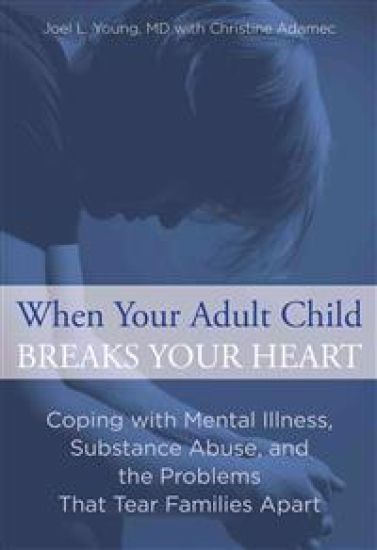
When Your Adult Child Breaks Your Heart

When Your Adult Child Breaks Your Heart

Joel L. Young; Christine Adamec; Joel L. Young

The Lyons Press
2013
pokkari
Behind nearly every adult who is accused of a crime, becomes addicted to drugs or alcohol, or who is severely mentally ill and acting out in public, there is usually at least one extremely stressed-out parent. This parent may initially react with the bad news of their adult child behaving badly with, "Oh no!" followed by, "How can I help to fix this?" A very common third reaction is the thought, "Where did I go wrong--was it something I said or did, or that I failed to do when my child was growing up that caused these issues? Is this really somehow all my fault?" These parents then open their homes, their pocketbooks, their hearts, and their futures to "saving" their adult child--who may go on to leave them financially and emotionally broken. Sometimes these families also raise the children their adult children leave behind: 1.6 million grandparents in the U. S. are in this situation. This helpful book presents families with quotations and scenarios from real suffering parents (who are not identified), practical advice, and tested strategies for coping. It also discusses the fact that parents of adult children may themselves need therapy and medications, especially antidepressants. The book is written in a clear, reassuring manner by Dr. Joel L. Young, medical director of the Rochester Center for Behavioral Medicine in Rochester Hills, Michigan; with noted medical writer Christine Adamec, author of many books in the field. In the wake of the Newtown shooting and the viral popularity of the post "I Am Adam Lanza's Mother," America is now taking a fresh look, not only at gun control, but also on how we treat mental illness. Another major issue is our support or stigmatization of those with adult children who are a major risk to their families as well to society itself. This book is part of that conversation.
ADHD Grown Up

ADHD Grown Up

Joel L. Young

WW Norton Co
2007
sidottu
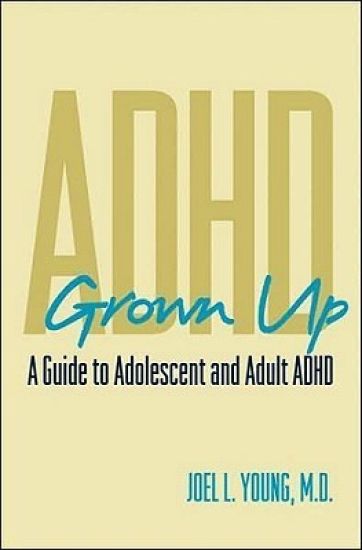
Yet despite this awareness, many clinicians as well as the general public continue to under-appreciate the significance of ADHD as it manifests itself in adults. What happens to all these ADHD kids when they grow up? ADHD isn’t like a cold or the flu—it doesn’t just go away all of the time. As a child grows and matures, it is possible that the symptoms lessen, and in some cases adults are able to overcome the disorder, but it doesn’t usually just vanish on its own. At least 40-70% of those diagnosed with this disorder as kids will have it persist when they are adults; however, mental health professionals often overlook ADHD symptoms and continue calling their adult patients who suffer from it anxious or depressed, or diagnose them with a personality disorder. Family members may also consider adults with procrastination issues, inattentiveness, and distractibility lazy or malingering, when in fact they are suffering from ADHD. Here Joel Young MD, who has been treating and researching ADHD for more than15 years, takes a comprehensive look at ADHD in adults. As an accurate diagnosis is essential to a patient’s successful treatment, the book begins by detailing how clinicians can provide the most accurate ADHD diagnosis. Once established, the basic diagnostic process begins. This includes obtaining a careful medical history to rule out medical problems that may mimic the symptoms of ADHD, taking a psychiatric history and carefully considering any family or genetic history of medical and psychiatric problems. Some helpful tools used to evaluate quickly and comprehensively distressed patients are presented. Comorbidities are extremely common among patients with ADHD. Emphasis in the book is placed on the most common ADHD comorbidities, including mood and anxiety disorders, bipolar disorder, oppositional defiant disorders, eating disorders and learning disabilities. The book also details the different types of ADHD that clinicians may encounter: ADHD (predominately hyperactive/impulsive subtype) is manifested in people who are hyperactive, and experience serious problems at work and at home. They are fidgety and impatient and may be the most commonly diagnosed adults. ADHD (predominately-inattentive subtype) manifests itself in patients who are typically, but not exclusively, female. As children, these women were inattentive and distractible, underperforming but not demonstrating overt behaviors typical of their hyperactive brethren. Their conditions may be complicated by factors like anxiety, depression, and fatigue. Even as adults, most clinicians overlook their symptoms. Other chapters focus on diagnostic and treatment issues in specific populations: adolescents and common adolescent mindsets; women with ADHD; substance abuse; psychotherapy and coaching as treatments and medications. The medications chapter will review the use of antidepressant and mood stabilizing medications taken in concert with stimulants or non-stimulants, and other medication combinations need for conditions comorbid with ADHD. Finally, the author concludes by presenting findings that self-referred patients with fibromyalgia and chronic fatigue syndrome have high rates of ADHD. Young proposes that extreme distractibility may intensify the patient’s pain perception. Overall this book provides clinicians and family members with a concise yet comprehensive overview of the many issues associated with ADHD throughout adolescence and adulthood.